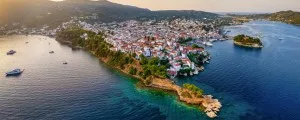
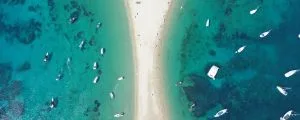
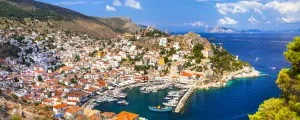
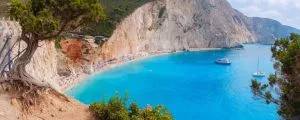
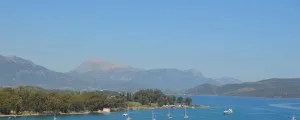
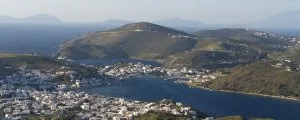
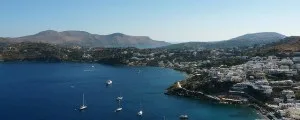
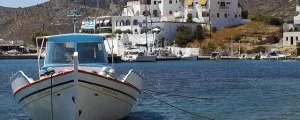
Start your crewed catamaran charter in the heart of the Cyclades, on Paros, instead of spending days sailing there and back from Athens. From Athens to Mykonos and Santorini is well over 200 nautical miles round trip, a big ask on a one-week charter, especially when the meltemi blows hard in July and August. From Paros, you are already in the middle of the action: shorter hops to the islands that matter, and more time actually spent in the bays, villages and tavernas rather than getting to them. Our guide to Cyclades yacht charter has the full picture.
This suits guests who want a greatest-hits Cyclades route on a catamaran, are comfortable with one or two longer sailing legs, and understand that in strong meltemi the captain may adjust the order for safety.
Not every catamaran is based in Paros itself. Some are, which is the simplest option, and others reposition from Athens or elsewhere ahead of your charter, which can mean a relocation fee. Either way, you are not the one sailing that leg, it happens before you fly in, not during your week, but it is worth asking about when you book.
The week runs Saturday to Saturday: board Saturday afternoon in Paros, hand back the following Saturday morning, seven nights on board, about 205 nautical miles with the Sifnos-to-Mykonos crossing the longest single leg.
The route at a glance
- Day 1: Board in Paros, sail to Naxos (about 10nm)
- Day 2: Naxos to Koufonisia (about 28nm)
- Day 3: Koufonisia to Ios (about 25nm)
- Day 4: Ios to Santorini (about 20nm)
- Day 5: Santorini to Folegandros (about 22nm)
- Day 6: Folegandros to Sifnos (about 30nm)
- Day 7: Sifnos to Mykonos (about 48nm)
- Day 8: Mykonos to Paros, return (about 22nm)
Day 1 – Paros to Naxos (about 10nm)
Midday: boarding at Paros
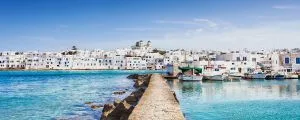
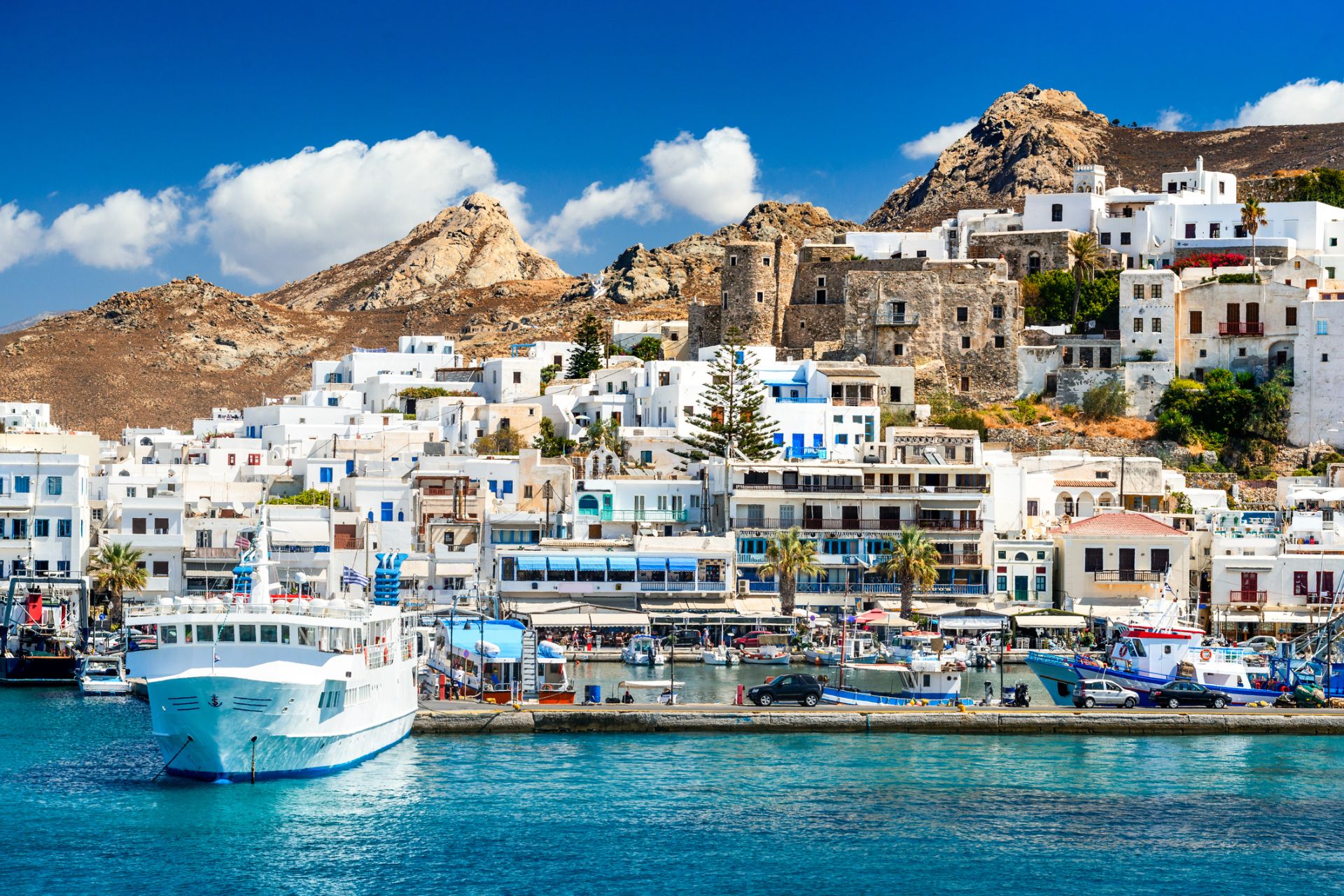
Embarkation is at Parikia, and most guests are aboard within the hour of arriving by flight or fast ferry. The crew goes through the preference sheet before you cast off for the short hop to Naxos, an ideal first sailing day, steady breeze, islands on the horizon, and an easy run for a modern catamaran.
Afternoon: the largest island in the Cyclades
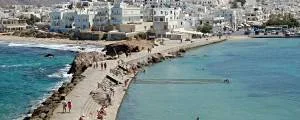
Naxos is the largest and highest island in the group, and often called its breadbasket, unusually green, with fields, citrus groves, vineyards and olive trees supplying much of the region’s produce. Swim off long sandy beaches like Agios Prokopios or Plaka before heading ashore.
Broker insight
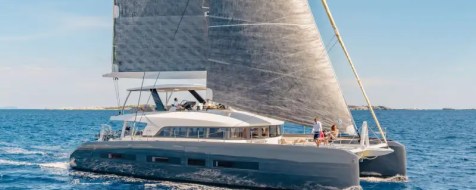
A catamaran is the right call for this Paros loop. The shallow draft opens up anchorages that deeper motor yachts have to skip, and there is a lot more room on deck for a week like this one.
 Chris de Kock
Charter Broker, Sales Broker, Active CYBA Member
Chris de Kock
Charter Broker, Sales Broker, Active CYBA Member
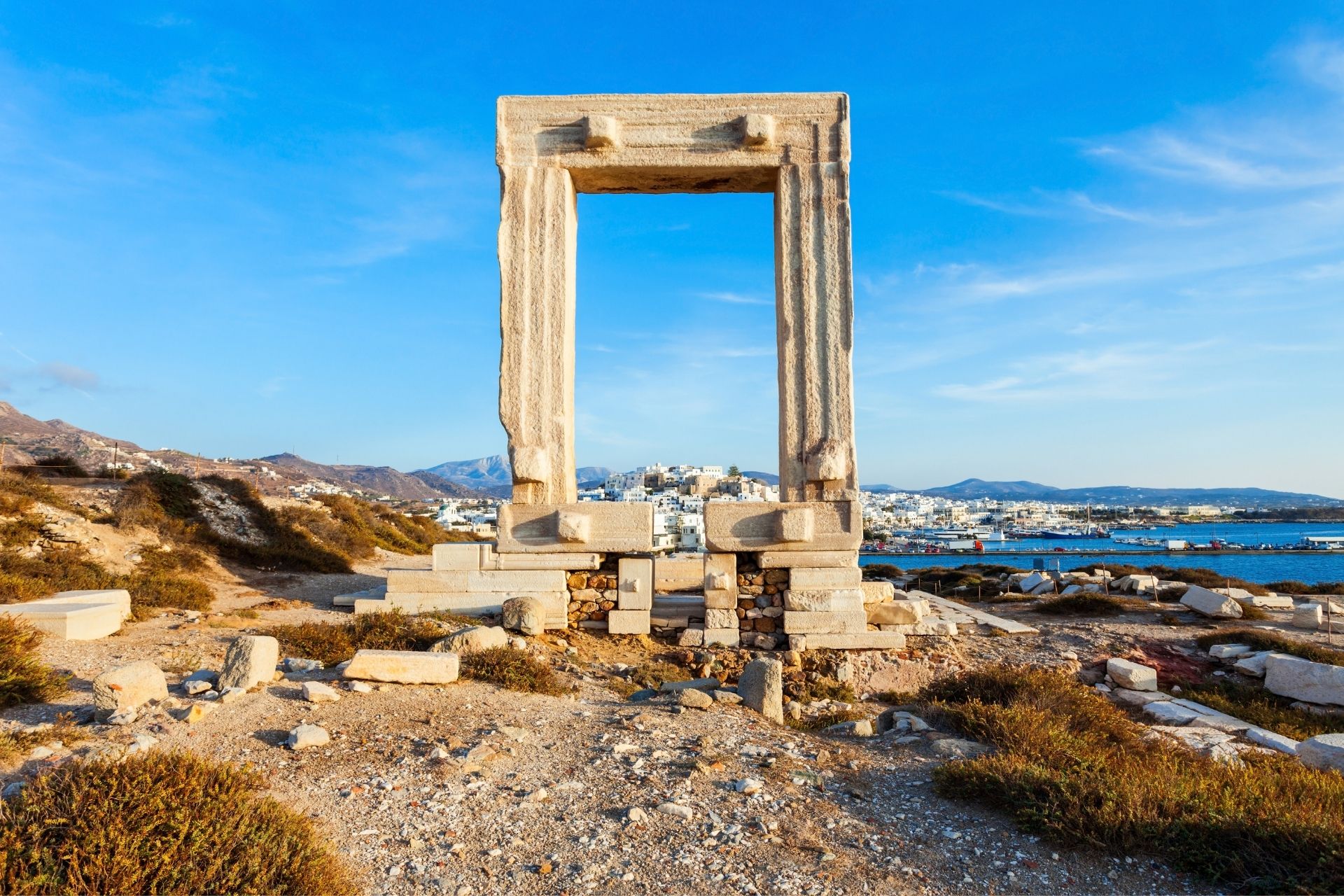
Evening: the Portara at sunset
The medieval Kastro and the great marble gate of the Portara give the arrival real drama, especially at sunset. Legend ties the doorway to Theseus, who is said to have abandoned Ariadne on Naxos on his way home from Crete.
Dinner
Naxian cheese, potatoes and local dishes in a family taverna, one of the most reliably good tables of the week.
Overnight: Naxos town.
Don’t Miss
- Swimming off Agios Prokopios or Plaka beach
- The sunset walk to the Portara above the harbour
- Naxian cheese and potatoes in a family taverna
Day 2 – Naxos to Koufonisia (about 28nm)
Morning: into the Small Cyclades
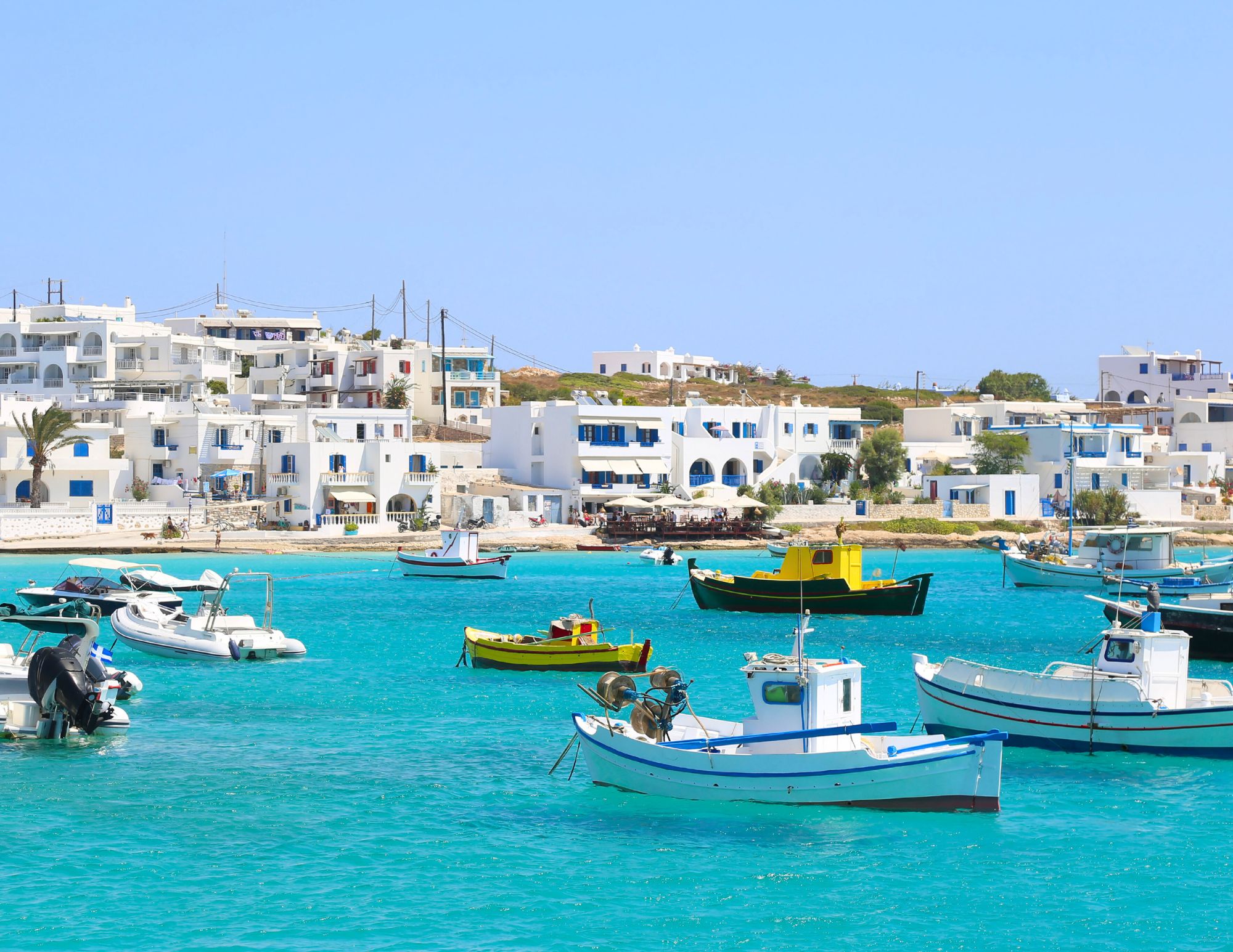
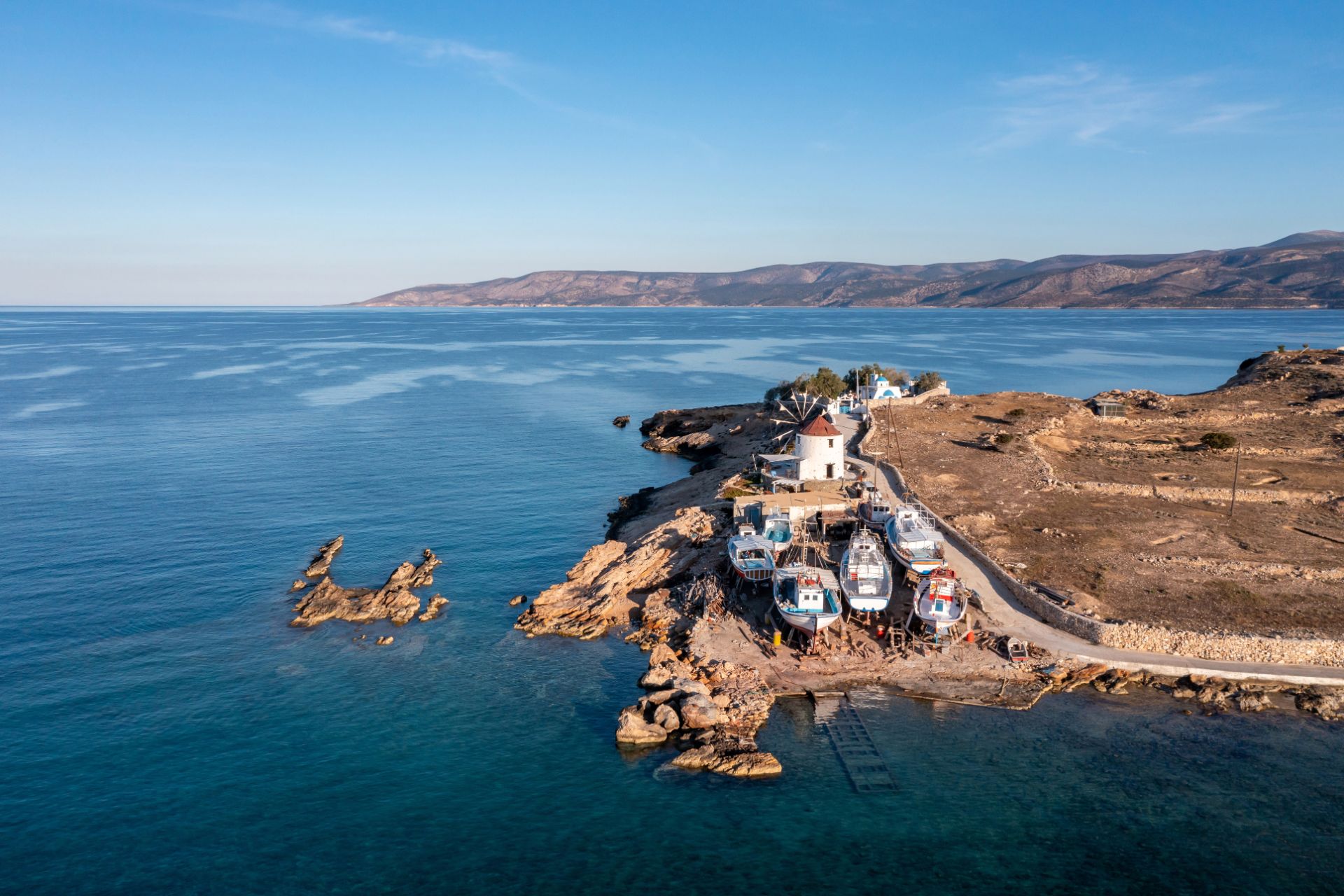
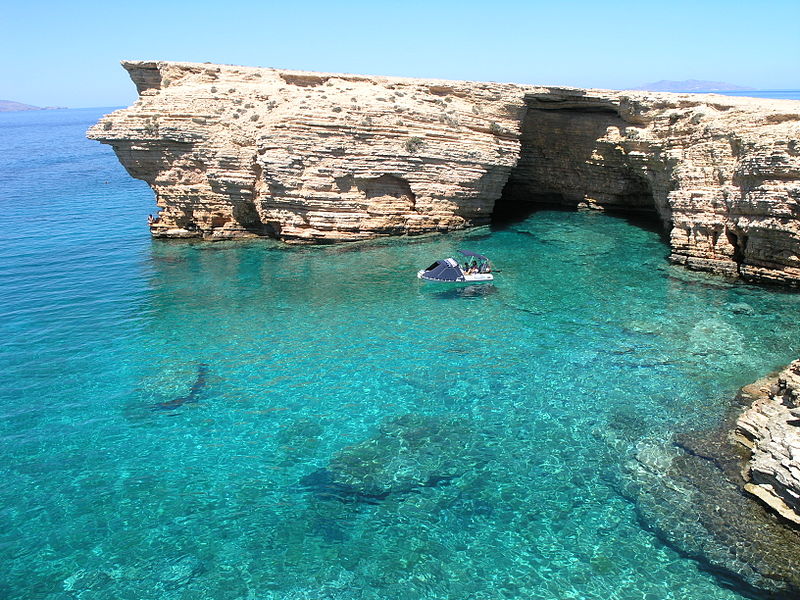
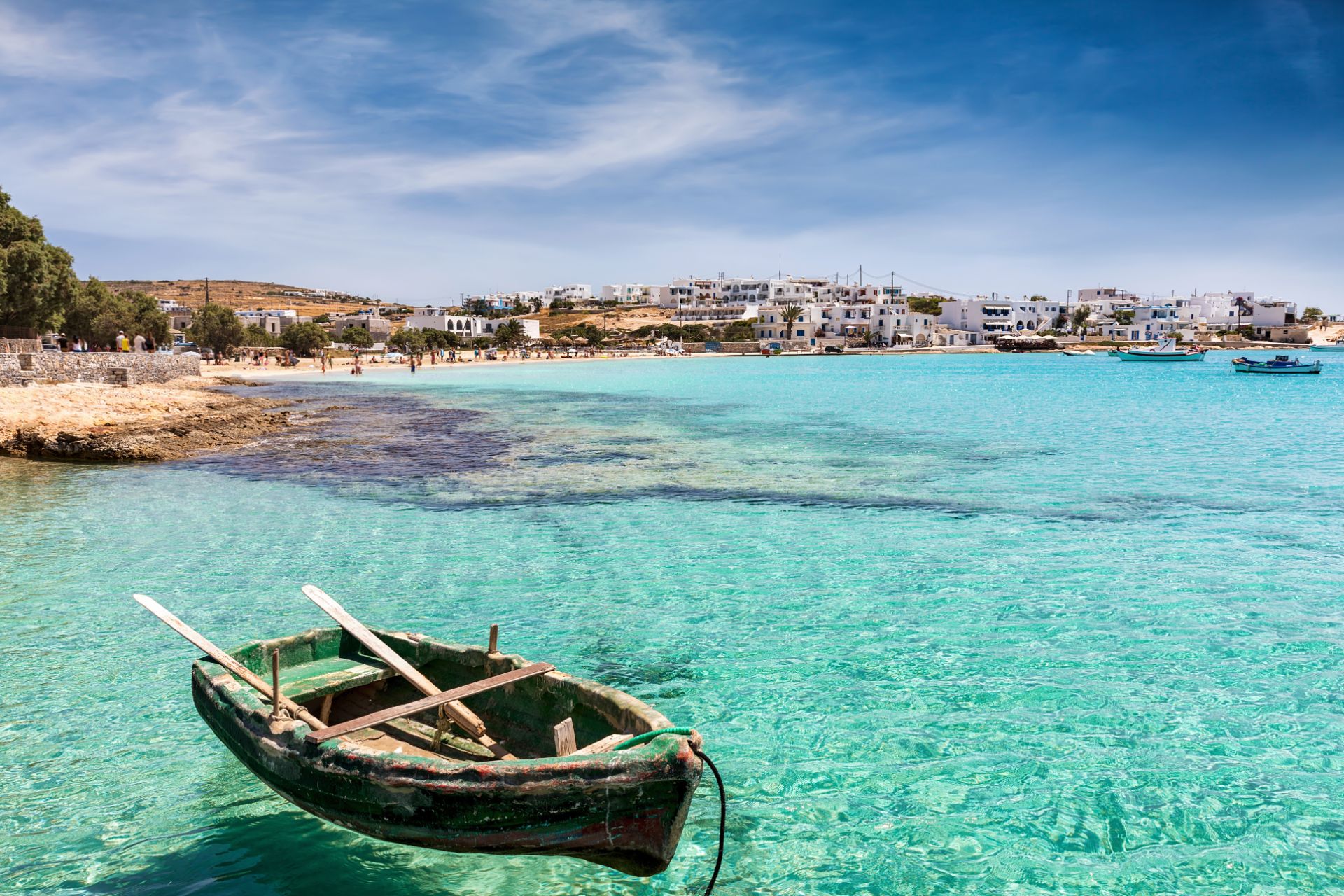
East into the Small Cyclades, a cluster of islets almost purpose-built for a catamaran: short hops, turquoise water, and very little development compared to the week so far.
Lunch: Ano Koufonisi
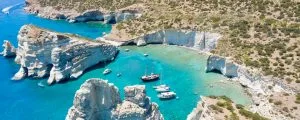
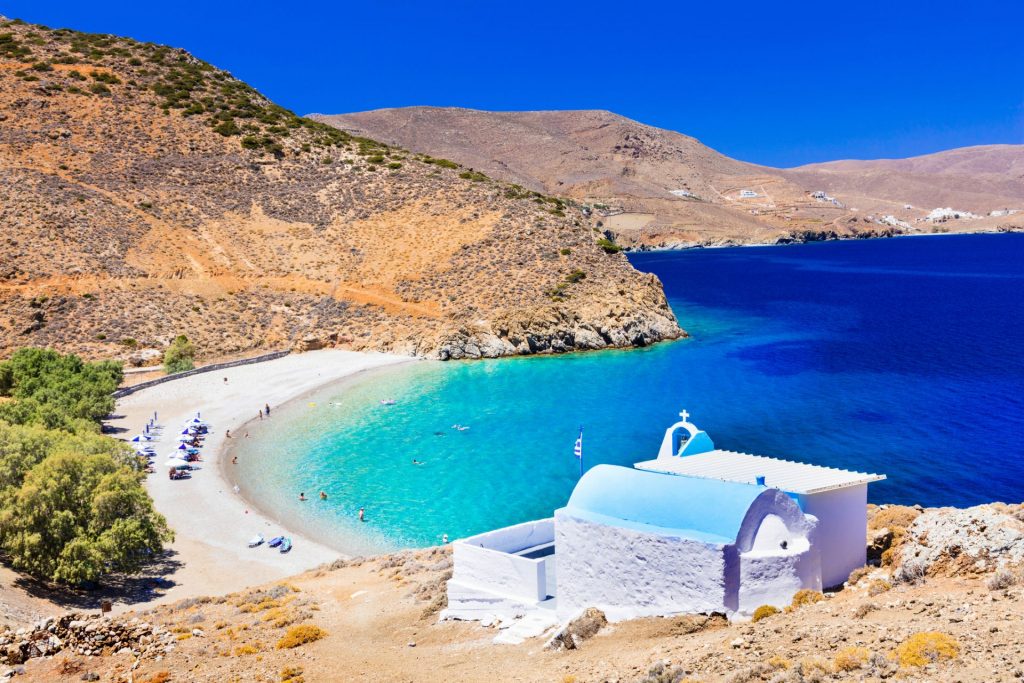
Ano Koufonisi has a small port village and a chain of beaches, Pori, Italida and Fanos, threaded with sea caves and natural rock pools, good swimming close to the boat.
Afternoon: Kato Koufonisi
A short tender ride to Kato Koufonisi, uninhabited and quiet, ideal for a long, lazy swim with nobody else around.
Evening: dinner in the port village
Dinner in Koufonisia’s small port village, a genuinely low-key evening, exactly the kind of scale-down the middle of a busy week benefits from.
Overnight: Koufonisia.
Don’t Miss
- Sea caves and rock pools at Ano Koufonisi
- A quiet swim at uninhabited Kato Koufonisi
- A simple, low-key evening in the port village
Day 3 – Koufonisia to Ios (about 25nm)

Morning: leaving the Small Cyclades
South from Koufonisia toward Ios, a real change of pace waiting at the other end after two quiet days.
Lunch: an open-water stop
Lunch at anchor along the way, a quiet, uncrowded stretch of water most charters only pass through.
Afternoon: Manganari
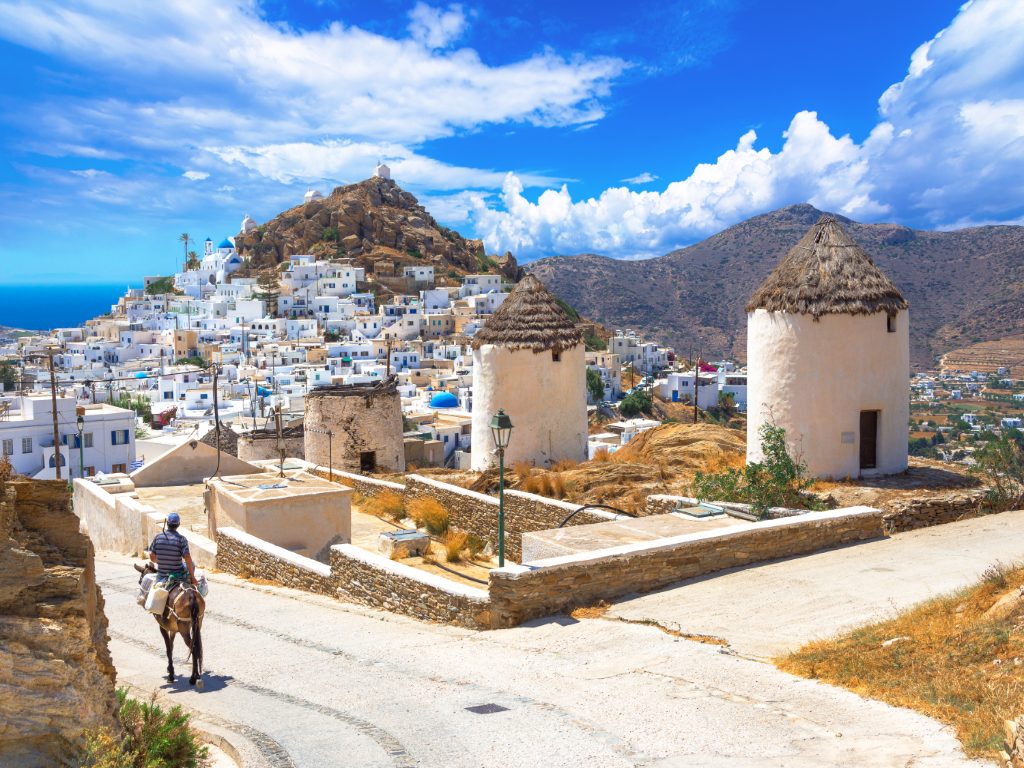
Ios combines broad sandy beaches with a lively Chora. Swimming and anchoring at Manganari, one of the best beaches in the area, is the afternoon’s main event.
Evening: Ios Chora
An evening wander through Ios Chora, its viewpoints and windmills, and if the group wants a detour, the hilltop site said to be the Tomb of Homer gives some of the biggest views in the Aegean.
Overnight: Ios.
Don’t Miss
- Swimming and anchoring at Manganari beach
- Ios Chora’s viewpoints and windmills at golden hour
- The hilltop site said to be the Tomb of Homer
Day 4 – Ios to Santorini (about 20nm)
Morning: entering the caldera
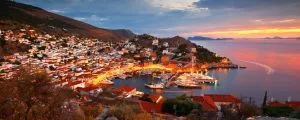
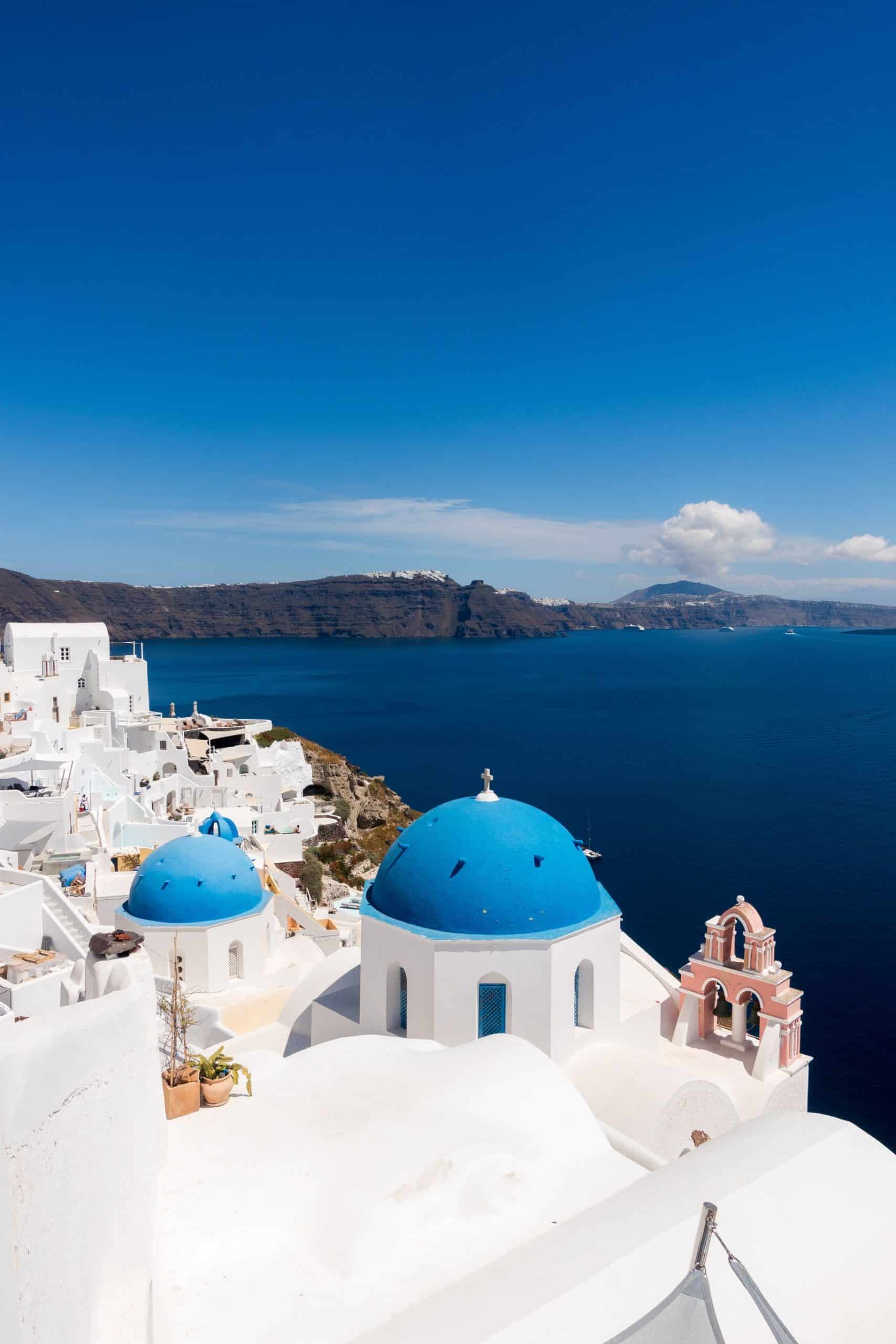
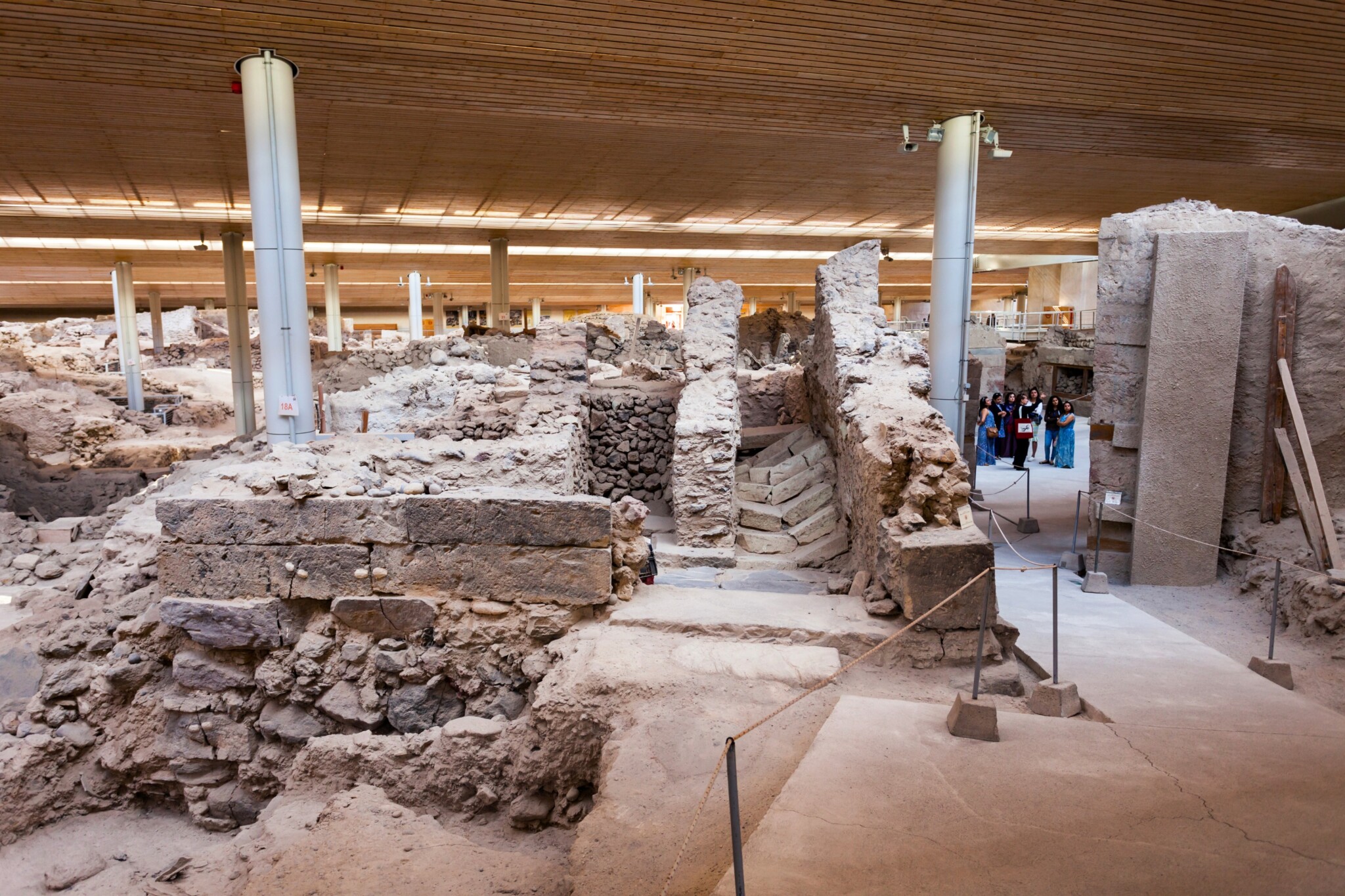
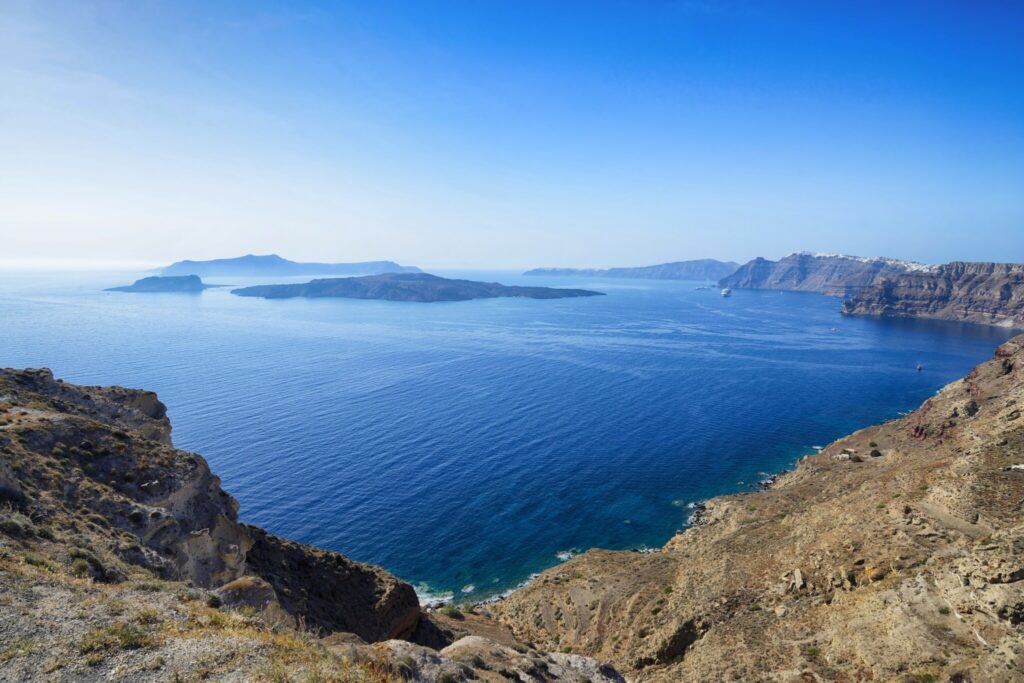
Sailing into Santorini feels like entering a flooded volcanic crater: sheer cliffs and white villages perched along the rim. The island is the remnant of a major Bronze Age eruption that buried the city of Akrotiri, an event often linked to the Atlantis myth.
Lunch: Vlychada
Santorini is about smart logistics from a yacht: limited anchoring in the deep caldera means using Vlychada or an organised mooring, then exploring the island by road from there.
Afternoon: Akrotiri
A guided visit to Akrotiri, with its remarkably preserved Bronze Age streets and houses, buried and protected by the same eruption that shaped the island.
Evening: sunset from the caldera rim
Caldera-side sunset from Oia or Fira, looking down at the anchored ships, then a tasting of crisp assyrtiko and sweet vinsanto at a caldera-view winery.
Overnight: Santorini caldera.
Don’t Miss
- Caldera-side sunset from Oia or Fira
- A guided visit to Akrotiri’s buried Bronze Age streets
- Assyrtiko and vinsanto at a caldera-view winery
Day 5 – Santorini to Folegandros (about 22nm)
Morning: quieter territory
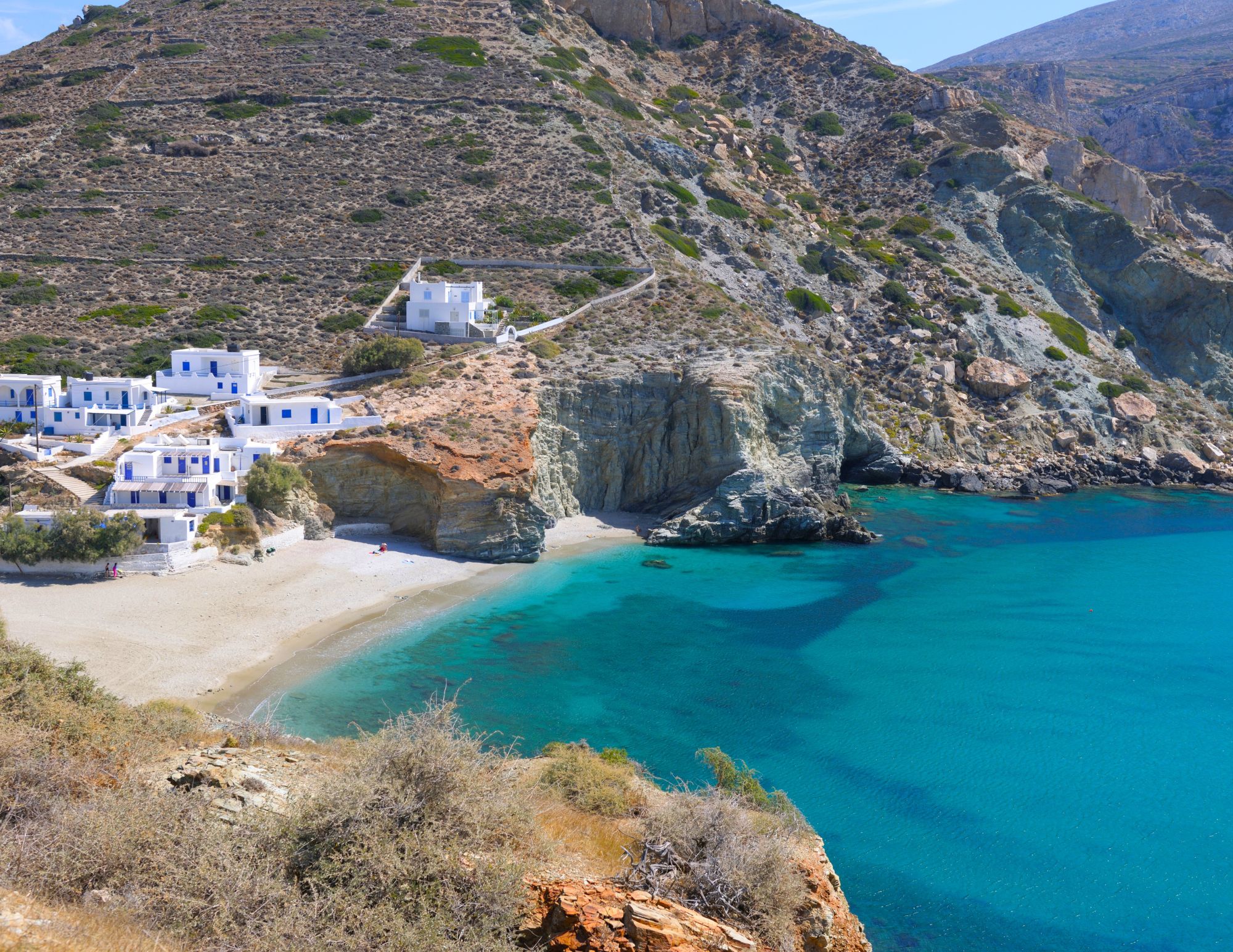
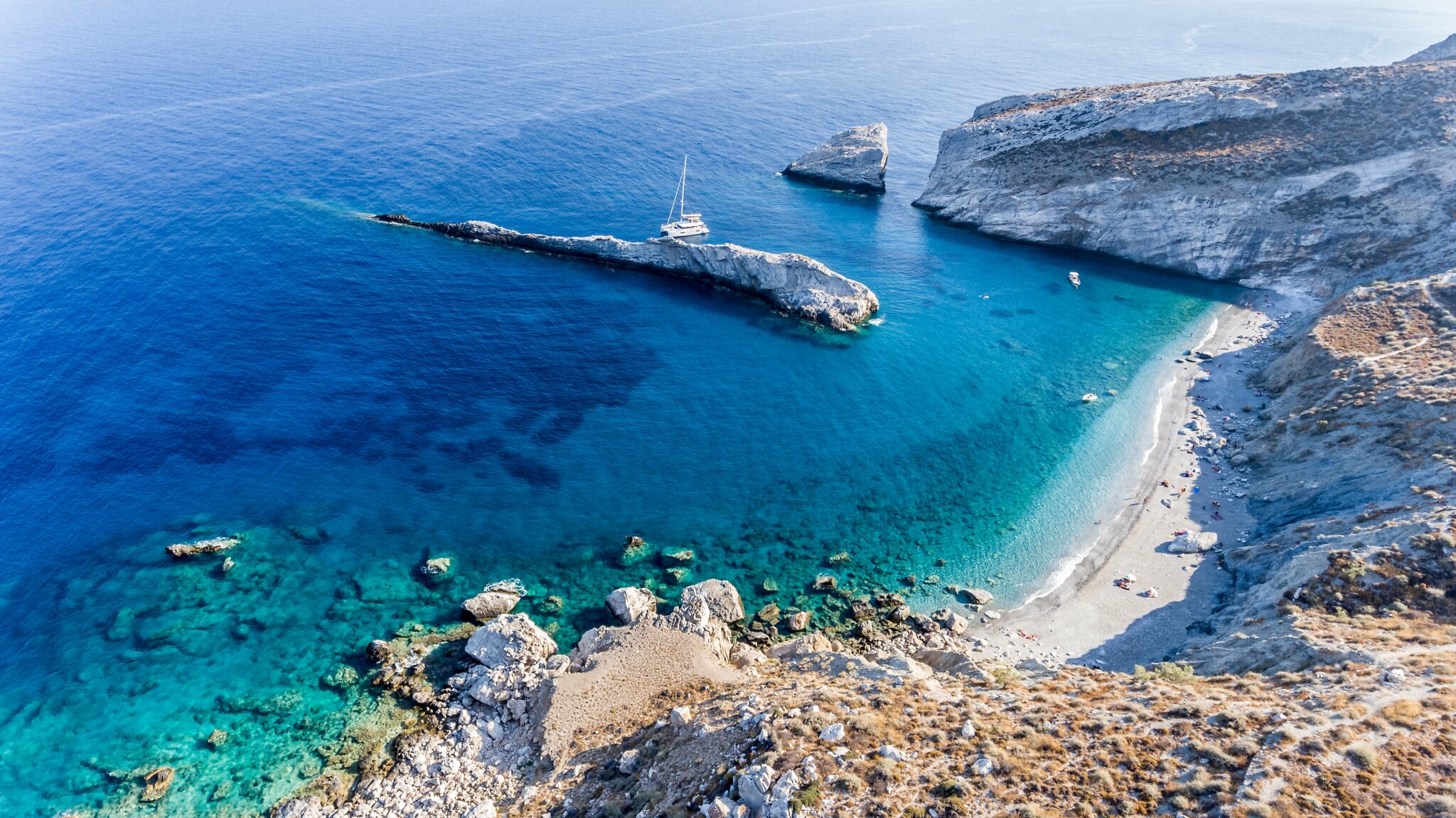
From Santorini, the route shifts into quieter territory with Folegandros. The cliff-edge Chora and its old Kastro quarter offer one of the most atmospheric evenings in the Cyclades.
Lunch: Katergo
Lunch and a swim stop at Katergo or one of the island’s other wild beaches, minimal development, clear water, a real contrast after Santorini’s crowds.
Afternoon: the walk to Panagia
The zigzag path up to Panagia church gives wide views back across the sea, and the coastline along the way is dotted with simple, unspoiled coves.
Evening: dinner in Chora
Dinner in Chora, tavernas strung along the clifftop squares, with the walk up to Panagia worth doing again for the view alone if the sunset was missed earlier.
Overnight: Folegandros.
Don’t Miss
- Swim and snorkel stop at Katergo
- The sunset walk up to Panagia church
- Dinner in Chora’s clifftop squares
Day 6 – Folegandros to Sifnos (about 30nm)
Morning: the sail north-west
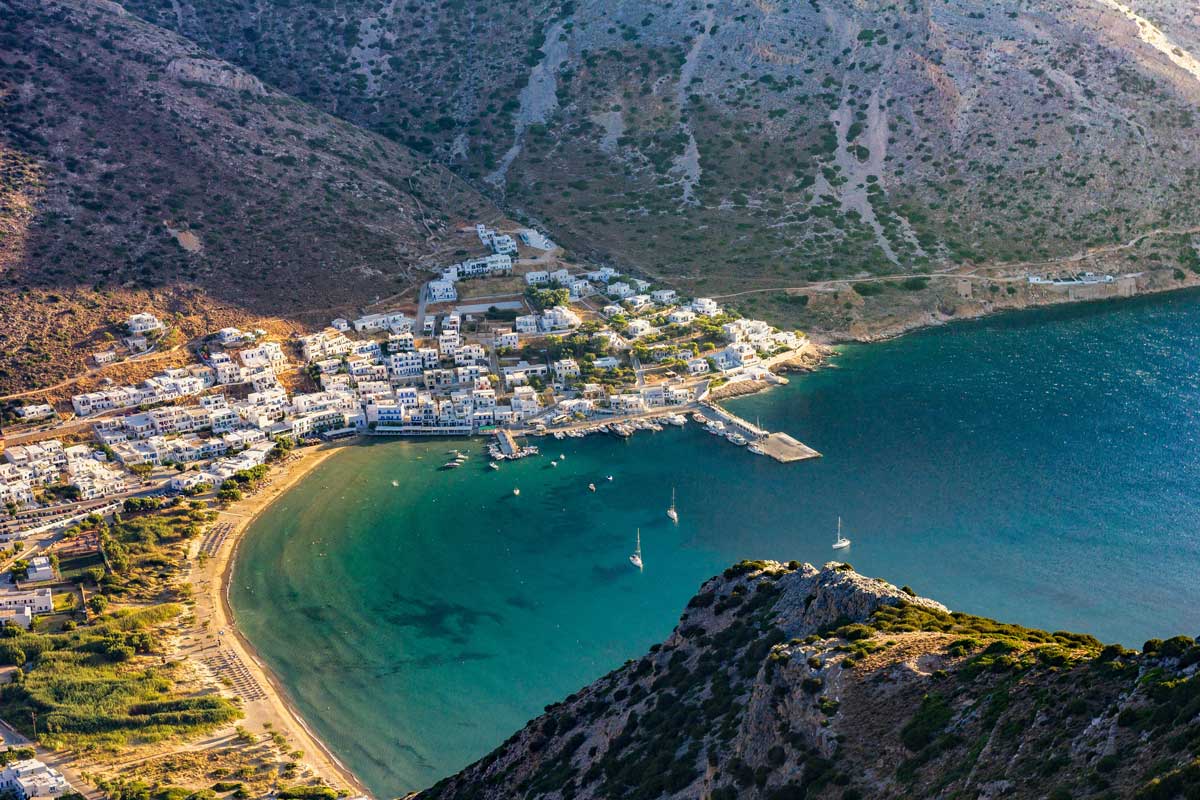
The sail north-west to Sifnos brings you to an island known across Greece for its food and pottery. Slow-cooked chickpeas (revithada) and clay-pot stews are part of the island’s identity.
Lunch: Vathi or Faros
During the day the catamaran can drop anchor in bays like Vathi or Faros, both ideal catamaran anchorages, for a long lunch and swim.
Afternoon: Kastro
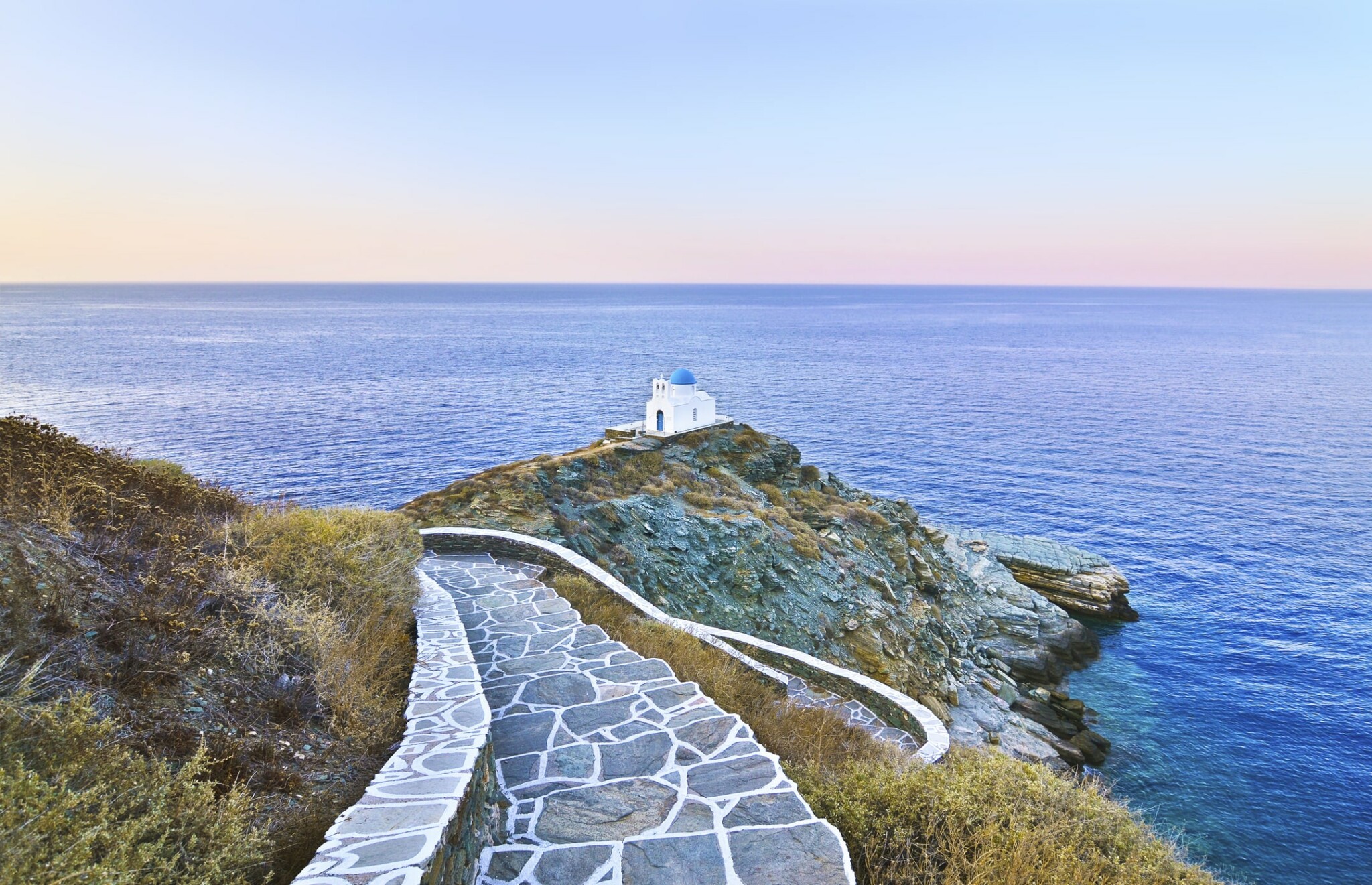
Moving round to Kamares for the night, with time along the way for Kastro and the Church of the Seven Martyrs, perched on its own rock outcrop above the sea.
Evening: revithada
Traditional revithada and other Sifnos dishes in a local taverna, this is the night to book ahead if the group cares about dinner.
Overnight: Kamares, Sifnos.
Don’t Miss
- A long lunch and swim at Vathi or Faros
- Kastro and the Church of the Seven Martyrs
- Traditional slow-cooked revithada in a local taverna
Day 7 – Sifnos to Mykonos (about 48nm)

Morning: the longest leg
The longest leg of the week, heading towards Mykonos. On a catamaran it is a rewarding open-water sail when the meltemi cooperates, and a real demonstration of what a cruising catamaran is built for.
Lunch: at anchor underway
Lunch at anchor partway across, before the final approach into Mykonos in the afternoon.
Afternoon: Little Venice
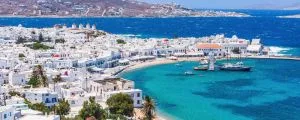
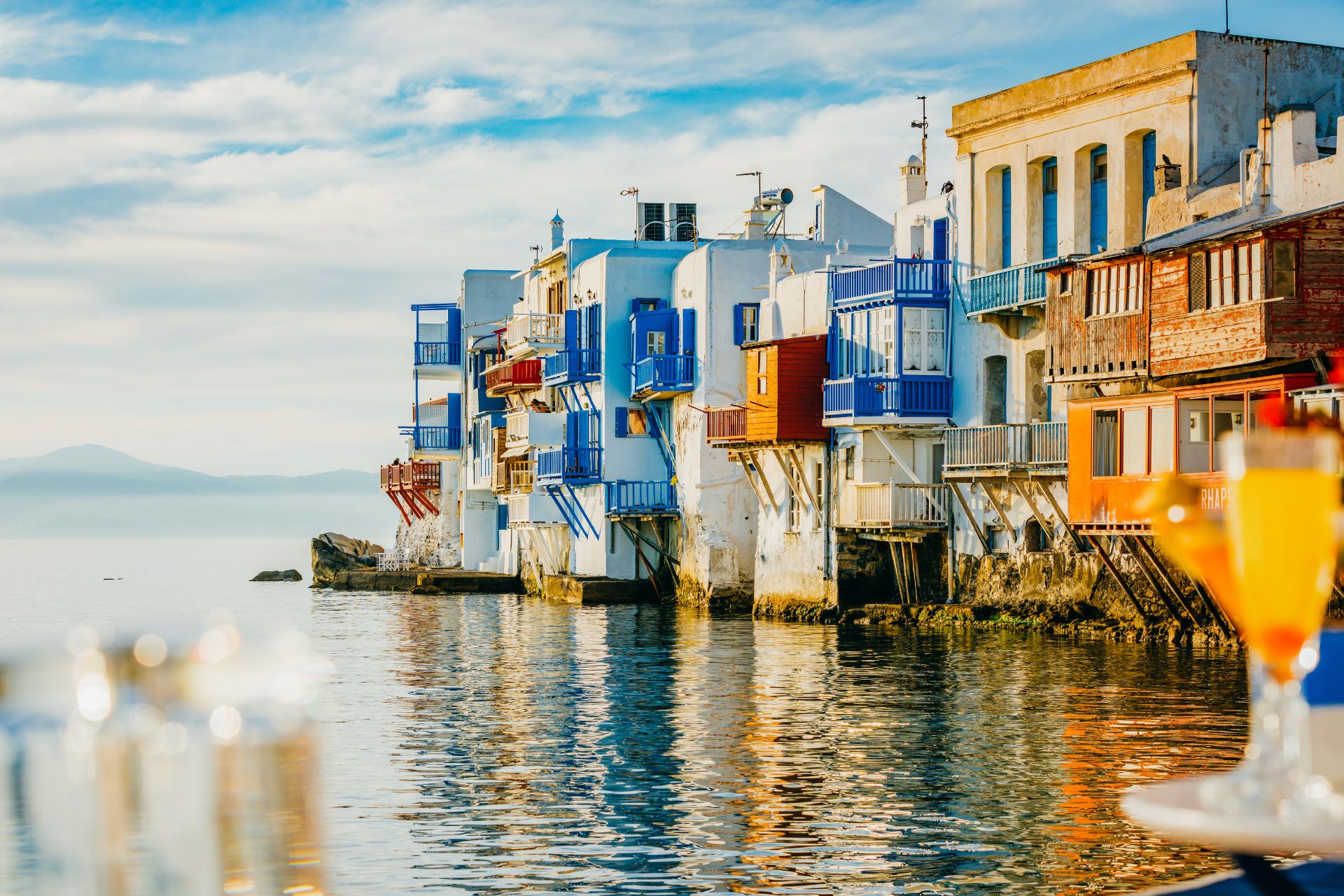
Mykonos is a sharp contrast to the quieter islands earlier in the week: the Kato Mili windmills, Little Venice, galleries, designer shops, and a highly polished hospitality scene.
Evening: Delos and Rhenia, if there is time
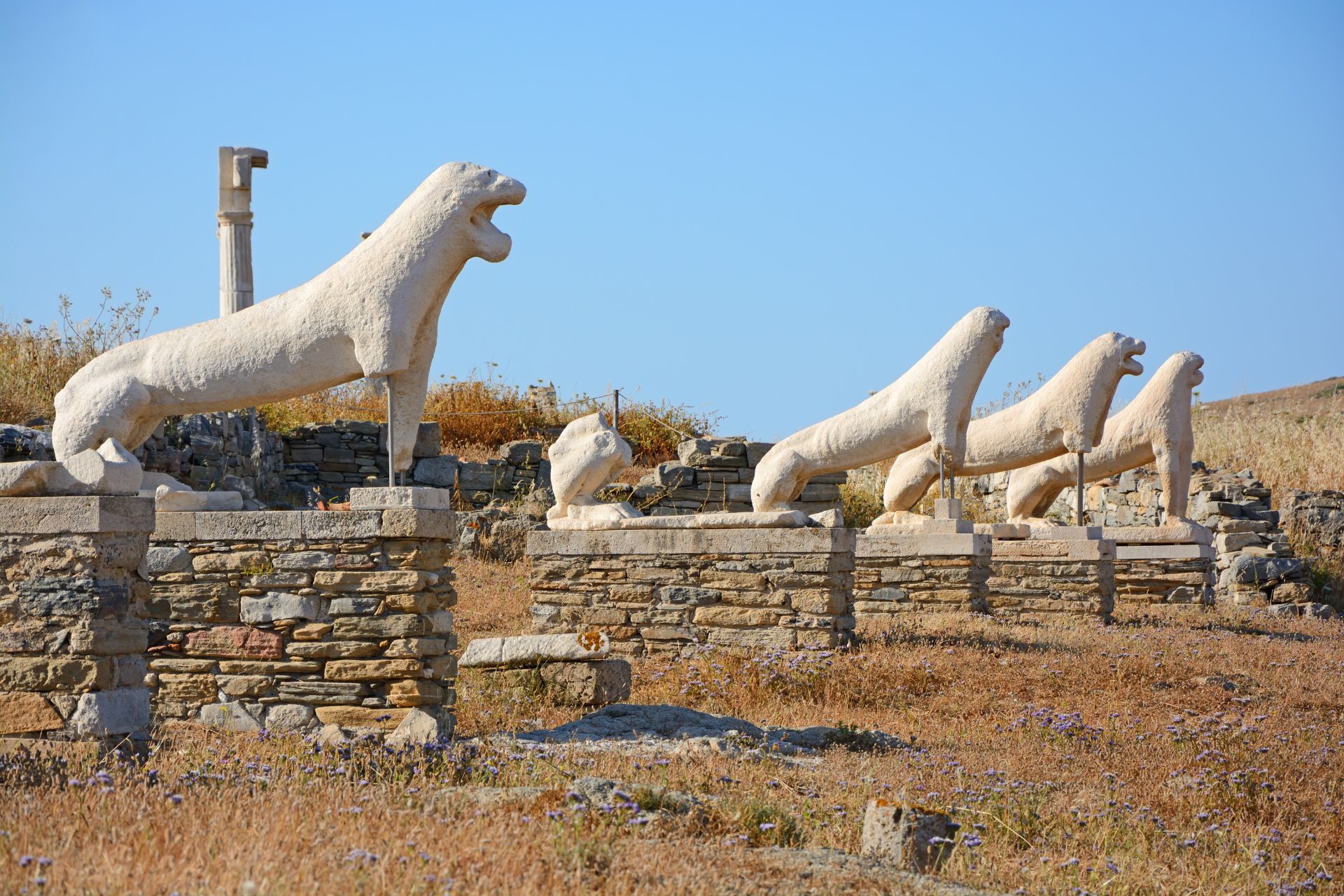
Mykonos also offers easy access to the archaeological site of Delos, a UNESCO World Heritage site and Apollo’s mythical birthplace, and the swimming bays of Rhenia, worth the detour if the schedule allows.
Overnight: Mykonos.
Don’t Miss
- The Kato Mili windmills and Little Venice at golden hour
- An open-water sailing day, catamaran country at its best
- An optional Delos and Rhenia excursion
Day 8 – Mykonos to Paros, Return (about 22nm)
Morning: closing the loop
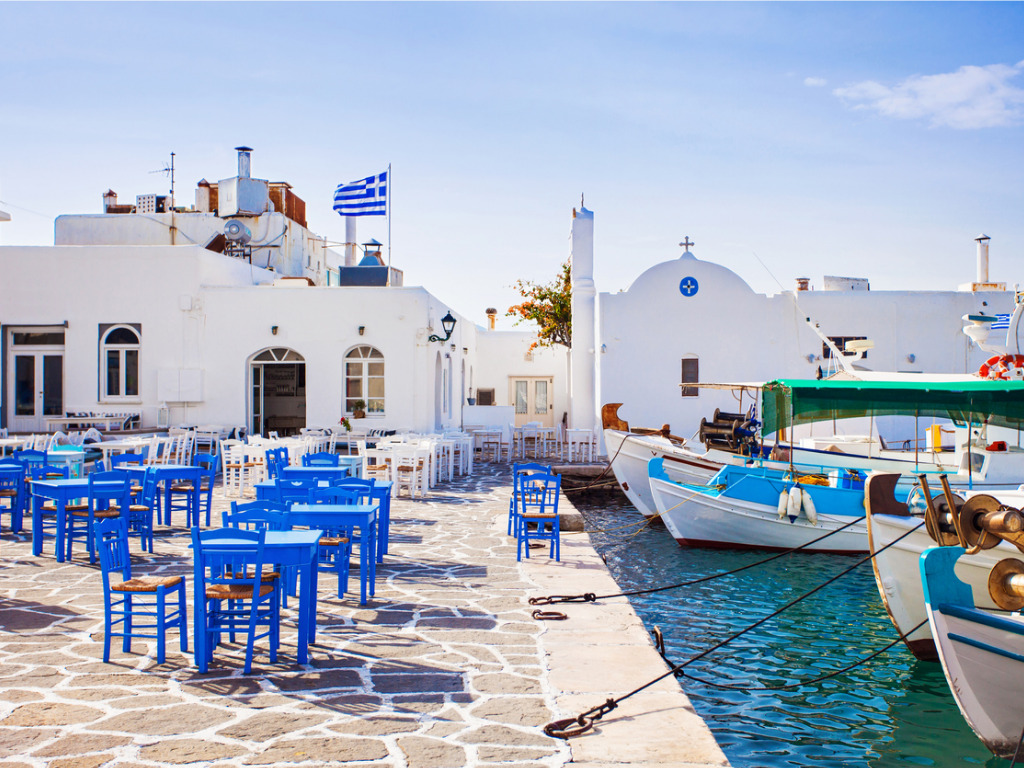
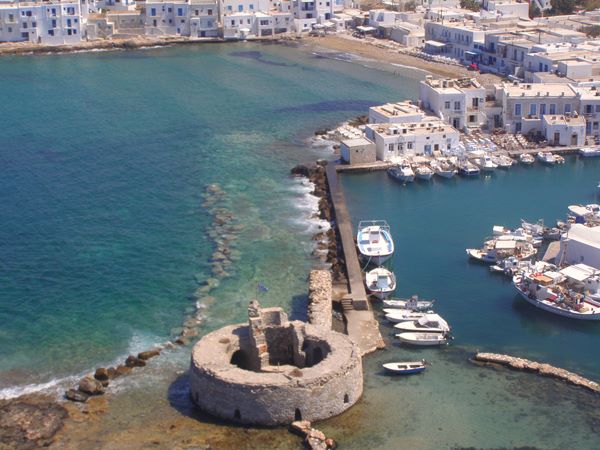
The final hop back to Paros closes the loop, usually a relaxed sail with the week’s mileage already behind you.
Lunch: a last swim
Time for a last swim stop and lunch on board before returning to Parikia for disembarkation.
Afternoon: back to Parikia
Many guests choose to spend a final night on Paros ashore, which takes the pressure off flight and ferry connections and gives a softer landing after a week at sea.
Evening: a farewell dinner
A farewell dinner in Parikia or Naoussa rather than rushing straight to the airport, the harbour towns are worth one more evening.
Overnight: Parikia, Paros.
Don’t Miss
- A last swim stop before returning to Parikia
- A farewell dinner in Parikia or Naoussa
- Open Aegean views on the final crossing from Mykonos
Making This Week Work
The yacht you need
Paros sits in the middle of the chain, which is exactly why this route works so well on a catamaran: no leg except the Sifnos-to-Mykonos run is over about 30nm, and every overnight has a sheltered option whichever way the meltemi blows. A catamaran’s shallow draft also opens up anchorages a deeper motor yacht has to skip, including the approach into Koufonisia.
How weather can change the week
The meltemi is a real factor on the Sifnos-to-Mykonos crossing especially. Your captain may reorder the week around a real spell rather than fighting it; every stop on the route stays the same either way.
Best Months to Book
- Best: June or the second half of September, when the meltemi is far softer
- Toughest: mid-July to mid-August, still very charterable, just build in flexibility around the long Mykonos crossing
Flights or a fast ferry get you to Paros easily in season. If your group would rather start from an international airport, the Mykonos round trip covers similar water. Tell us your dates and group size and we will shortlist catamarans based in either.





 iMessage
 WhatsApp