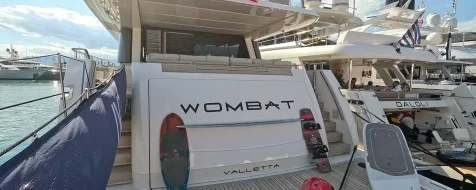
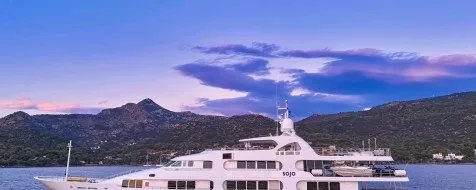
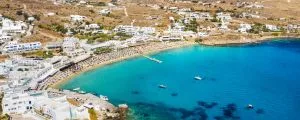
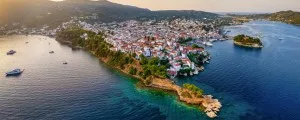
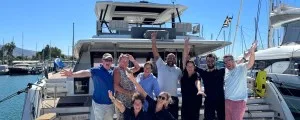
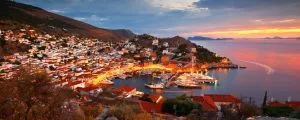
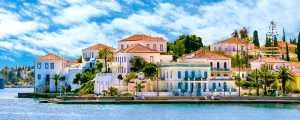
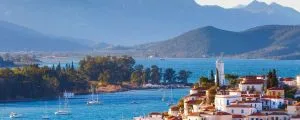
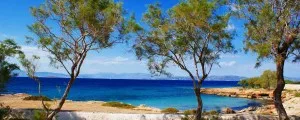
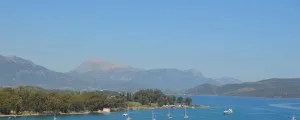
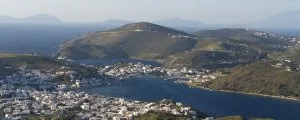
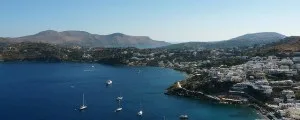
This is the week for a group that has Mykonos and Santorini on their must-see list and does not want to fly between them. If your Greece charter has to include both of the two most famous islands, and you would rather sail there than change planes, this route is built for exactly that. Our guide to Cyclades yacht charter has the full picture.
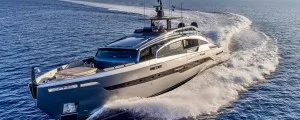
Be honest with yourself about the trade first, because we would rather you know it now than on Day 5. This is 250 nautical miles in seven days, which is a lot for one week, so we sell it almost exclusively on motor yachts with real cruising speed. What would be an exhausting slog under sail becomes a comfortable three-to-four-hour run at 20 knots. In exchange for that pace, you get both headline islands plus six quieter ones most first-time visitors never see: Kea, Syros, Delos, Paros, Sifnos, Kythnos.
The week runs Saturday to Saturday: board Saturday afternoon in Athens, hand back the following Saturday morning, seven nights on board. Your captain adjusts the order and the swim stops to the meltemi, Greece’s summer wind, so treat the days below as the shape of the week rather than a fixed schedule.
Day 1 – Board in Athens, First Night in Kea (about 43nm)
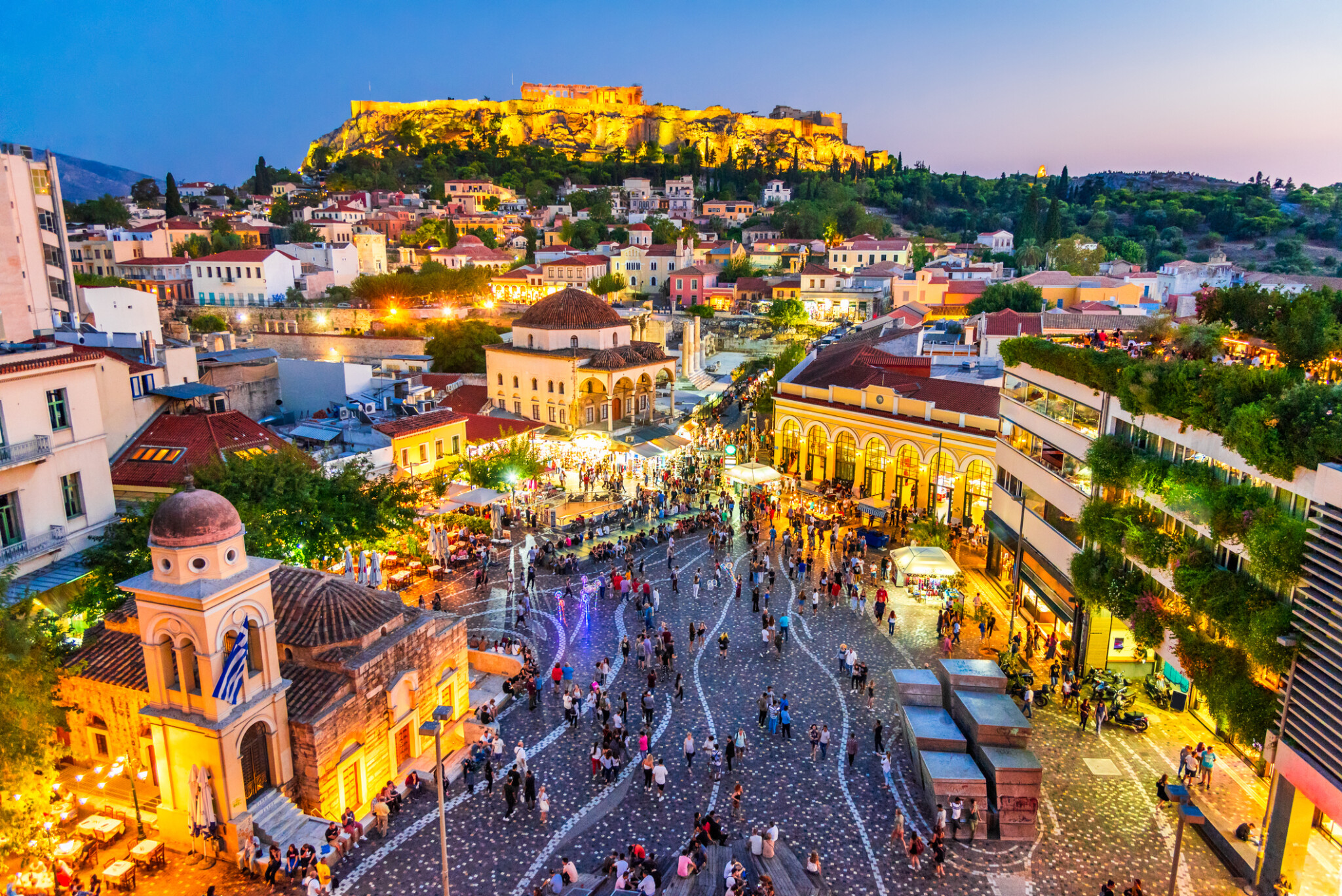
Midday: boarding at Alimos or Agios Kosmas
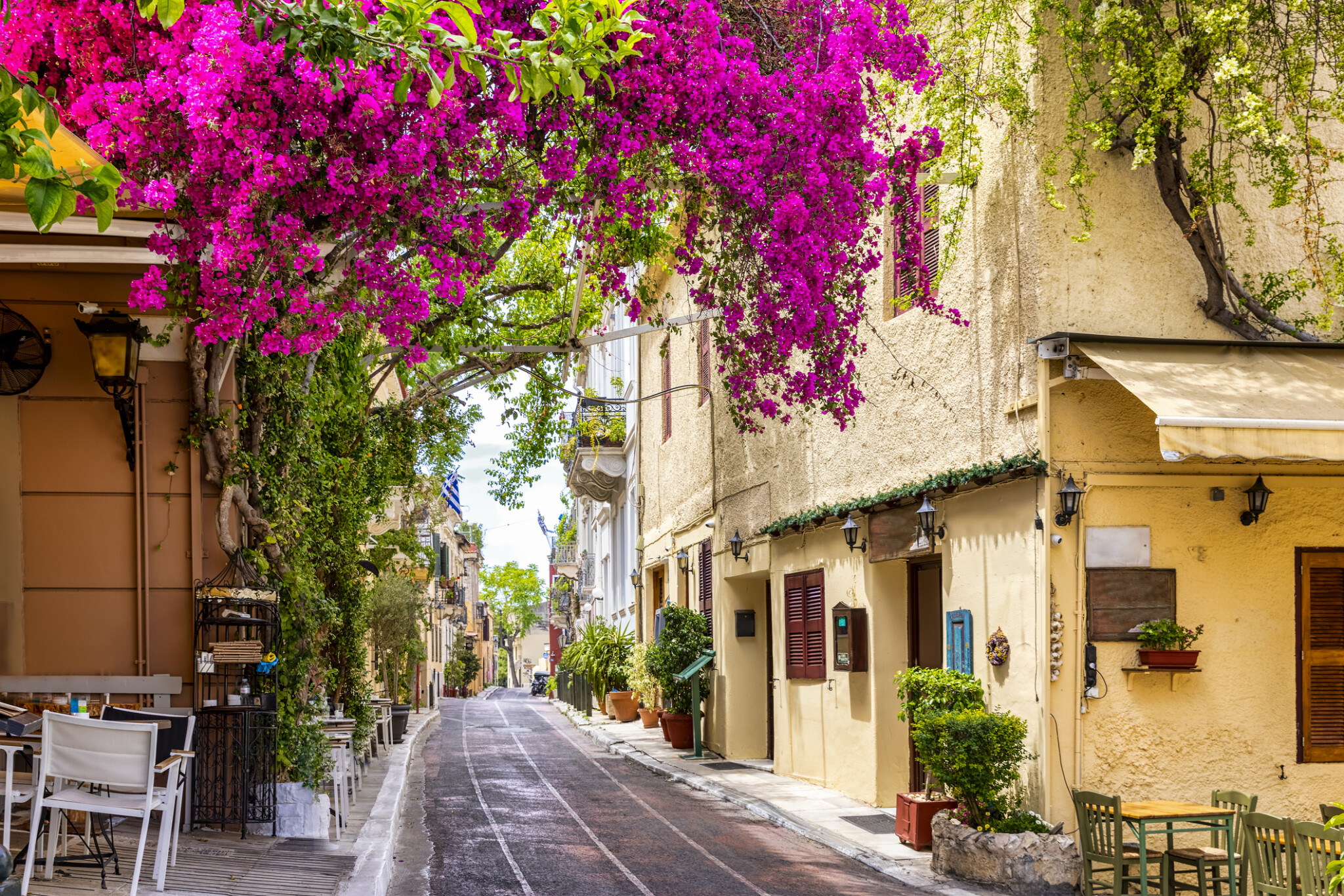
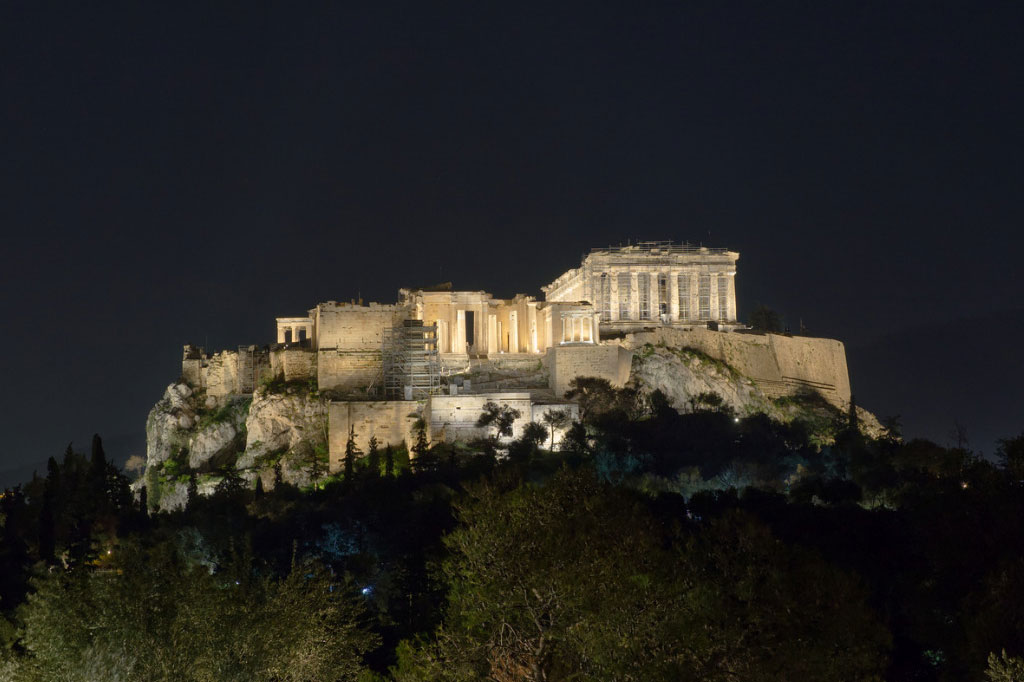
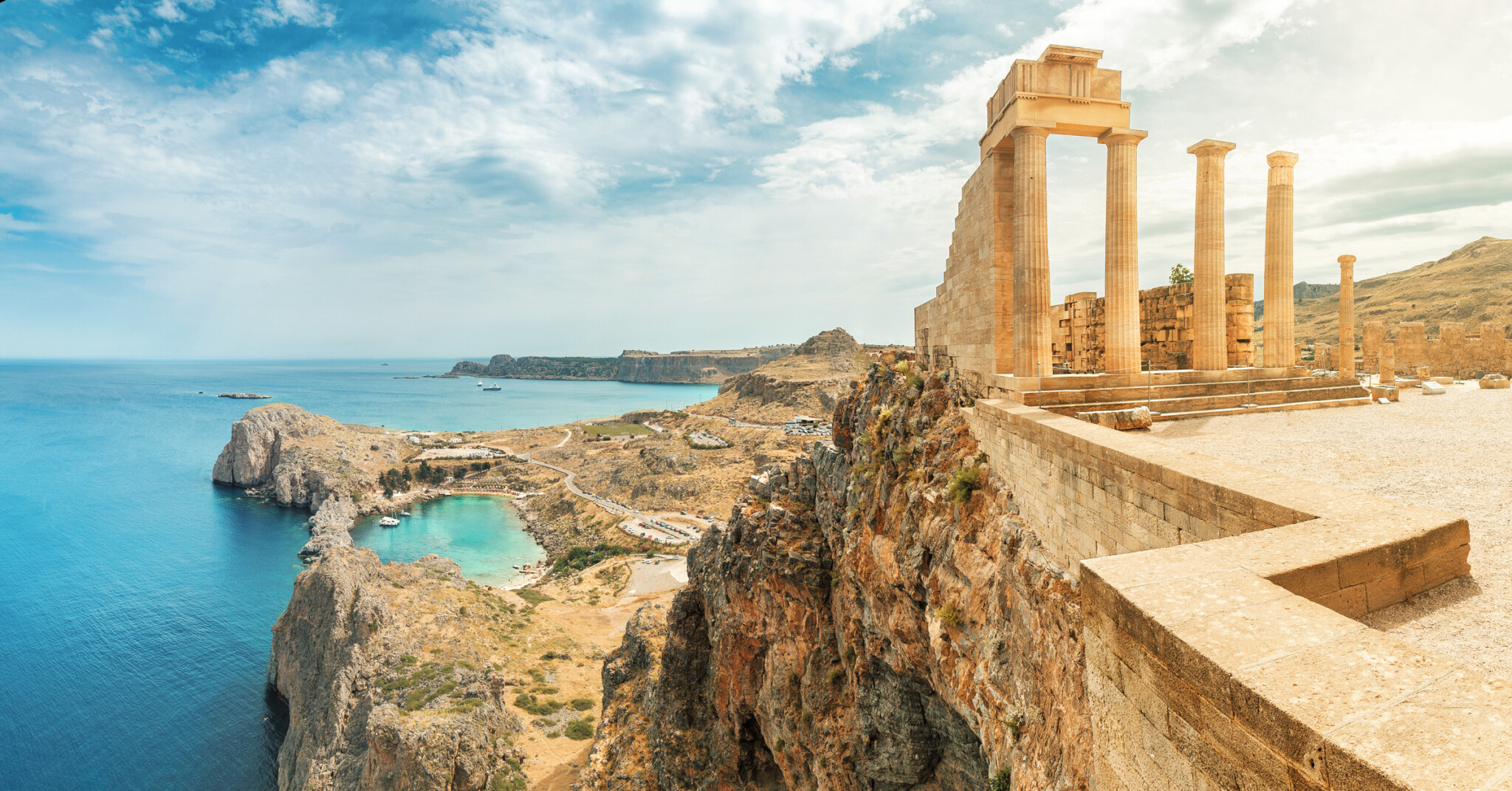
Embarkation is Saturday early afternoon at Alimos or Agios Kosmas marina, a short transfer from the airport. If you can, fly in a day early and see Plaka and the Acropolis before you board, it is a better use of that time than trying to fit it in once the week is already running. Once you are aboard, boarding itself is quick: bags to the cabins, a safety briefing, and the crew through the preference sheet if you have not already sent one.
Afternoon: out to Kea
You are not staying put. Most crews are casting off within the hour, out through the Saronic and across to Kea, the closest true Cyclade to the mainland and, for centuries, the first real stop for anything sailing south out of Piraeus. It is a real sail, roughly 43 nautical miles, so settle in and let the first miles of the week pass, this is the crossing that actually gets you into the islands. Kea looks different from the Cyclades of postcards: greener, with pine and almond groves running down to the water instead of bare rock, because it sits just far enough north to keep some cover from the summer meltemi wind. Some captains will swing past Cape Sounion and the Temple of Poseidon on the way if the timing and the light work out, the temple stands on a cliff above the water and was as much a landmark for returning sailors as a place of worship; ask, but do not plan the day around it.
Evening: Vourkari harbor
A quiet first island night in Vourkari harbor, a small fishing harbor on Kea’s north coast, among a handful of local tavernas with nothing touristy about them, mostly because Kea has never chased the crowds Mykonos and Santorini get. If anyone wants a walk before dinner, the road up to Ioulida, the island’s hilltop capital, is worth the short taxi: houses stacked up a ridge, and above the town, a five-minute climb to the Lion of Kea, a six-metre lion carved straight into the living bedrock sometime in the 6th century BC. Nobody knows for certain who carved it or why; one local story says Zeus sent it to drive off water nymphs who had made the island too green and comfortable for its own good.
Overnight: Vourkari harbor, Kea.
Don’t Miss
- The Lion of Kea, carved into the bedrock above Ioulida
- Cape Sounion from the water, if the timing allows
- Fresh fish in Vourkari, no crowds
Day 2 – Kea to Syros (about 38nm)
Morning: water toys in Kea
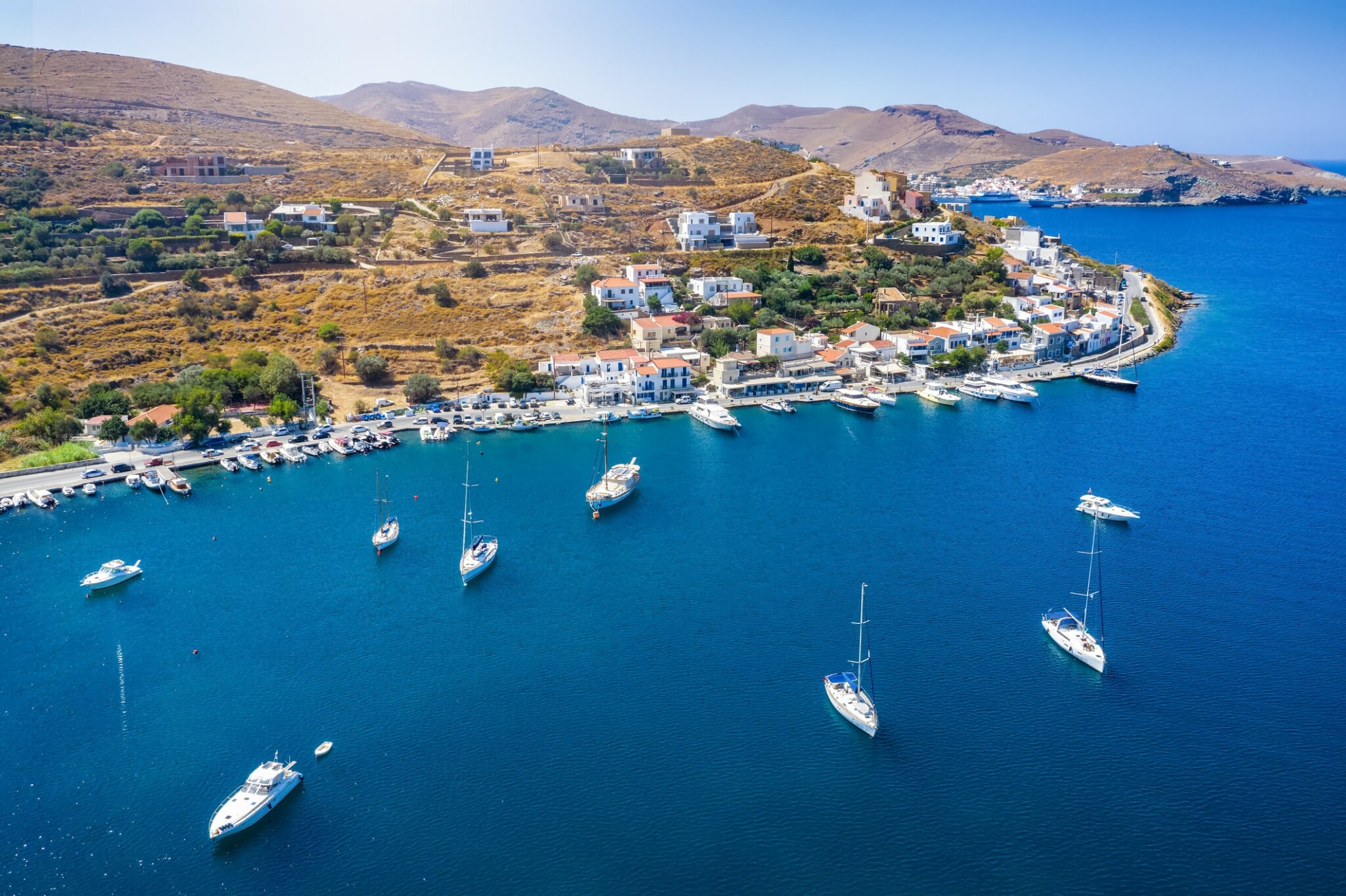
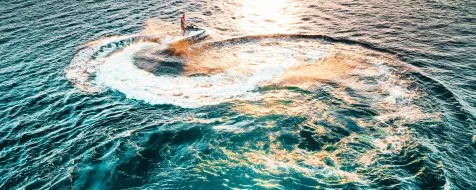
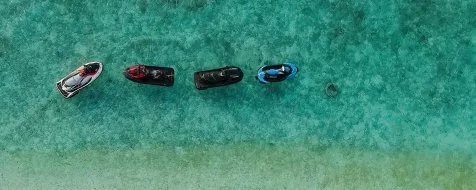
A morning of water toys in Kea’s protected bay, usually the day the jet skis and paddleboards come down for the first proper session of the week. The bay is sheltered enough that this is also a good morning for anyone still finding their sea legs: flat water, an easy swim off the back of the boat, and no rush to be anywhere.
Lunch: on the crossing
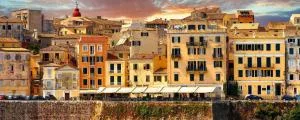
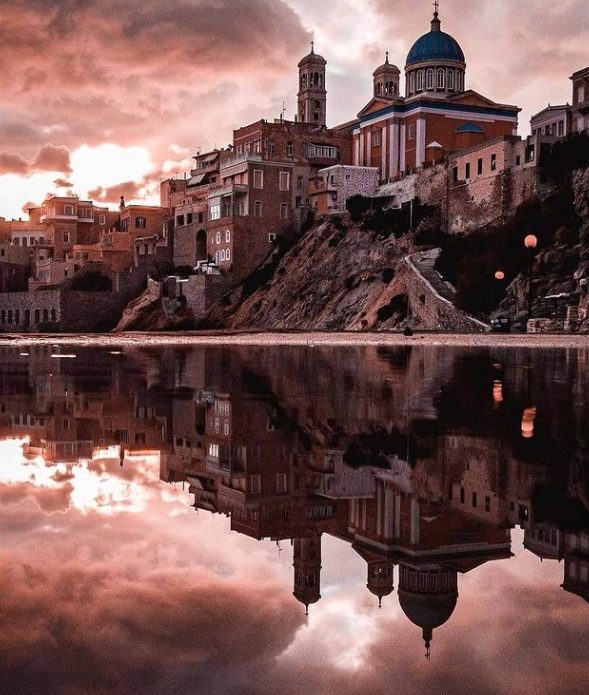
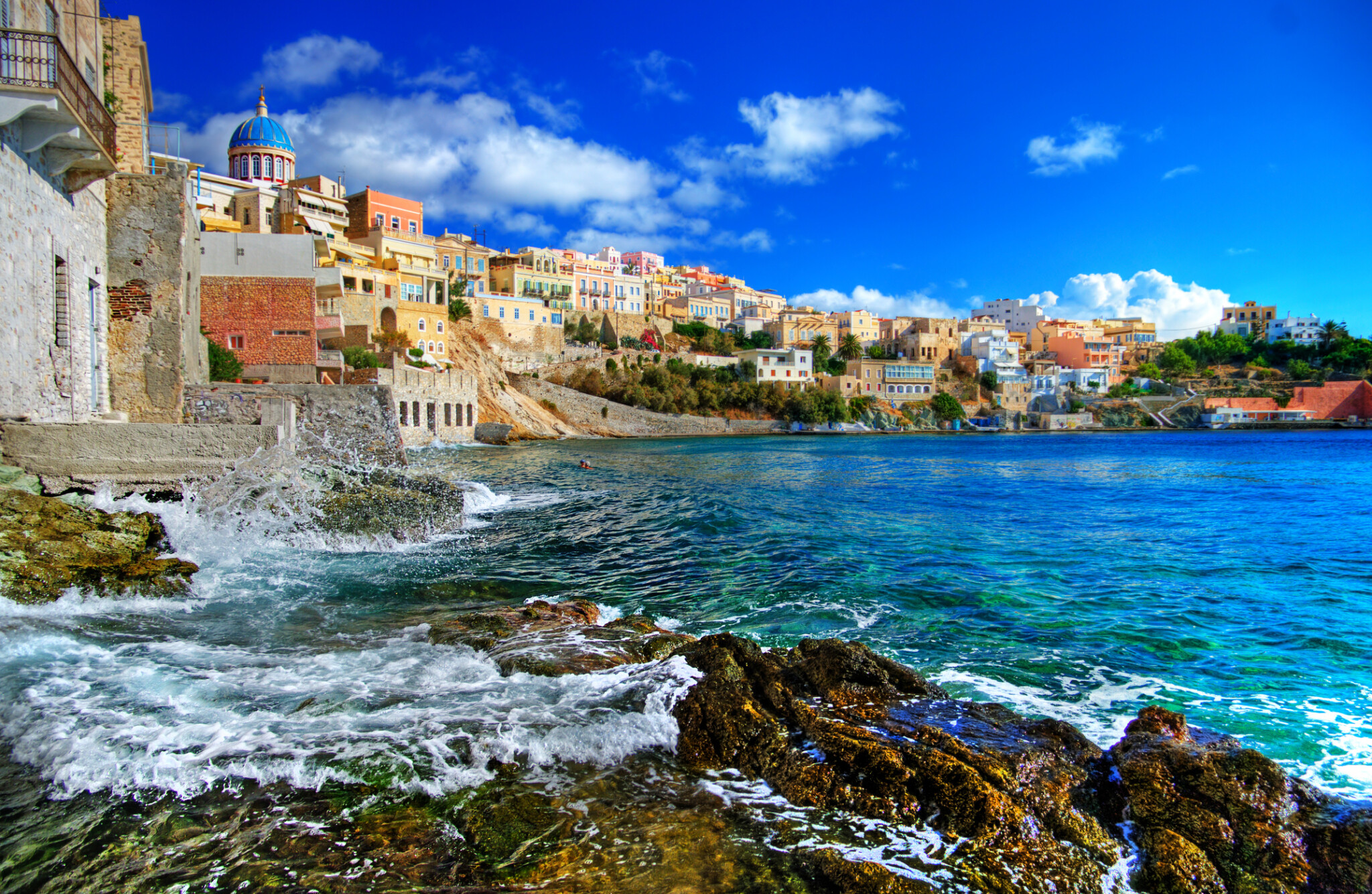
Lunch underway on the run to Syros, the administrative capital of the Cyclades and, on arrival, unlike anywhere else in the islands. Most Cycladic towns are small and white; Syros’s harbor town climbs the hillside in tiers of pastel neoclassical mansions, a skyline built by money, not by tradition.
Afternoon: Ermoupolis
Ermoupolis is a real working Greek city, not a resort town, and the reason is history: after the Greek War of Independence in 1821, refugees fleeing the fighting on Chios and Psara settled here, and within a few decades Ermoupolis had grown into the commercial and shipping capital of the newly independent Greek state, briefly outranking Athens and Piraeus. That money built the wide neoclassical squares, the grand harborfront, and the Apollo Theatre, a small opera house modeled on Milan’s La Scala with four tiers of boxes and a painted ceiling, still used for performances today. Walk it before dinner: the main square, Miaouli, the marble staircases up toward Ano Syra, and the working harbor below, still a real port rather than a marina built for show.
Evening: dinner ashore
Dinner ashore here feels genuinely local because it is, Syros does not live off tourism the way its neighbours do; it has its own economy, its own shipyards, and its own reasons for existing that have nothing to do with charter guests.
Broker insight
This route saves the big Santorini finish for last, but the quiet middle days around Kea and Syros are what guests remember. Do not rush them just to reach Santorini early.
 Leonidas Marousos
Charter Broker
Leonidas Marousos
Charter Broker
Overnight: Ermoupolis, Syros.
Don’t Miss
- The neoclassical squares of Ermoupolis
- A dinner with no tourist menu in sight
- The Cyclades’ one real city
Day 3 – Syros to Delos and Mykonos (about 28nm)
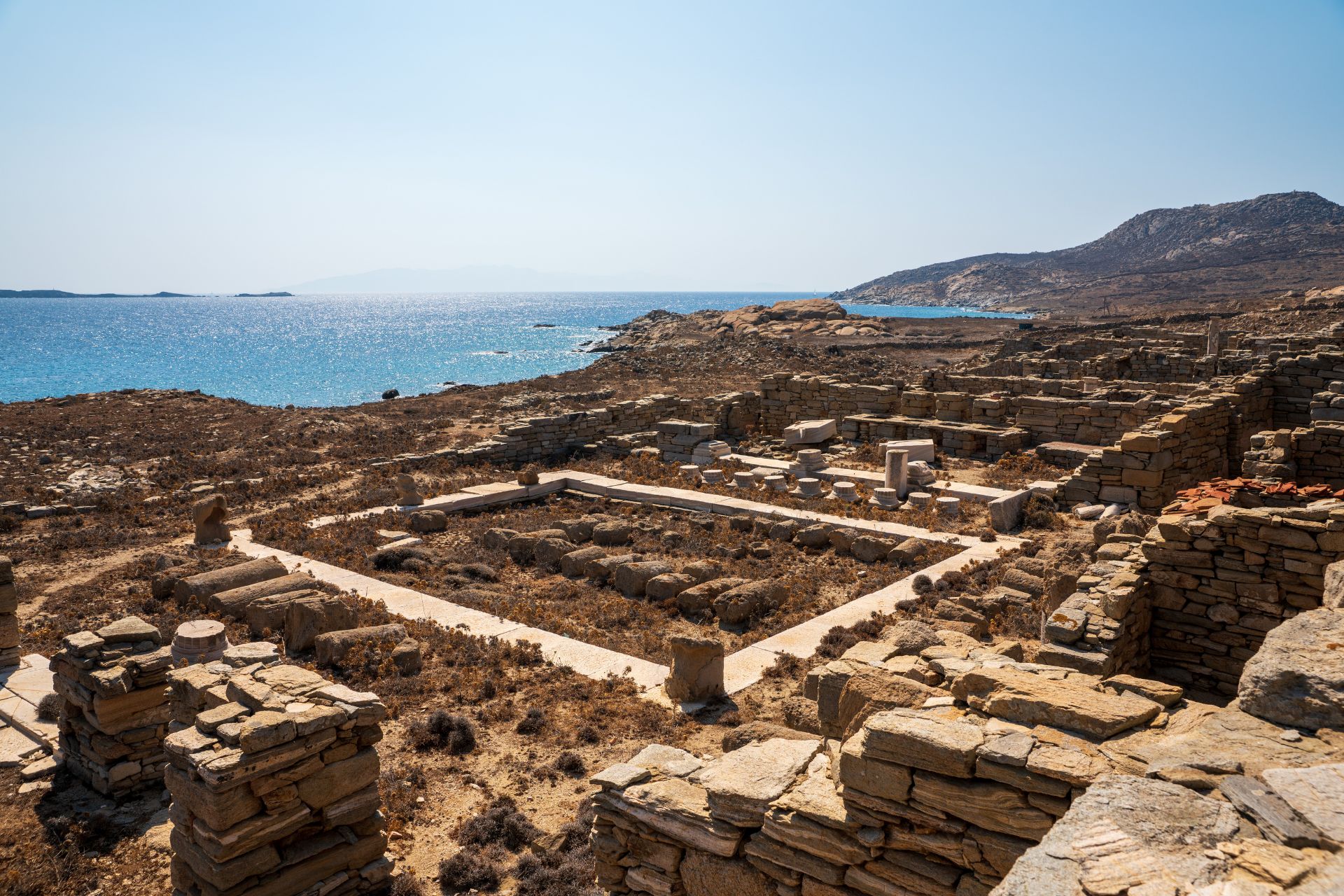
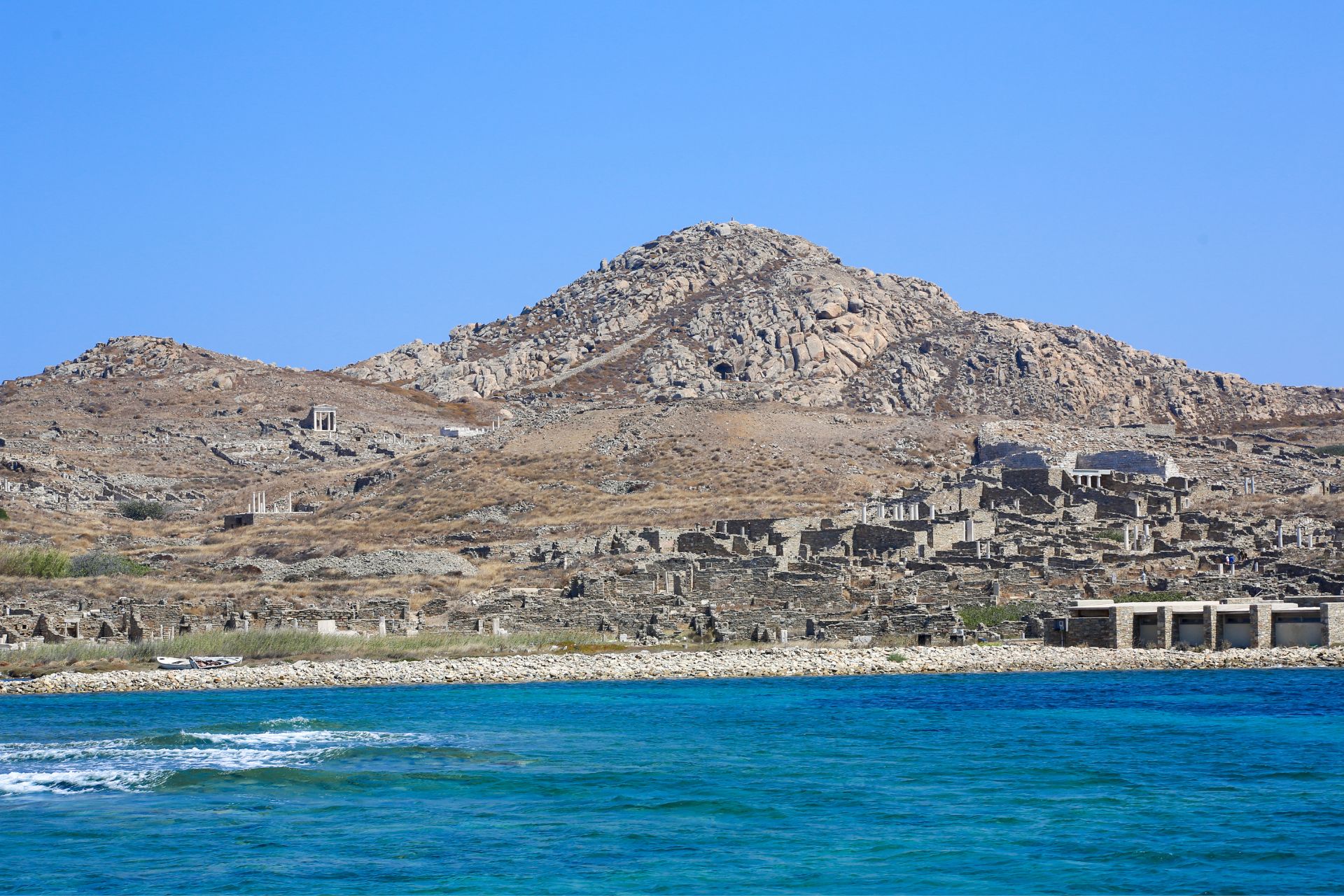
Morning: Delos
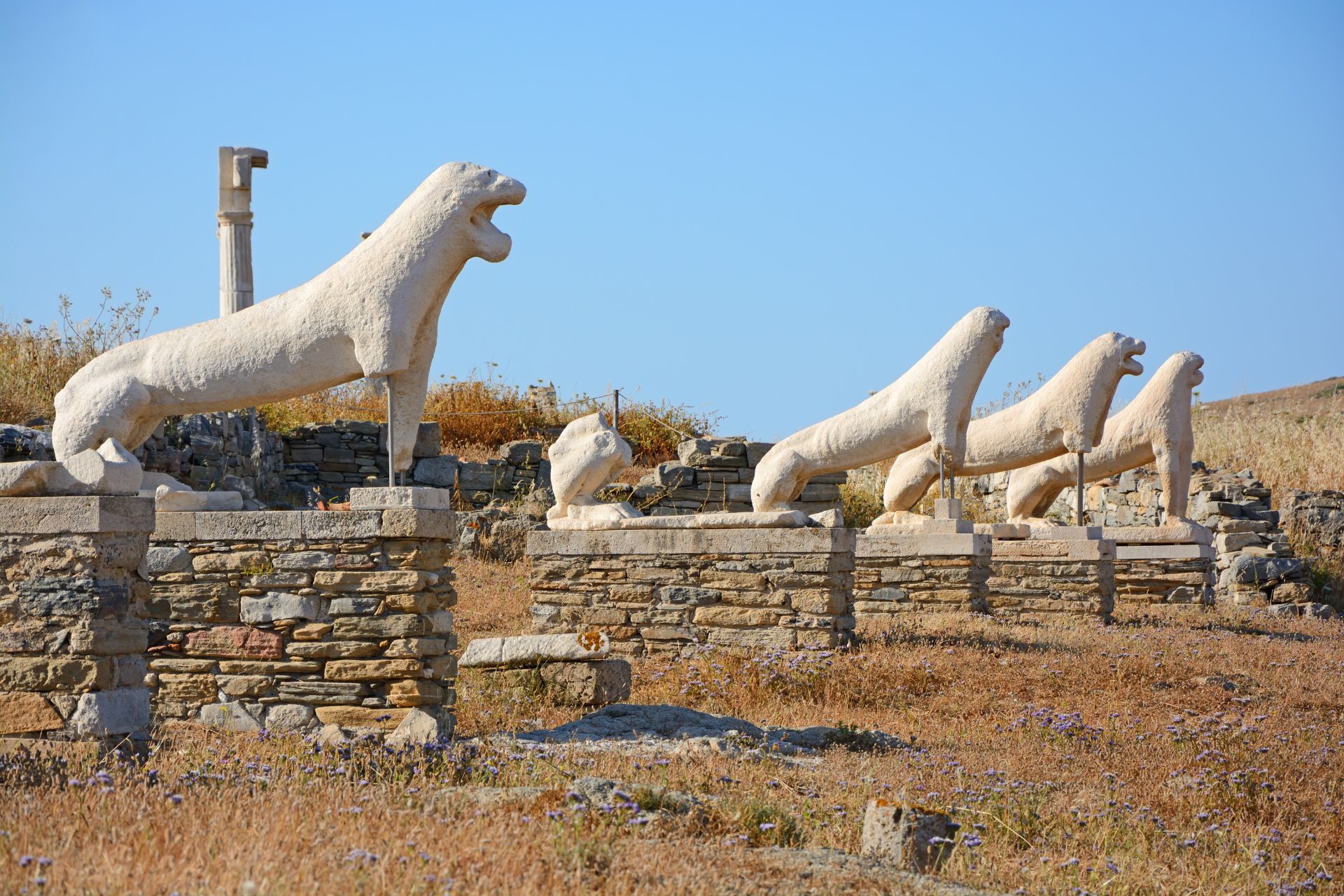
This is the day the Cyclades earn their name: the islands form a rough circle, kykloi, around Delos, the sacred island at their center, and its ruins are one of the great archaeological sites of Greece. In antiquity Delos was considered the birthplace of Apollo and Artemis, and the rule was absolute: nobody was permitted to be born or to die on the island, anyone close to either was ferried across to Rhenia first. That taboo is part of why so much survived here, a small population and a huge amount of sacred building, including the Terrace of the Lions, a row of marble guardian lions set up by the Naxians in the 7th century BC to watch over the sanctuary. Anchor off and go ashore early, before the heat and the day boats, and give it two full hours, there is more here than a quick walk covers.
Lunch: on the short hop to Mykonos
Lunch on the short crossing into Mykonos, twenty minutes from Delos.
Afternoon: Mykonos old town
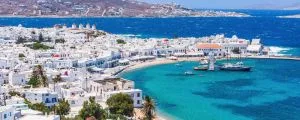
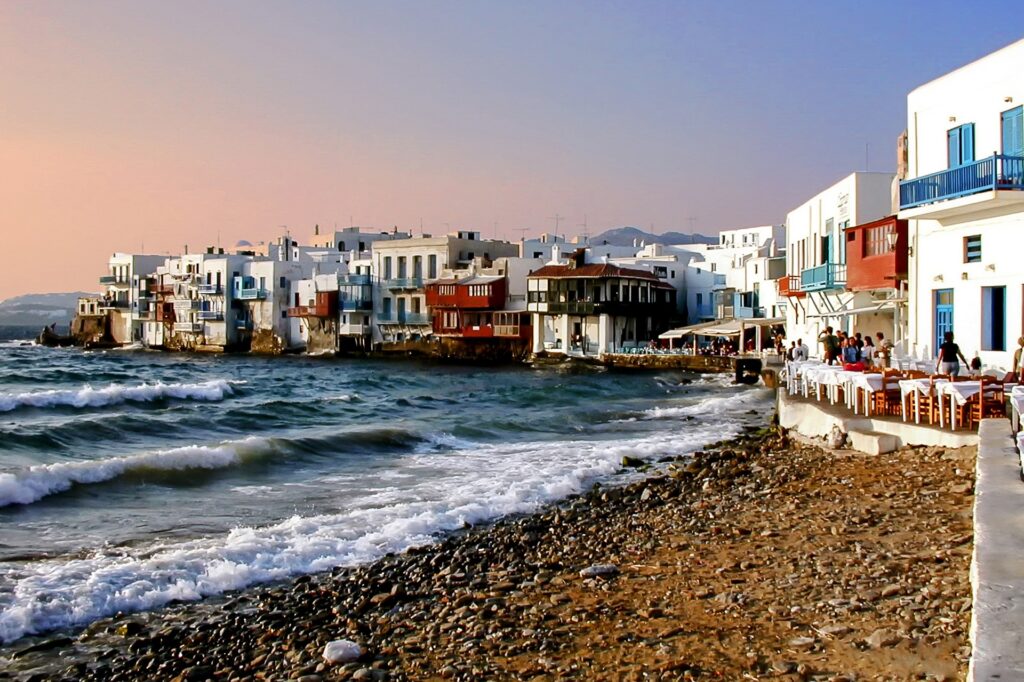
The afternoon is yours in Mykonos: the winding old town, the shops, a swim if the anchorage suits it. The lanes were said to be laid out on purpose to confuse pirates raiding the coast centuries ago; whether or not that is true, the Aegean genuinely had a serious piracy problem for hundreds of years, and getting lost in the maze is still the best way to spend an hour here, every turn opens onto a different whitewashed corner.
Evening: the windmills at sunset
Dinner in the old town, the windmills of Kato Mili at sunset, and as much or as little nightlife as your group wants. The windmills are not decoration, they were built by the Venetians to grind wheat and barley into paximadi, the hard, long-lasting ship’s biscuit that fed sailors on months-long voyages; Mykonos sat on the trade route and the meltemi wind made it one of the best-placed islands in the Aegean to mill grain, right up until electricity made the mills obsolete in the early 1900s. We pre-book restaurants here in peak months, walk-ins are genuinely hard to get in July and August.
Overnight: Mykonos.
Don’t Miss
- Delos before the heat and the crowds
- The windmills at sunset
- Booking dinner ahead in peak season
Day 4 – Mykonos to Paros and Naxos (about 38nm)
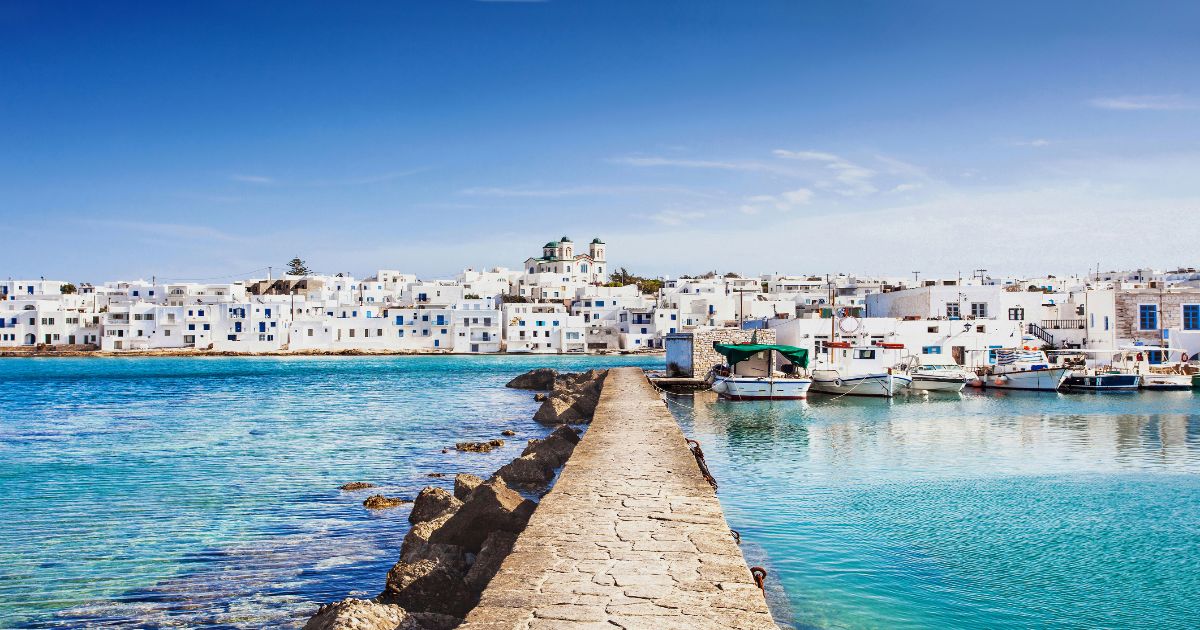
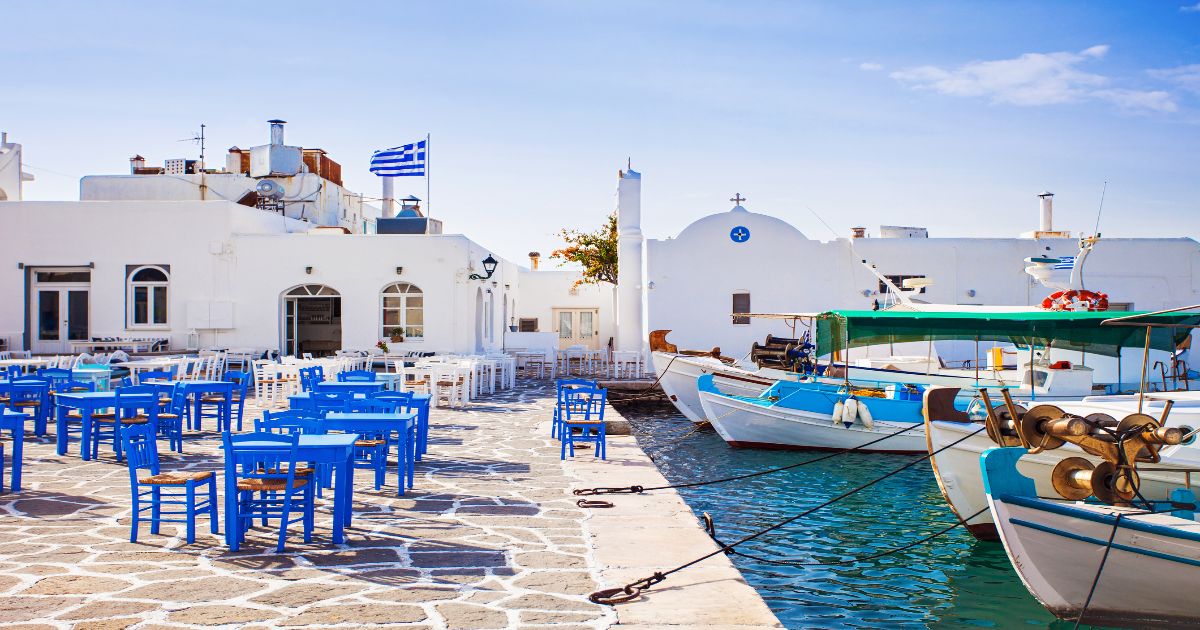
Morning: leaving Mykonos
An easy-paced morning out of Mykonos. This is the day the route swings west into the middle of the Cyclades, about 28 nautical miles to the first stop, so there is no need to rush breakfast.
Lunch: Naousa, Paros
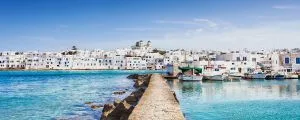
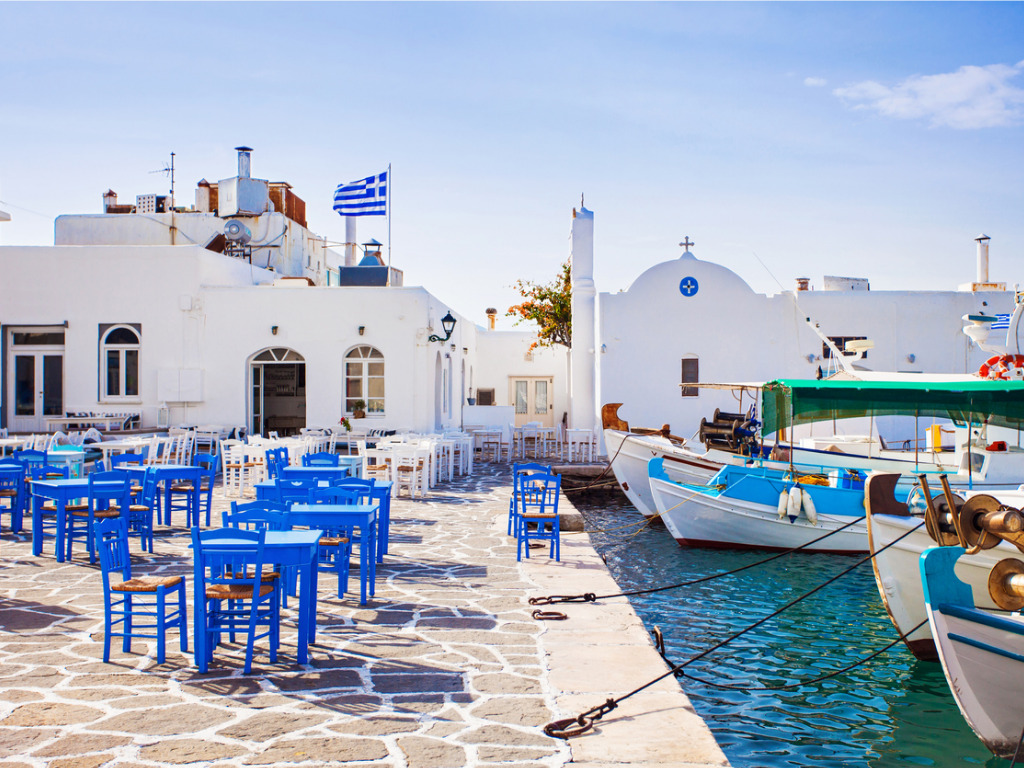
Paros sits almost exactly between Mykonos and Naxos, and Naousa on its north coast is the reason to stop. The half-submerged ruin at the harbor mouth is a real Venetian castle, built by the Sommaripa family in the late 13th century and rebuilt in the 14th, a watchtower positioned to spot pirate and Ottoman raiders before they reached the port; Venetian rule here lasted more than three hundred years until the corsair Barbarossa sacked the island in 1537. None of that history gets in the way of lunch: whitewashed lanes behind the harbor, working fishing boats tied up next to the tavernas, and some of the best lunch tables in the Cyclades right on the quay. An hour or two ashore is enough, this is a lunch call, not the overnight.
Afternoon: on to Naxos
Back aboard for the short final hop to Naxos, the largest island in the Cyclades and a proper contrast to Mykonos: green, working farmland behind the beaches, olive groves and vineyards rather than bare rock, and an old town that has stayed unpretentious despite how well known the island is.
Evening: under the Portara
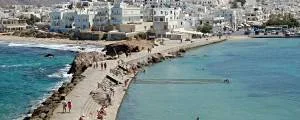
Naxos harbor sits right under the Portara, the massive marble doorway of the unfinished Temple of Apollo. It was begun in the 6th century BC by the tyrant Lygdamis, planned to be the largest temple in the Aegean and built from marble quarried a few miles inland at Flerio; Lygdamis was overthrown before the roof went on, and the temple was abandoned mid-build. The doorway is essentially all that survived, twenty-five centuries of a building that was never finished. Dinner ashore in the old town, with the gate lit up above the water after dark.
Overnight: Naxos.
Don’t Miss
- Lunch on the quay in Naousa, Paros
- The Portara lit up after dark
- Two islands, one easy day
Day 5 – Naxos to Santorini (about 65nm)
Morning: a long, deliberate start
The longest single sail of the week, about 65 nautical miles, and worth doing properly: an early departure gives you the whole day at sea without eating into the evening you are sailing toward.
Lunch: underway
Lunch aboard on the crossing. There is no stop to break this one up, the whole point of the day is arriving into Santorini with the light still good.
Afternoon: the approach
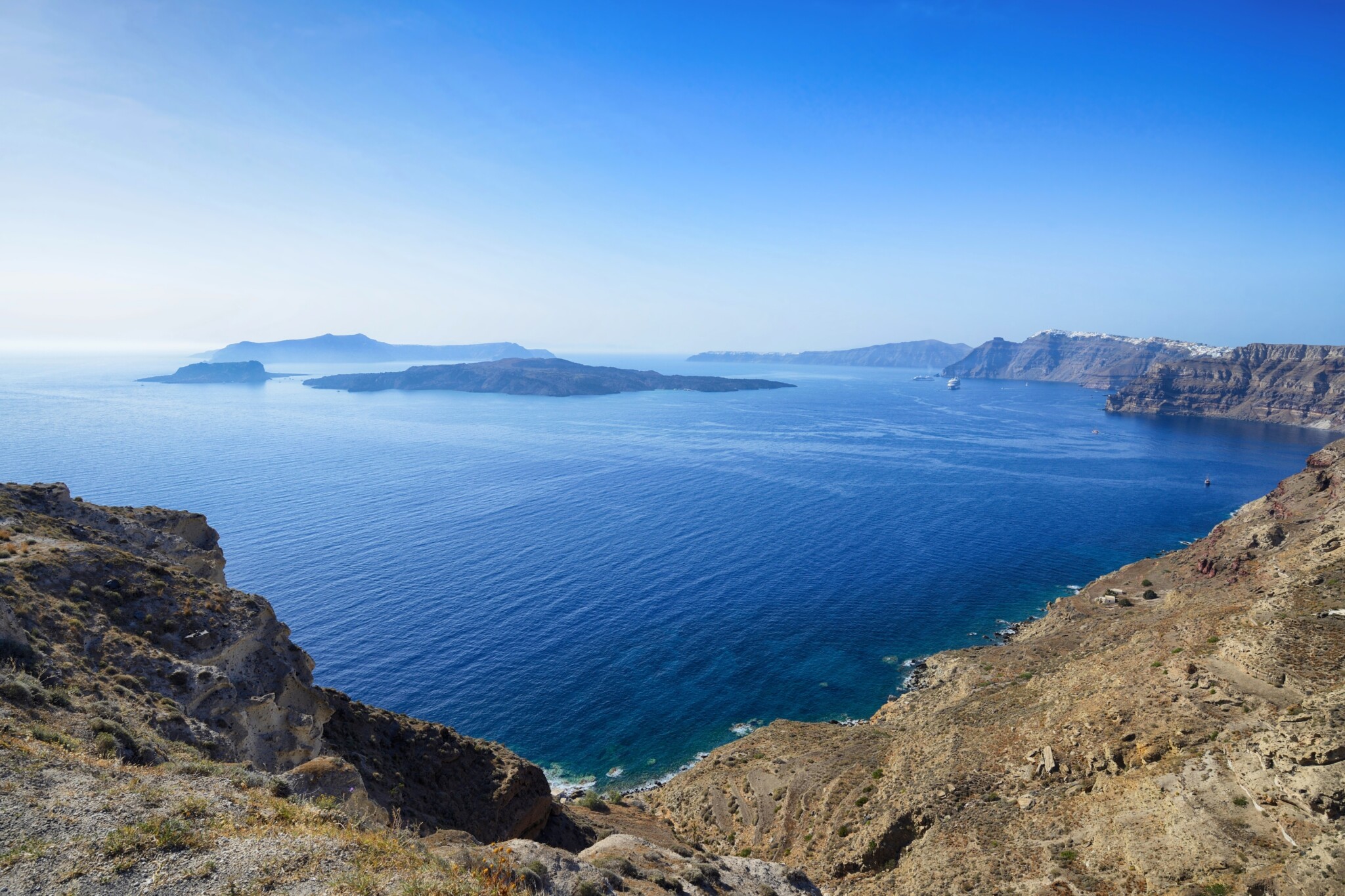
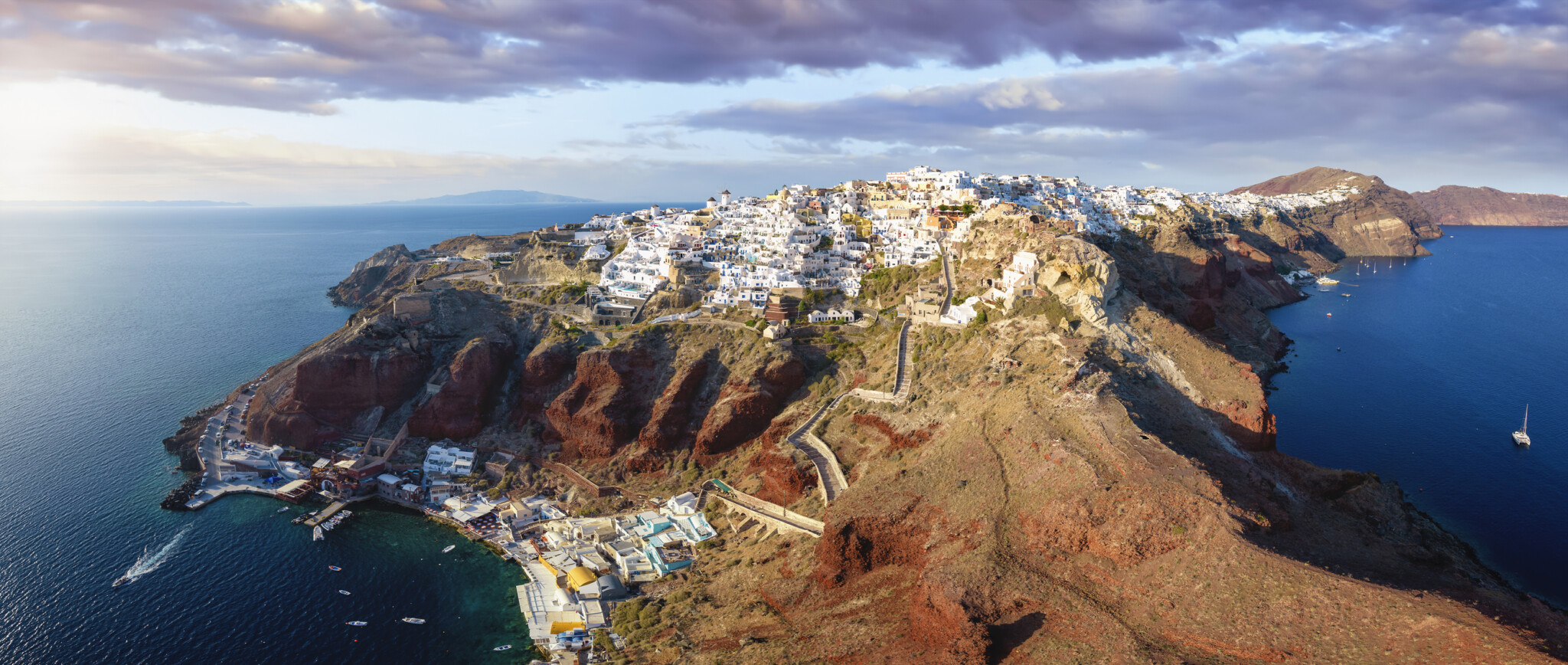
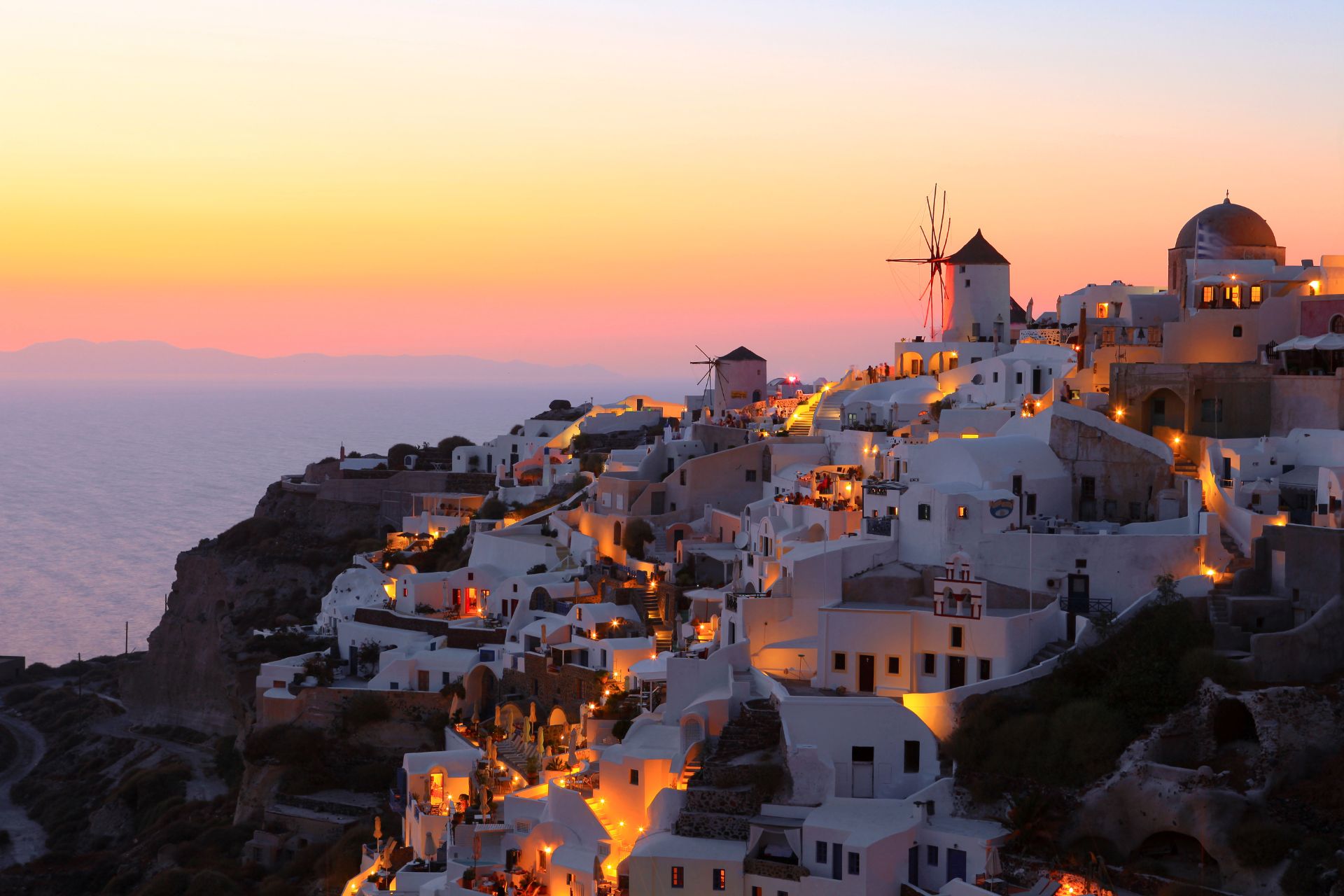
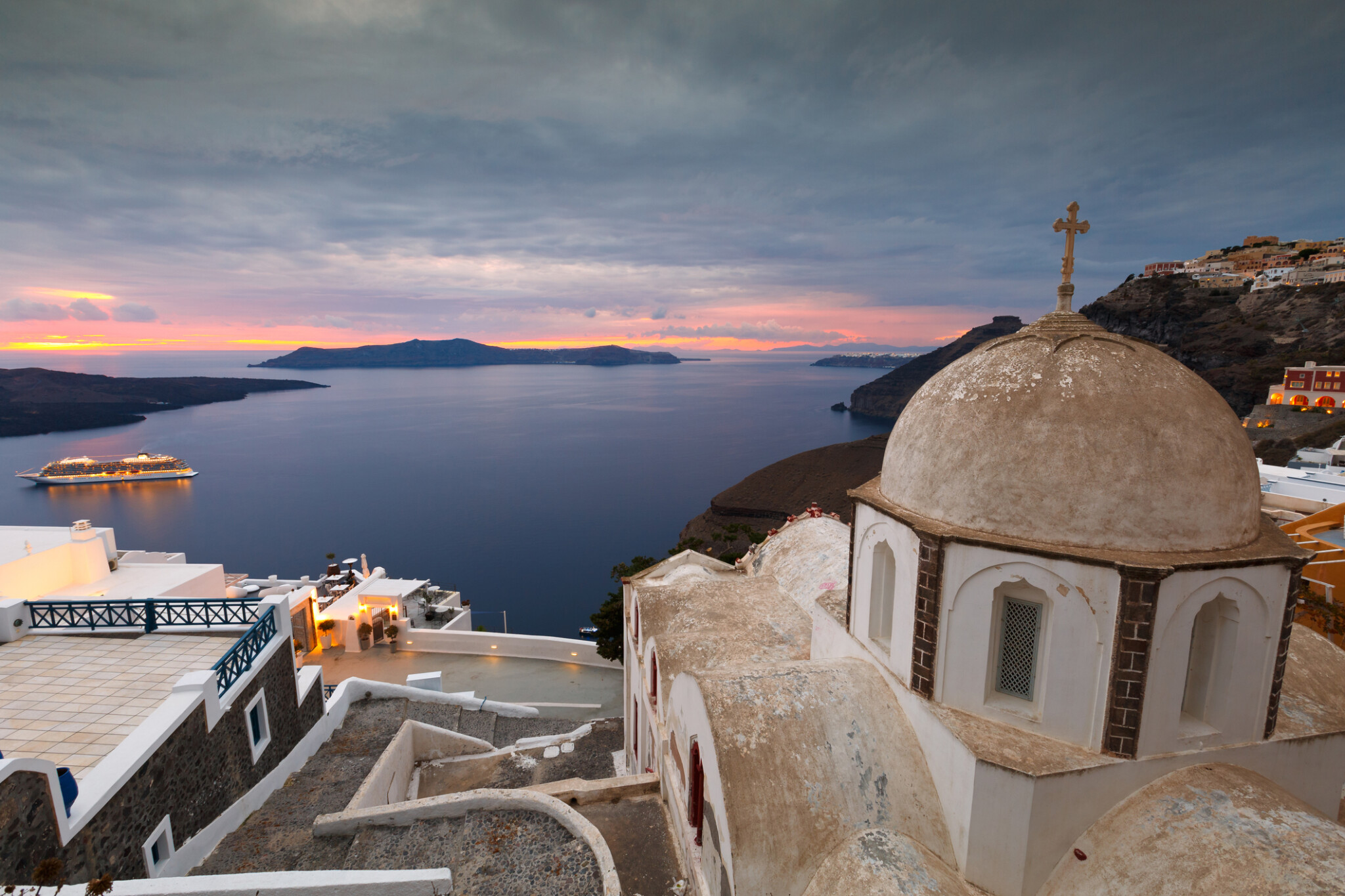
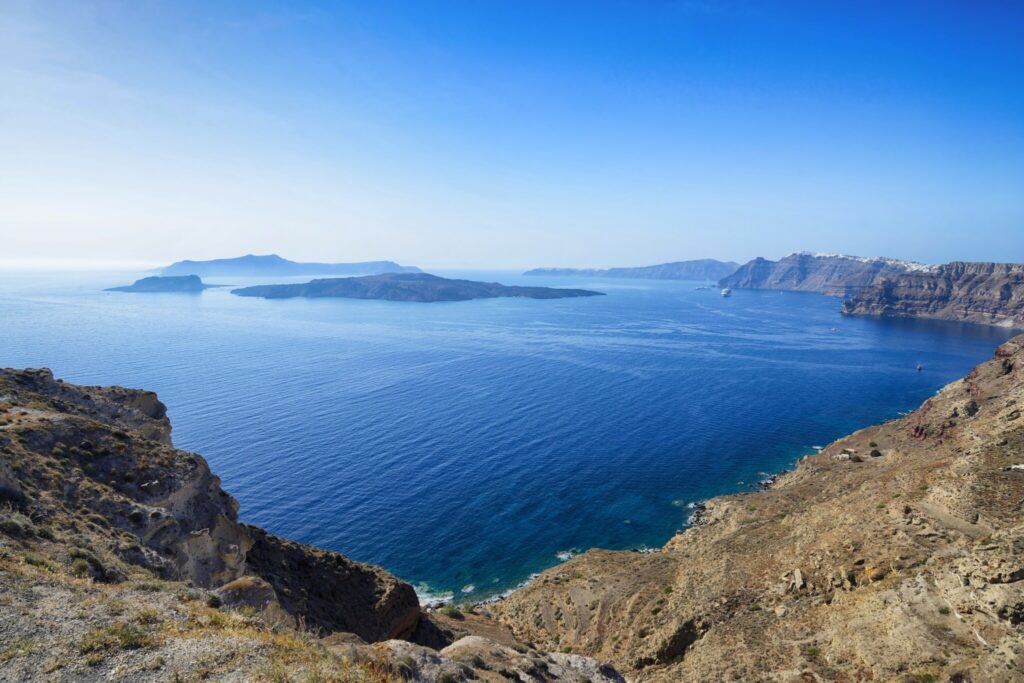
As Santorini comes into view the cliffs of the caldera rise straight out of the water, one of the genuinely dramatic approaches by sea anywhere in Greece. What you are looking at is the rim of a volcano that erupted around 1600 BC in one of the largest eruptions in recorded history, an event so violent it tore the original round island apart, buried the Bronze Age town of Akrotiri in ash, and left the flooded crater you are sailing into now.
Evening: the caldera at golden hour
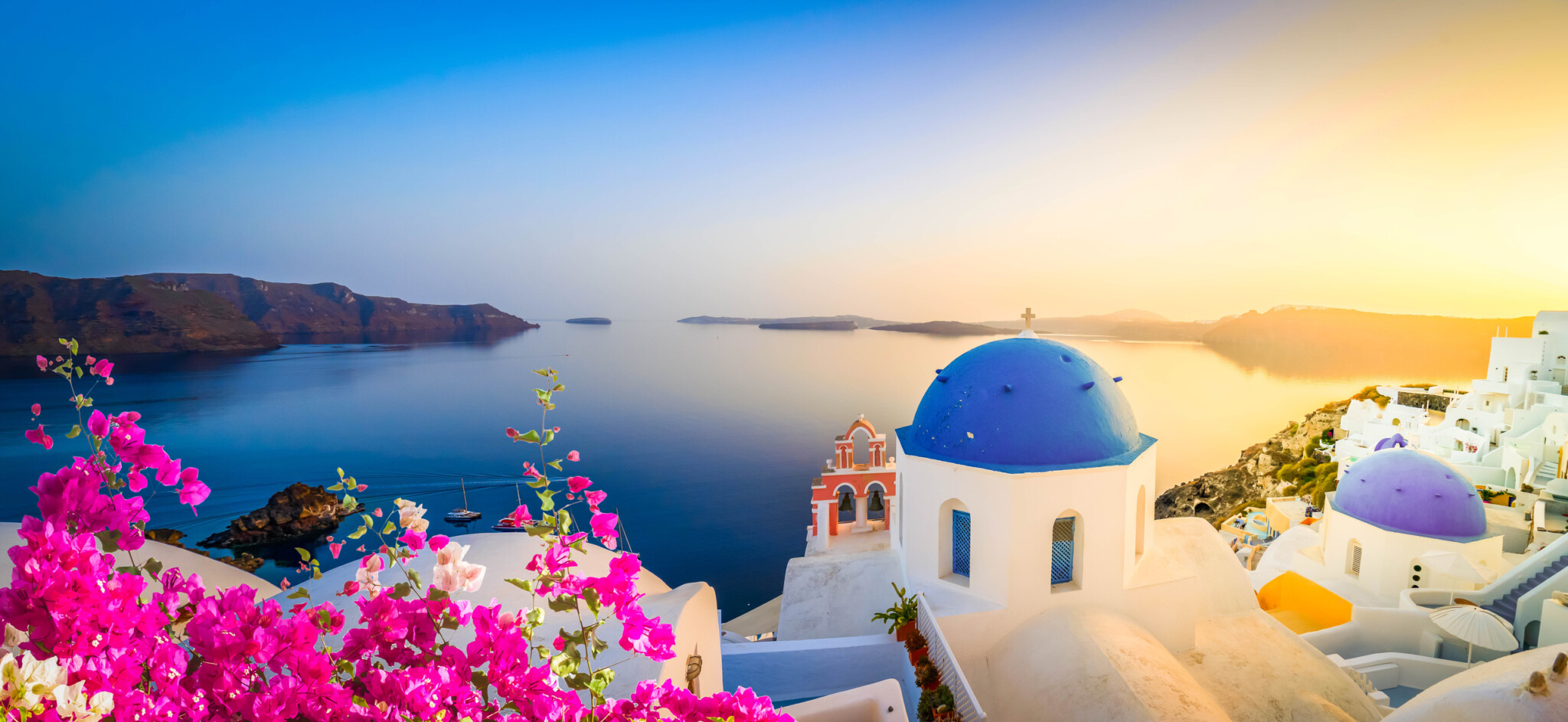
You arrive at the Santorini caldera as the light goes gold, which is the single best way to see it, better than any photo taken from the clifftop towns above. Overnight is your captain’s call: the caldera itself is exposed, so many crews position to Vlychada on the sheltered south coast or stay only as conditions allow.
Overnight: The Santorini caldera, or Vlychada, captain’s call on conditions.
Don’t Miss
- A full day at sea, not a rushed half-day
- The caldera cliffs from the water
- Arriving at golden hour
Day 6 – Santorini to Sifnos (about 50nm)
Morning: Nea Kameni
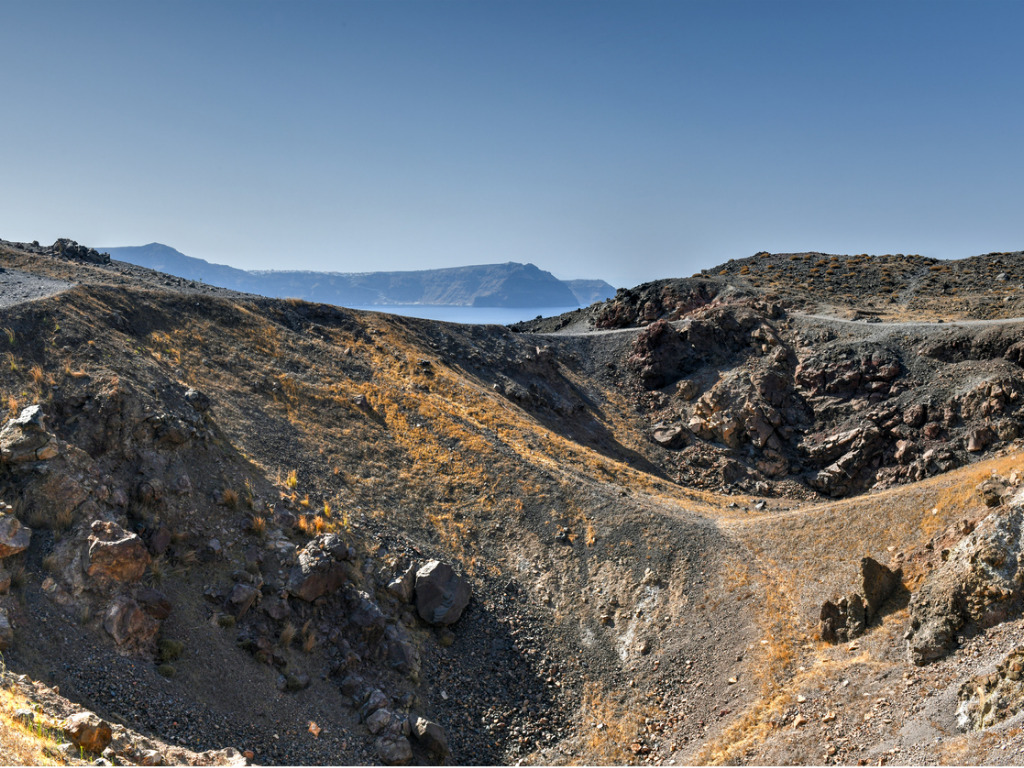
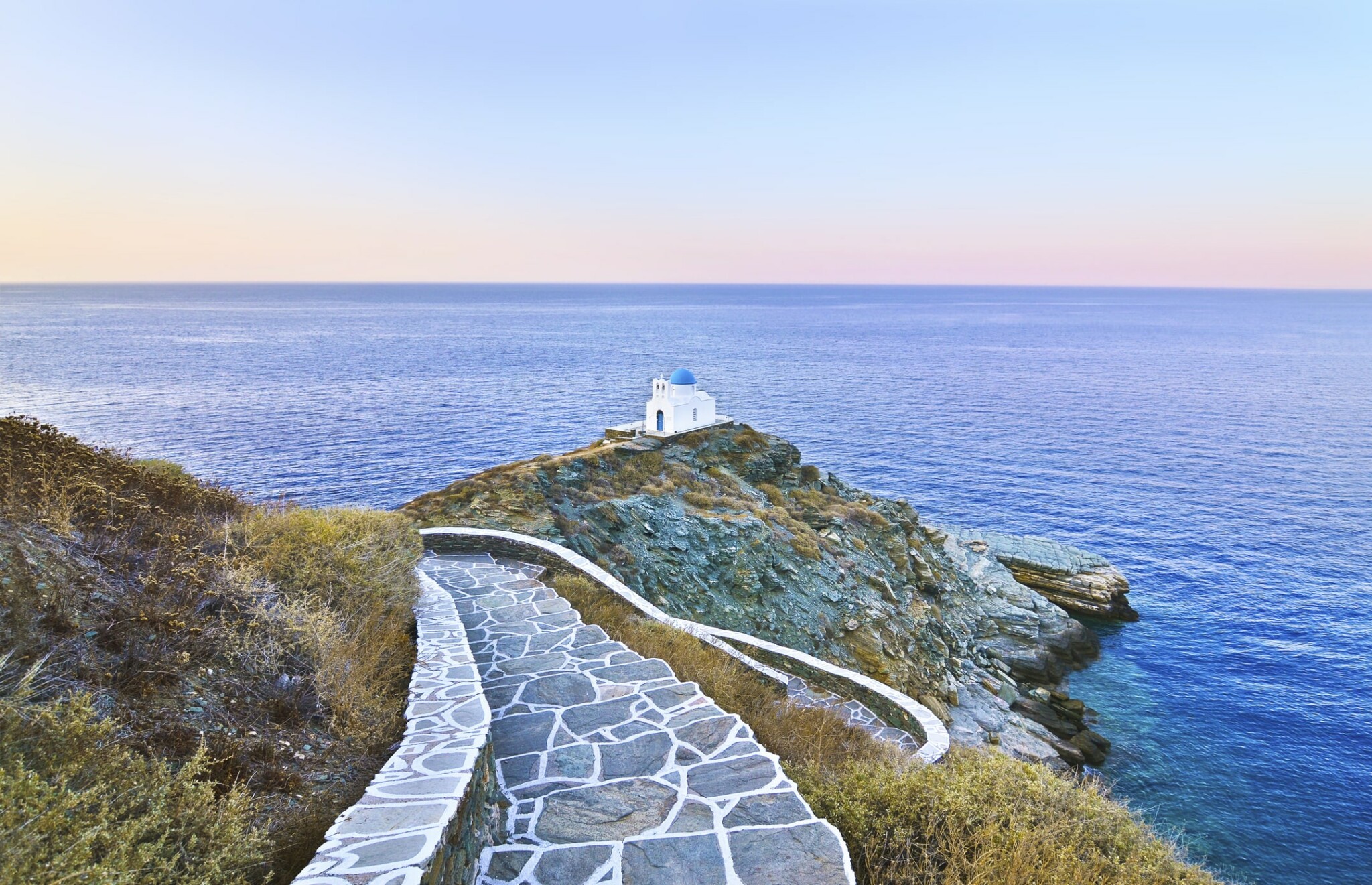
The morning belongs to Santorini: a tender ride out to Nea Kameni, the black volcanic island sitting in the middle of the caldera. The volcano has been dormant since its last eruption in the 1950s but it is still active, you can see sulfur gas rising from the crater on the hike up, and the water off the small islets nearby runs warm and orange-tinted from the mineral springs. It stains, and it washes off, which is most of the fun of it.
Lunch: at anchor, or ashore in Oia or Fira
Lunch at anchor, or time ashore in Oia or Fira if you did not make it up the evening before.
Afternoon: crossing to Sifnos
After lunch you cross northwest to Sifnos, the food island of the Cyclades, and the decompression stop this route needs after the Mykonos to Santorini stretch.
Evening: dinner in the Chora
Sifnos’s food reputation is not marketing, it is the birthplace of Nikolaos Tselementes, the chef and cookbook author who more or less standardized modern Greek cuisine, and the island still cooks like it means it: revithada, a slow-baked chickpea stew, is the local Sunday tradition, originally left in the bakery’s dying oven overnight because the island’s potters, working the local clay since roughly 3000 BC, needed one day a week off from cooking. Above the harbor, Kastro, the old fortified capital, keeps its walls and narrow gated lanes intact; the small archaeological museum inside holds pottery going back to the same tradition that still runs in the workshops today. Dinner in the handsome hilltop Chora, in one of the best tavernas in the Aegean, slower and quieter, exactly what the week needs here.
Overnight: Sifnos.
Don’t Miss
- The hot springs at Nea Kameni
- One more look at Oia or Fira
- Dinner in Sifnos, the Aegean’s food island
Day 7 – Sifnos to Kythnos and Athens (about 75nm)
Morning: the run home begins
The run home, broken exactly where it should be. An early departure from Sifnos gets you to Kythnos with the morning still fresh, an island most first-time visitors to Greece have never heard of, and one that Athenians have quietly kept for themselves for generations.
Lunch: Kolona beach
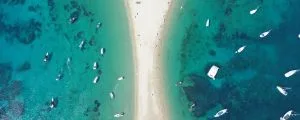
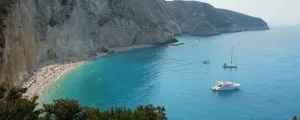
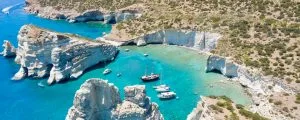
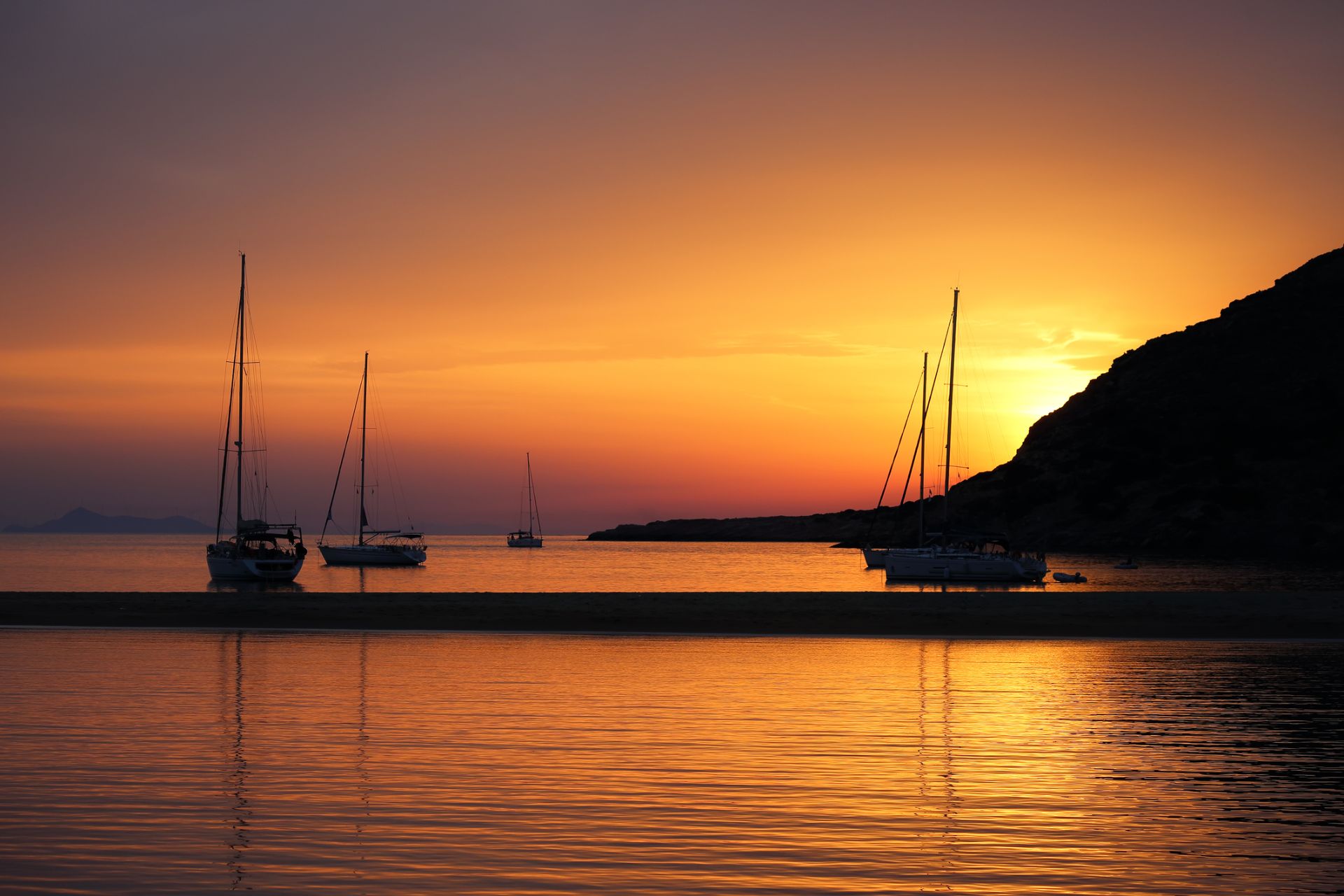
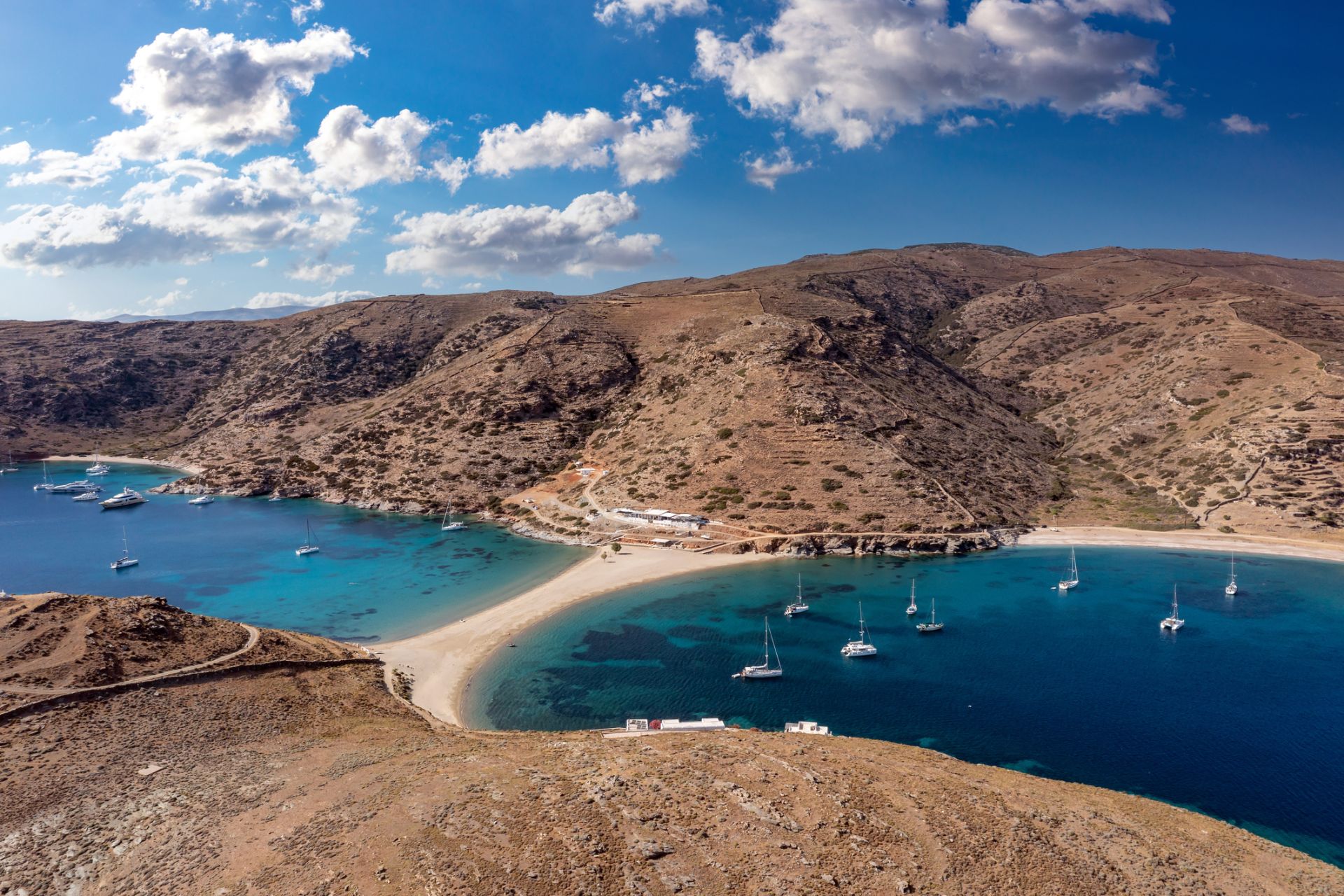
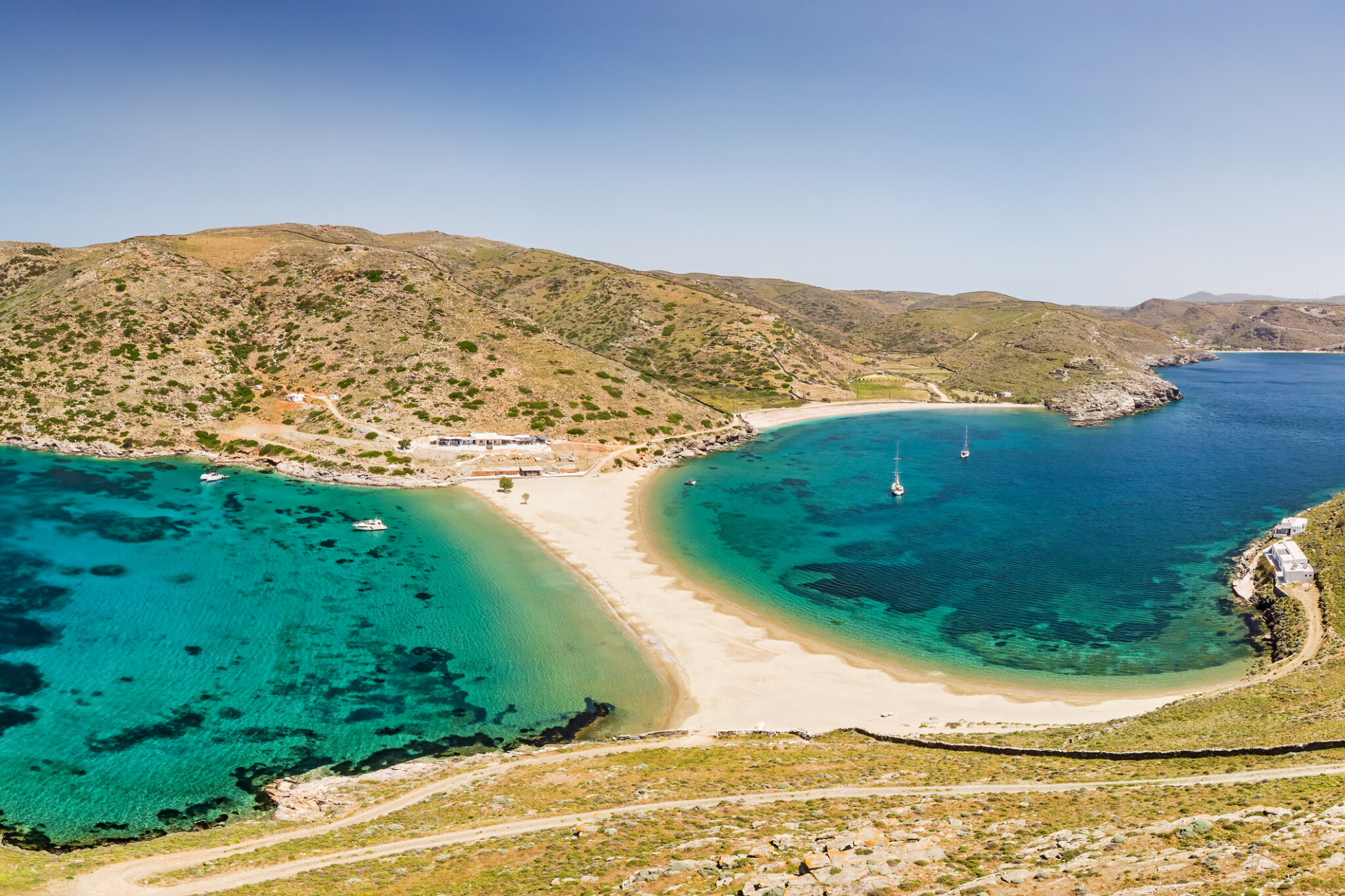
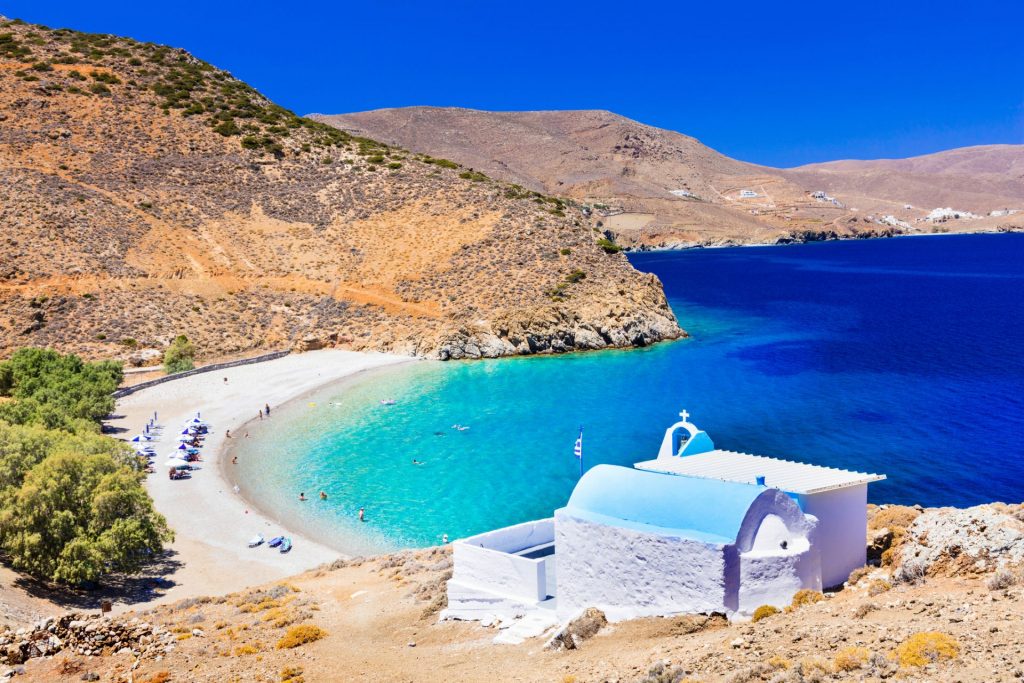
Kolona is a double-sided sandbar connecting the island to a rocky islet, water on both sides at once, and one of the best swim stops in the western Cyclades. If anyone wants to go ashore instead, Loutra on the north coast has genuine thermal springs, known since Roman times and formally studied in the 1830s by doctors travelling with Greece’s first king, Otto; it was the island’s main port before Merichas took over that role. Lunch at anchor off Kolona, a last session on the water toys.
Afternoon: the final leg
The final leg back to Athens, retracing the short hop you started with a week ago.
Evening: last night on board
Your last night on board, back where you started. Disembarkation is Saturday morning after breakfast.
Overnight: Alongside in the marina, Athens.
Don’t Miss
- Kolona, one of the best swim stops in the western Cyclades
- A last easy day, not a rushed one
- A proper final night on board
Making This Week Work
The yacht you need
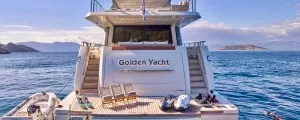
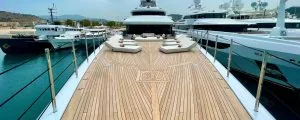
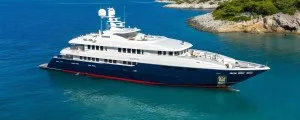
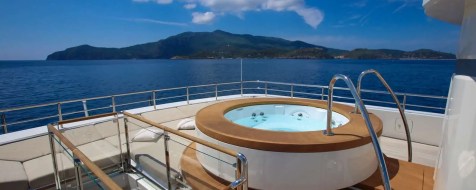
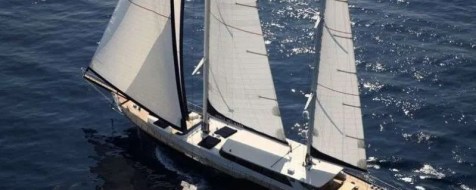
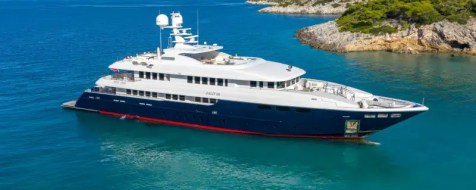
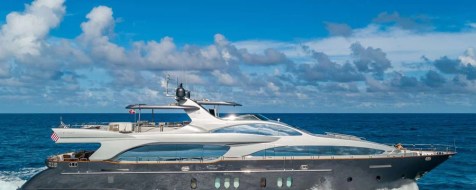
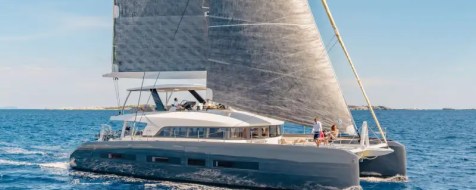
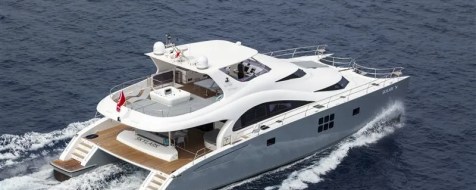
This is the one honest requirement on the page: a motor yacht with real cruising speed, we generally recommend 20 knots or better, is what makes 250 nautical miles in seven days comfortable rather than exhausting rather than a slog. A sailing catamaran can technically cover the distance, but you would spend most of the week motoring rather than sailing to make the schedule, which defeats the point of being on a sailing boat at all.
Speed also gives you a real cushion against the weather this route runs through, covered below. A fast power catamaran or a planing motor yacht can outrun a building afternoon meltemi inside a morning window, where a slower boat is already committed to the crossing once it starts; on the longest days, the difference is being anchored in Santorini by early afternoon instead of still at sea when the wind picks up.
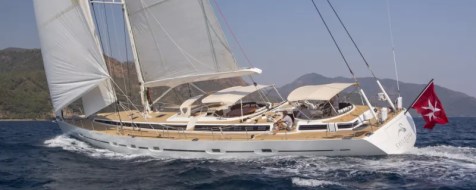
If a motor yacht is not what you had in mind, say so early rather than partway through planning. The honest alternative is not to force this route onto a sailing catamaran, it is to pick a shorter-range route instead: our Saronic itinerary and the round-trip Cyclades routes below are both built for sailing yachts and catamarans at a slower, more typical pace.
How weather can change the week
From June to September the Cyclades get the meltemi, a dry northerly wind that blows in spells of three to six days and builds toward an afternoon peak. It hits hardest and most often from mid-July to mid-August, and it shifts direction as you move south, by the time it reaches Santorini it is blowing northwest, exactly the direction of the longest, most exposed crossing on this route, Day 5.
Your captain runs the exposed legs early in the morning while the wind is lowest, and reorders the week around a spell rather than fighting it. In the worst case, on a genuinely bad forecast week, Santorini can be the day that moves or drops. Your captain has the final word on what is safe to cross, always, and that call is not negotiable once made; it has happened to real charter guests on this exact stretch. Weeks like that are rare, most runs stay close to plan.
Three days on this route run 43 to 75 nautical miles, and if anyone in your group is prone to seasickness, our honest answer on seasickness covers what actually helps.
Best Months to Book
- Best: June or the second half of September, when the meltemi is far softer and this route runs closest to plan
- Toughest: mid-July to mid-August, still very charterable, just build in flexibility around the Santorini days
Not sure this is the right shape for your group? Our guide to starting in Athens versus starting on the island walks through the trade-off, and our Greece charter cost guide covers what a week like this actually runs.
Prefer fewer miles with the same postcard views? Our Mykonos round trip and Santorini round trip both start on the island instead of sailing to it.




 iMessage
 WhatsApp