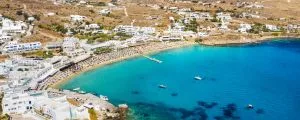
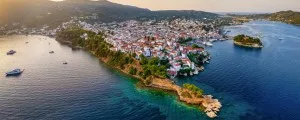
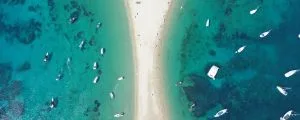
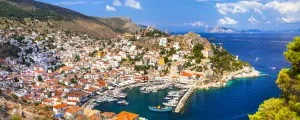
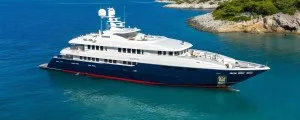
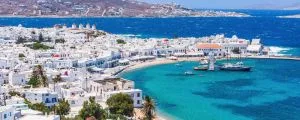
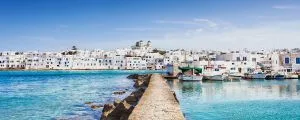
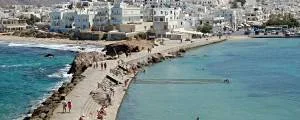
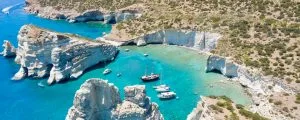
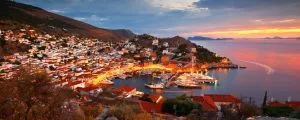
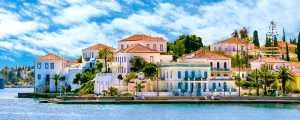
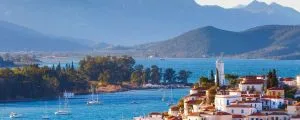
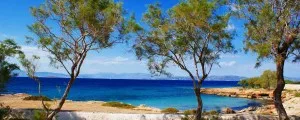
This is for anyone who wants to see the iconic spots of the Cyclades without losing days of a short week just getting to them. Start and finish in Mykonos instead of Athens, and you skip the long southbound transit an Athens-based week spends its first and last days on. That time comes back as real days on real islands: Paros, Serifos, Milos, Folegandros and Ios, with a full day on the Santorini caldera in the middle, the whole week’s distance staying inside the heart of the Cyclades instead of spent getting there and back. Our guide to Cyclades yacht charter has the full picture.
Getting a yacht to Mykonos is one of two things: a yacht already based there, the simplest option, and there are several, or an Athens-based yacht relocated ahead of your charter for a positioning fee. Either way, you are not the one sailing that leg, it happens before you fly in, not during your week. Flying into Mykonos means you can be on board within an hour of landing, and the route itself runs about 213 nautical miles with no leg longer than ~45nm.
The week runs Saturday to Saturday: board Saturday afternoon at Mykonos, hand back the following Saturday morning, seven nights aboard. Mid-summer meltemi is strongest in this stretch of the Cyclades, so your captain may reverse the loop or reorder days; the shape below assumes normal conditions.
The route at a glance
- Day 1: Board in Mykonos, sail to Paros (about 28nm)
- Day 2: Paros to Serifos (about 31nm)
- Day 3: Serifos to Milos (about 27nm)
- Day 4: Milos to Folegandros (about 33nm)
- Day 5: Folegandros to Santorini (about 27nm)
- Day 6: Santorini, the caldera day
- Day 7: Santorini to Ios (about 22nm)
- Day 8: Ios to Mykonos, return (about 45nm)
Day 1 – Board in Mykonos, Sail to Paros (about 28nm)
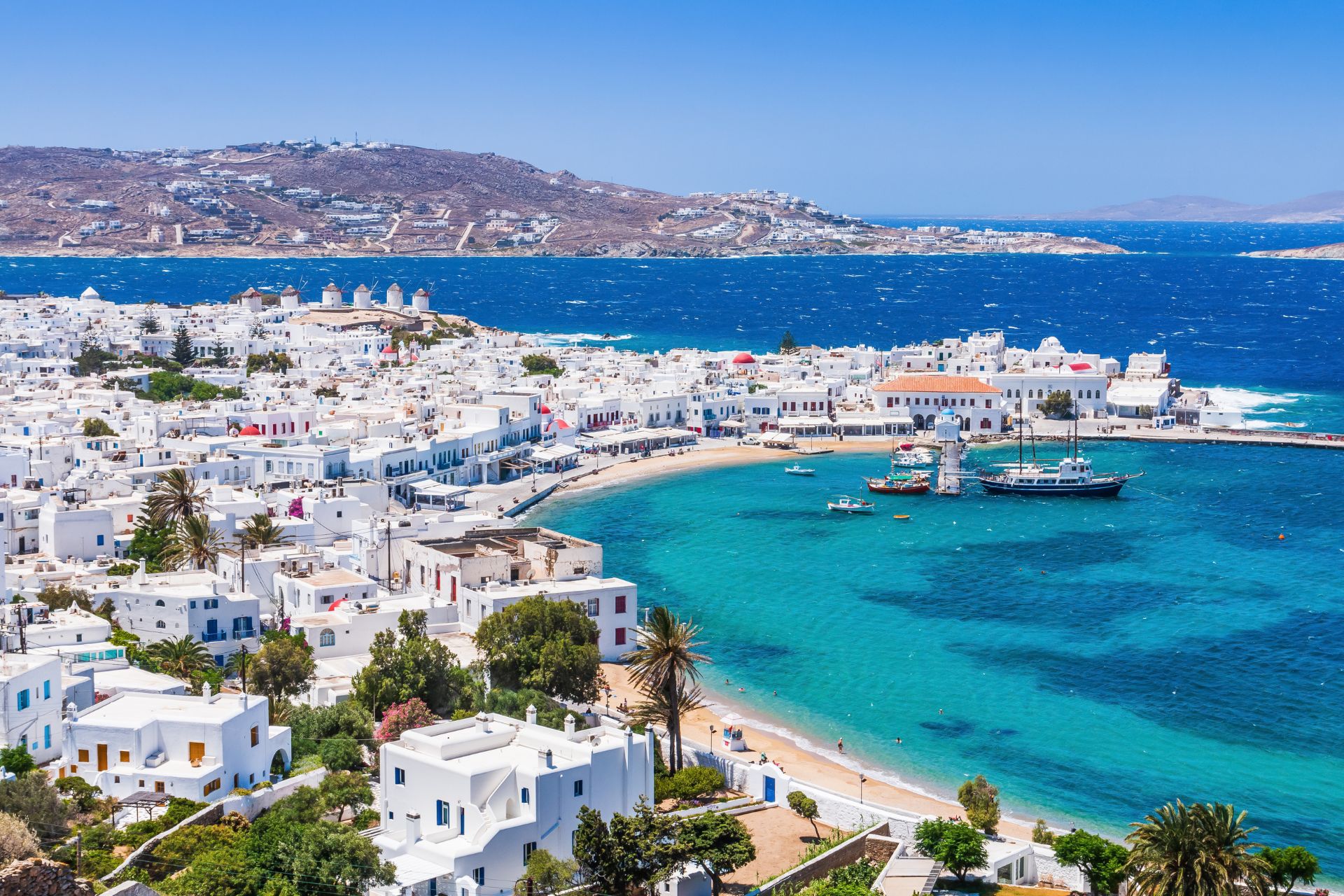
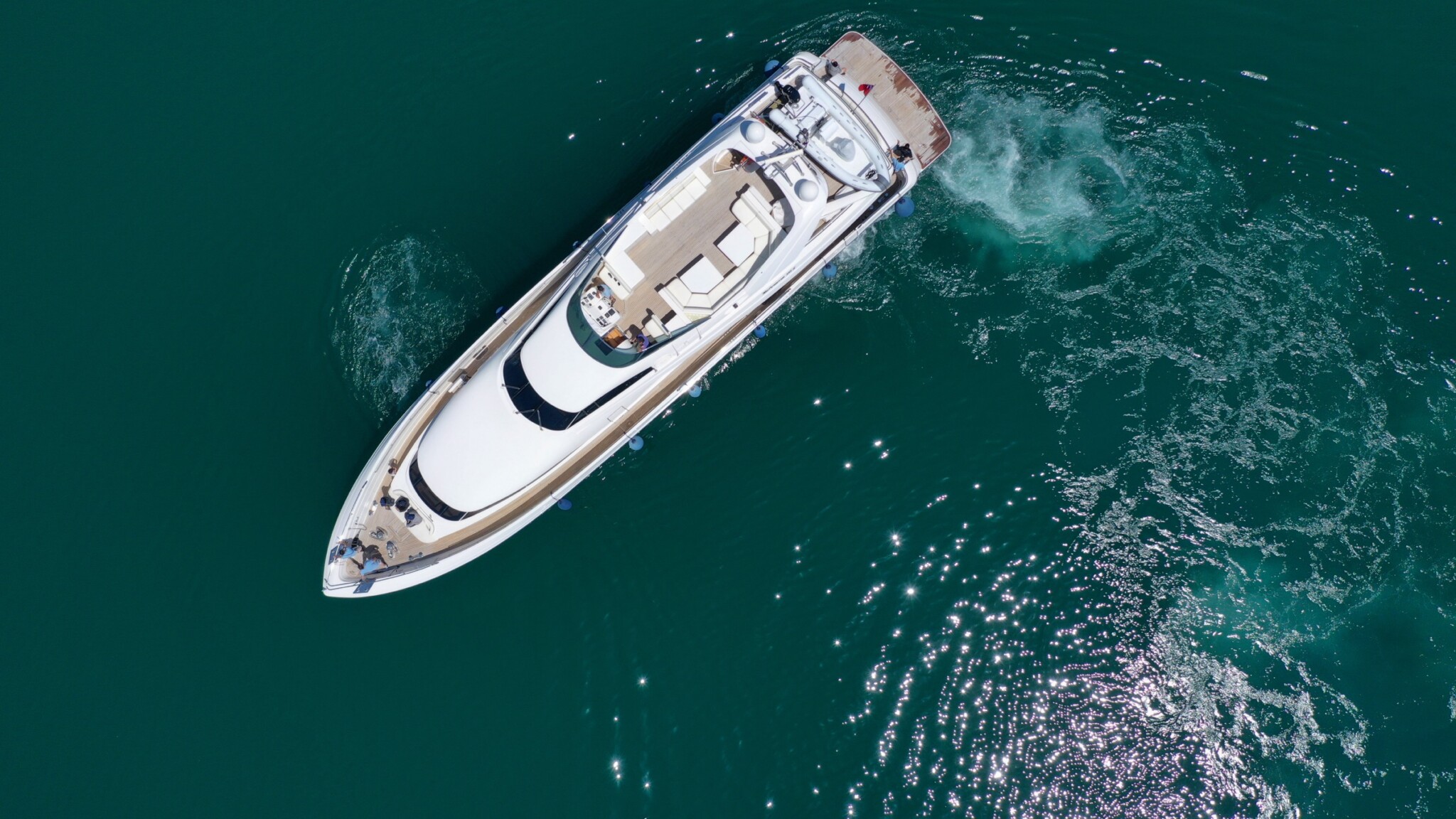
Midday: boarding in Mykonos
Embarkation is Saturday afternoon at Mykonos: most guests land at the airport and are aboard within the hour. Meet the crew over a welcome drink, go through the preference sheet if you have not already sent one, and get a first look at the windmills and Little Venice from the water before you sail.
Lunch: underway to Paros
Lunch is served either at anchor before departure or underway once you clear Mykonos harbour, your call. The crossing to Paros runs about 28nm, calm water in normal conditions, so it is a relaxed first sail rather than a test.
Afternoon: arriving at Paros
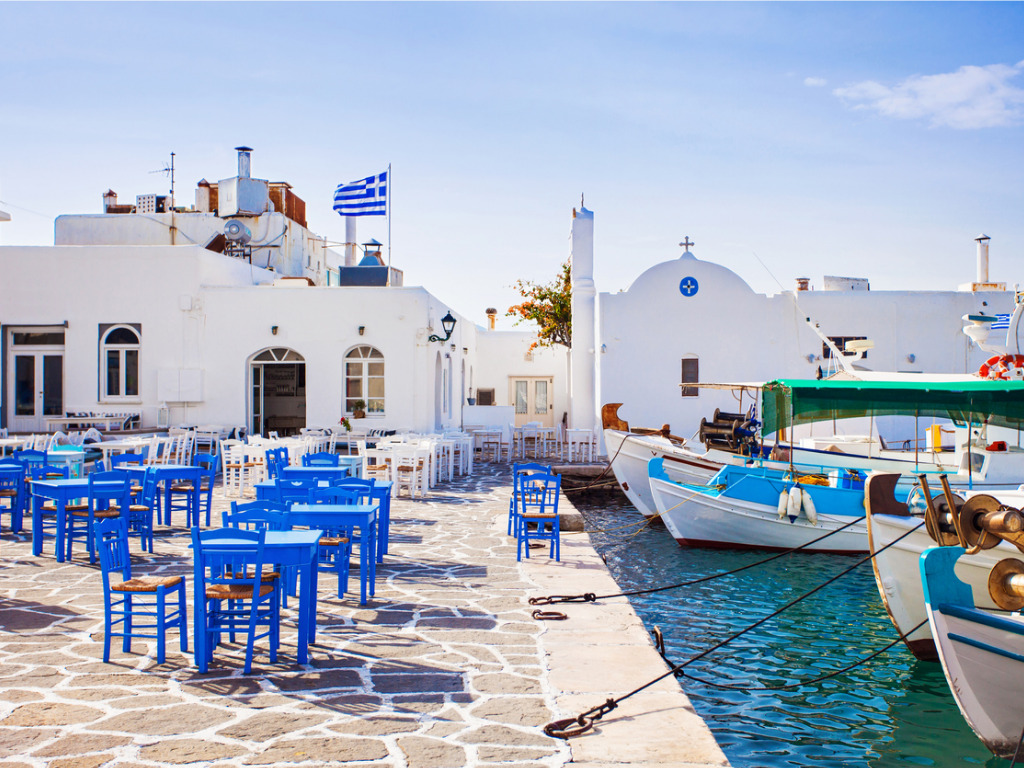
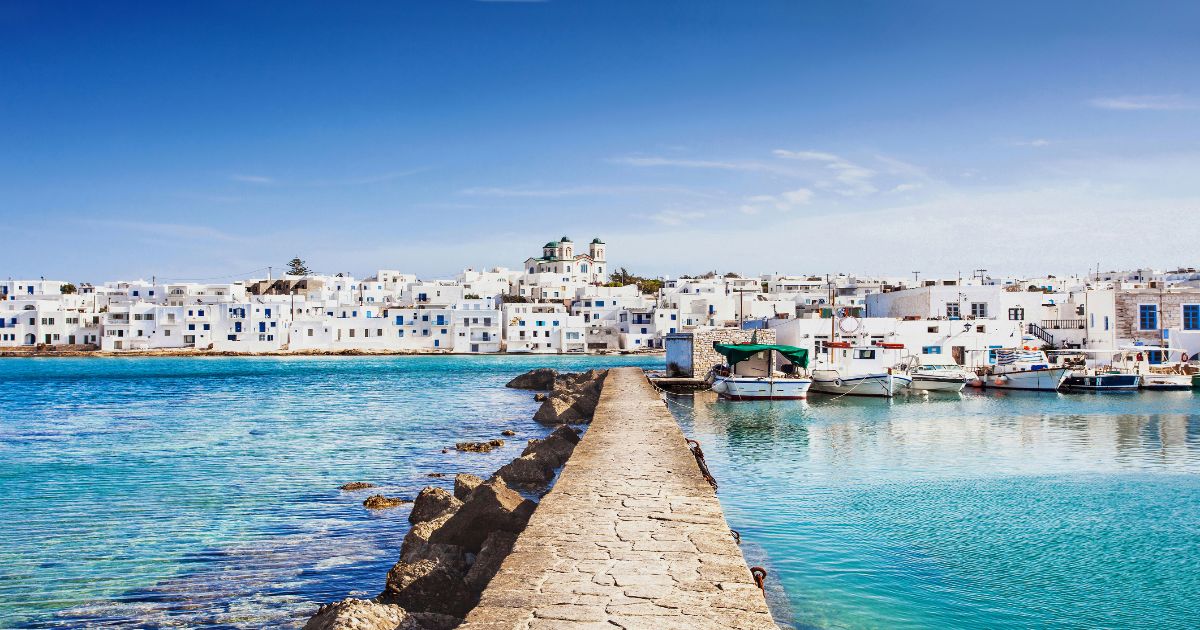
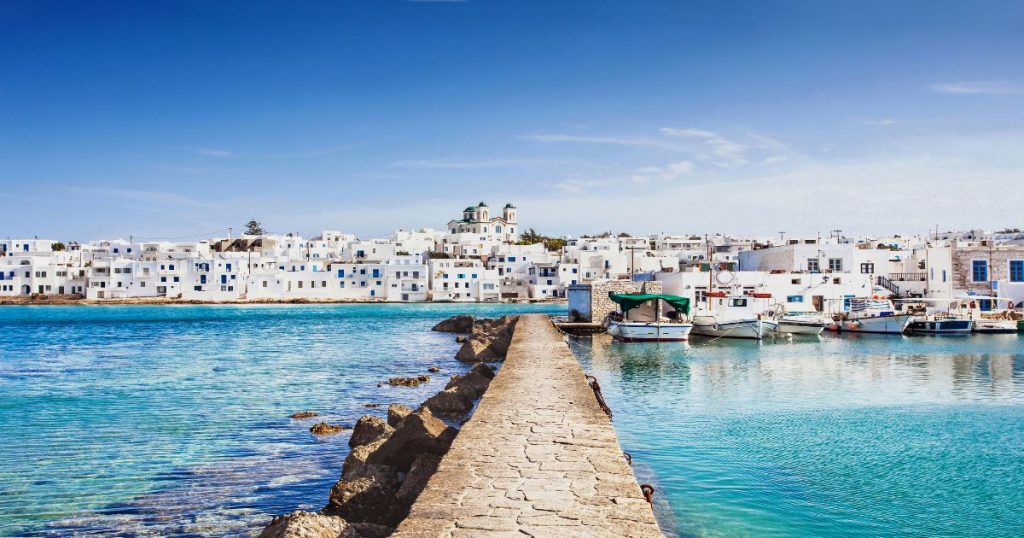
By mid-afternoon you are anchoring off Naousa, one of the most in-demand harbours in the Cyclades. There is time for a first swim off the boat before the crew ties up for the evening.
Evening: Naousa harbour
Dinner in Naousa’s old harbour, where a half-submerged Venetian castle guards the entrance. The Sommaripa family built it in the late 13th century to protect the fishing fleet from pirate raids, and it still stands watch over the same boats today, fishing caiques moored a few metres from tables serving considerably more polished plates.
Overnight: Naousa, Paros.
Don’t Miss
- Little Venice and the windmills in Mykonos before you sail
- Naousa’s half-submerged Venetian castle, lit up after dark
- Dinner among the fishing boats in Naousa’s old port
Day 2 – Paros to Serifos (about 31nm)
Morning: south to Serifos
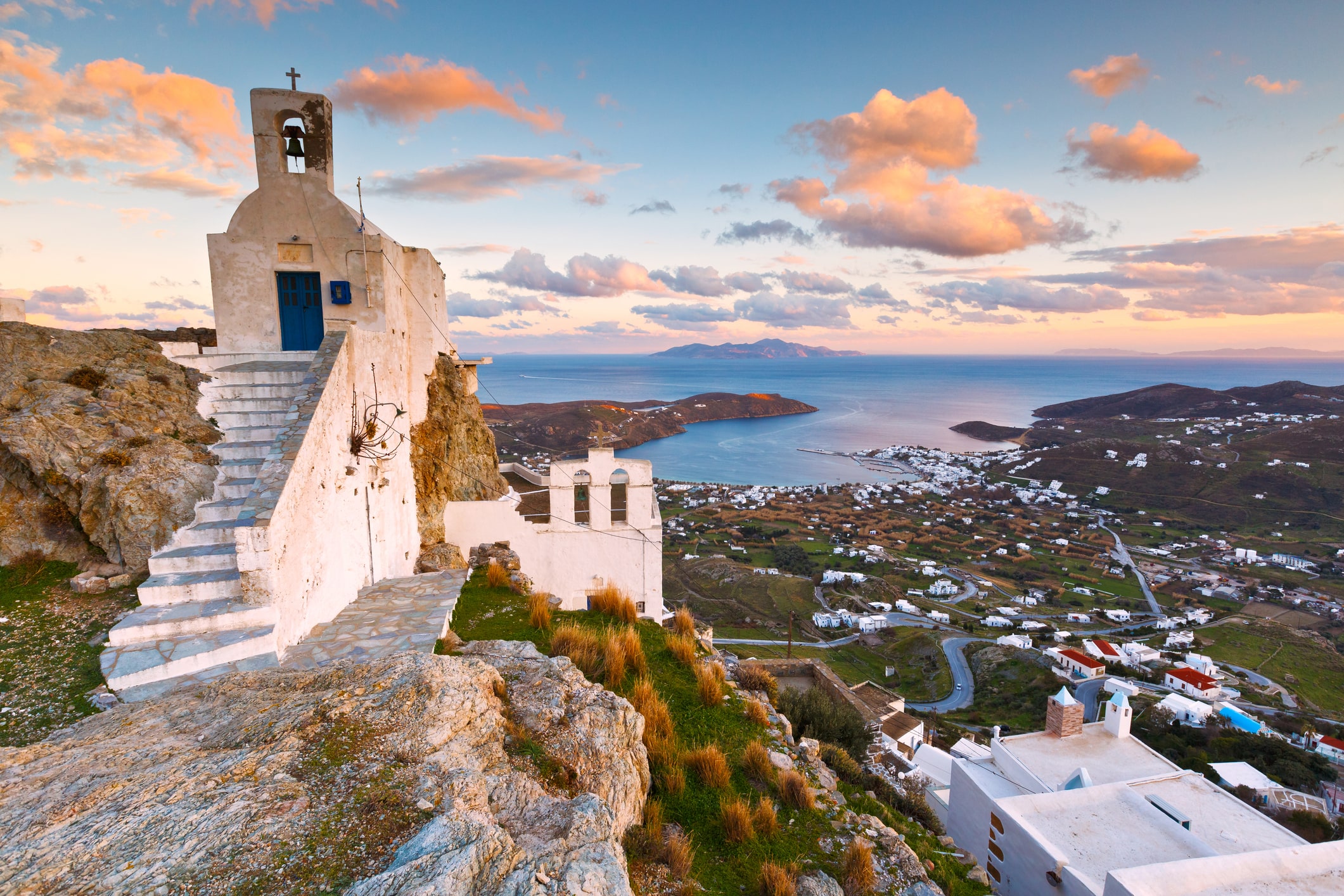
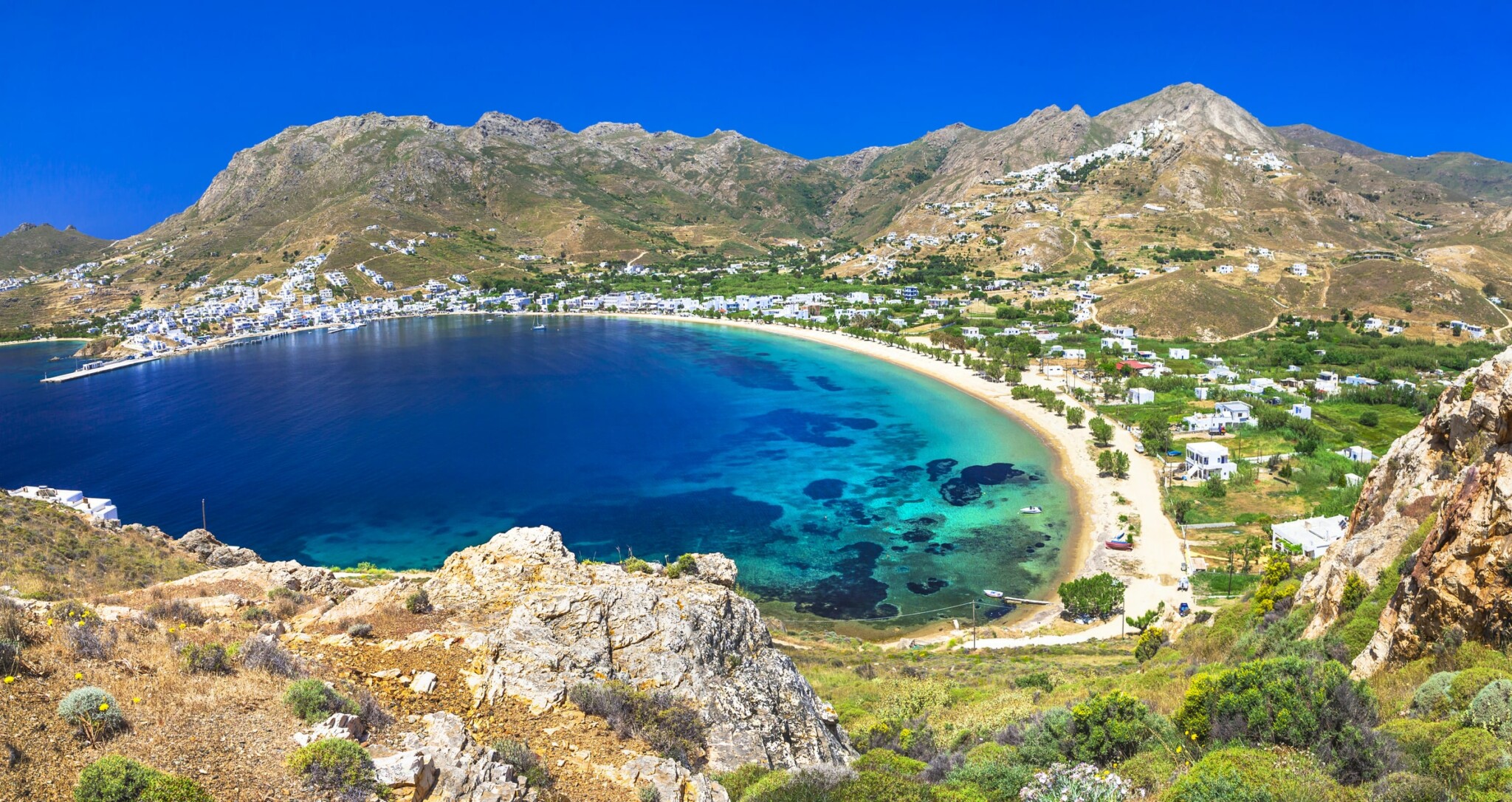
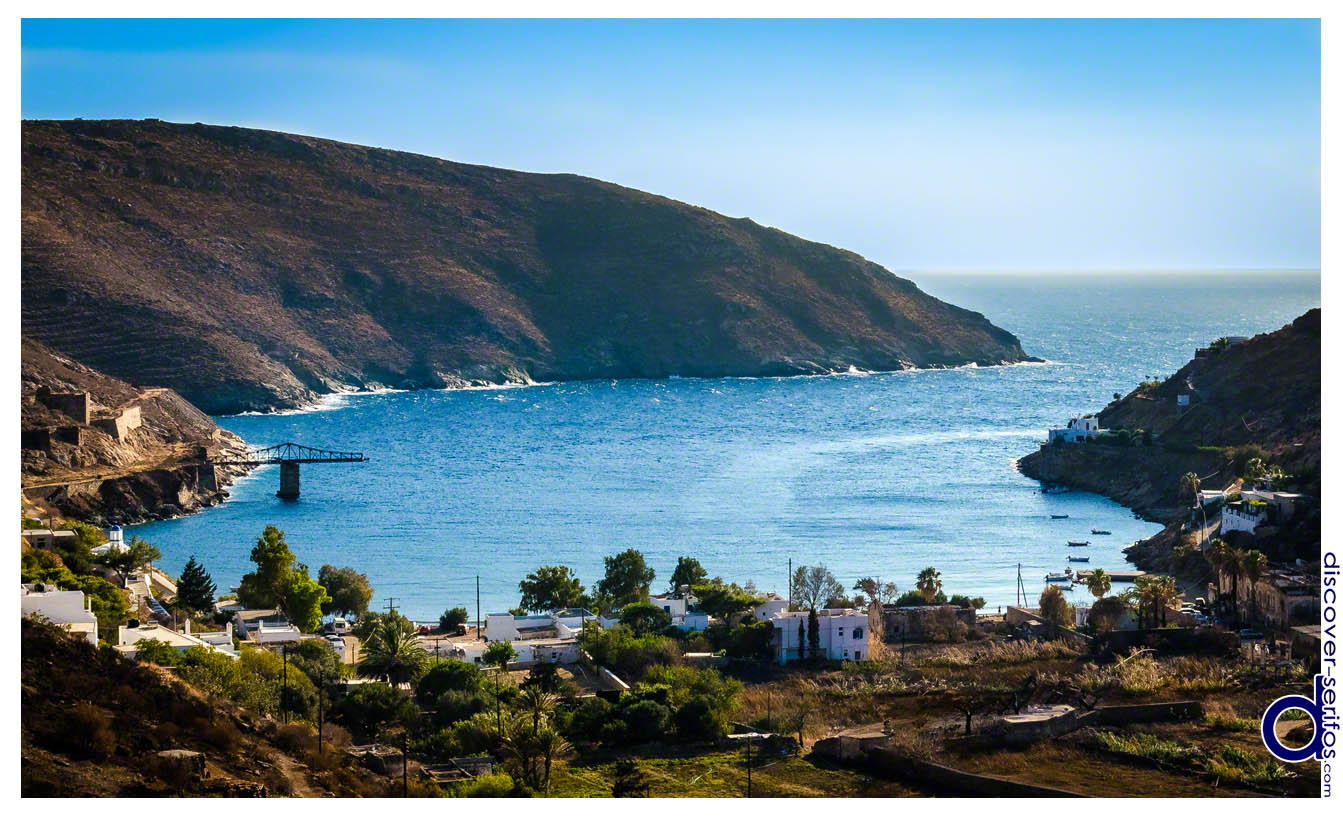
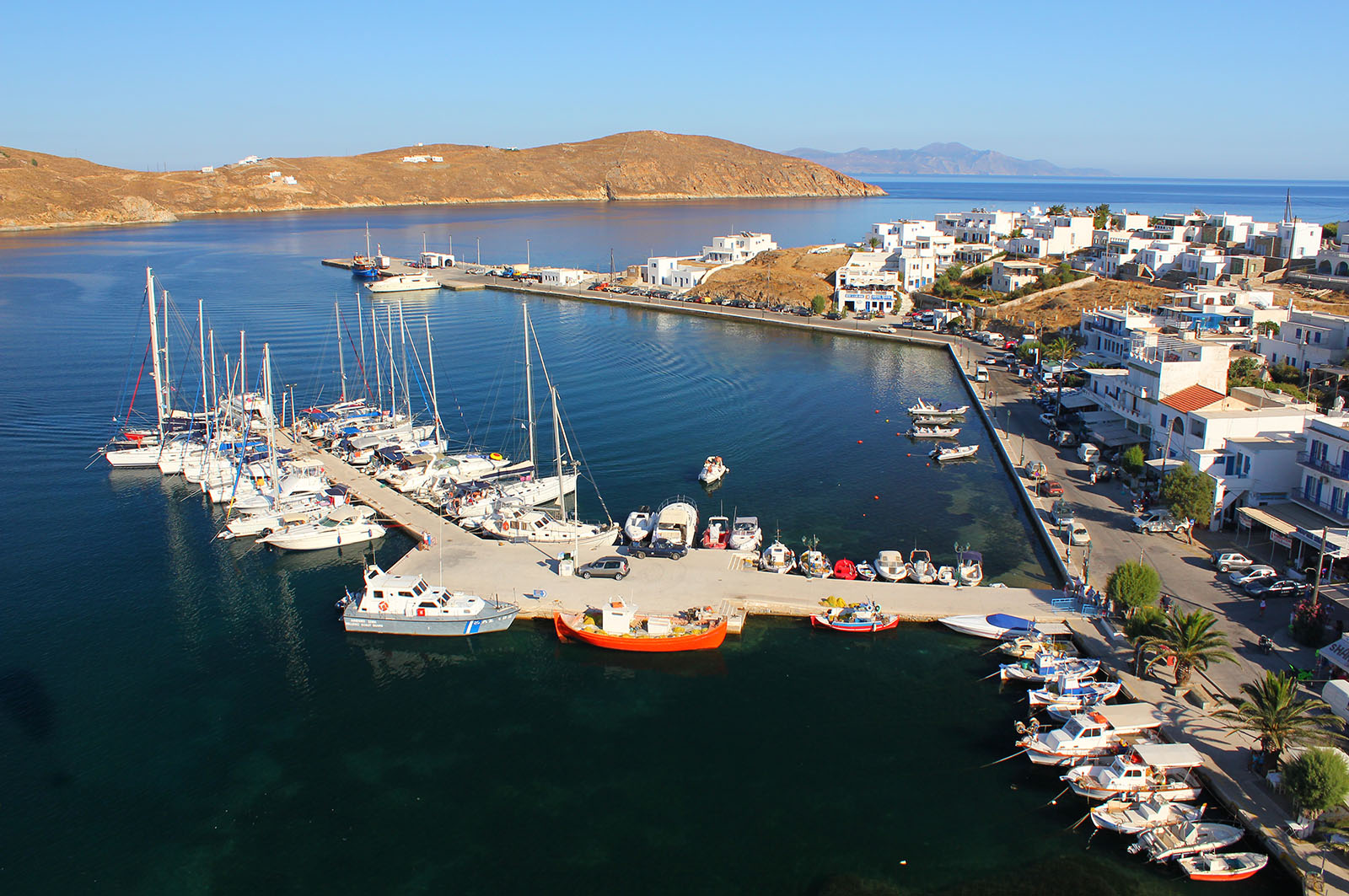
A morning crossing south to Serifos, an island with real mythology behind it: this is where Perseus is said to have grown up, and local legend places the severed head of Medusa somewhere in the catacombs beneath the old castle above town. The 31nm leg is the longest of the first half of the week.
Lunch: Livadi bay
Lunch at anchor in Livadi, the main harbour, with Serifos’ hilltop Chora and the neighbouring island of Sifnos visible in the distance across open water. Livadi has a scattering of good tavernas right on the water if anyone prefers to eat ashore.
Afternoon: Serifos’ Chora
Up to the Chora in the afternoon, one of the finest hilltop villages in the Cyclades and still barely visited despite the view: whitewashed houses climbing a rock spur, with the ruins of the old Venetian fortress on top and the Aegean stretching out on every side.
Evening: dinner in the Chora
Dinner in the Chora’s narrow lanes, where the crowds thin out fast once the sun goes down, or back at Livadi’s harbourside tavernas if your group prefers to stay close to the water for the night.
Overnight: Serifos.
Don’t Miss
- Serifos’ Chora and its Perseus and Medusa legend
- The Venetian fortress ruins above town
- Livadi’s harbourside tavernas by the water
Day 3 – Serifos to Milos (about 27nm)
Morning: on to Milos
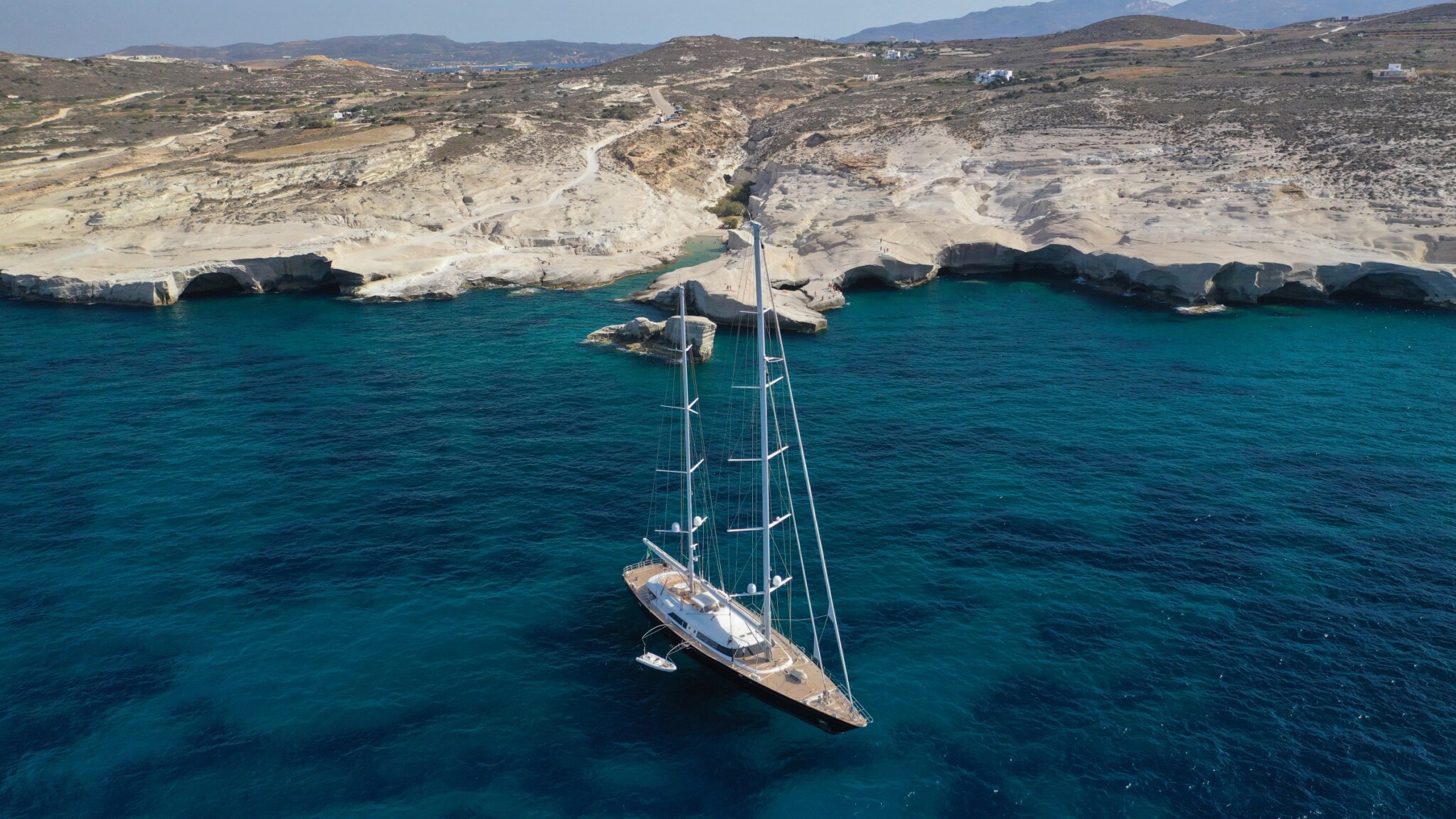
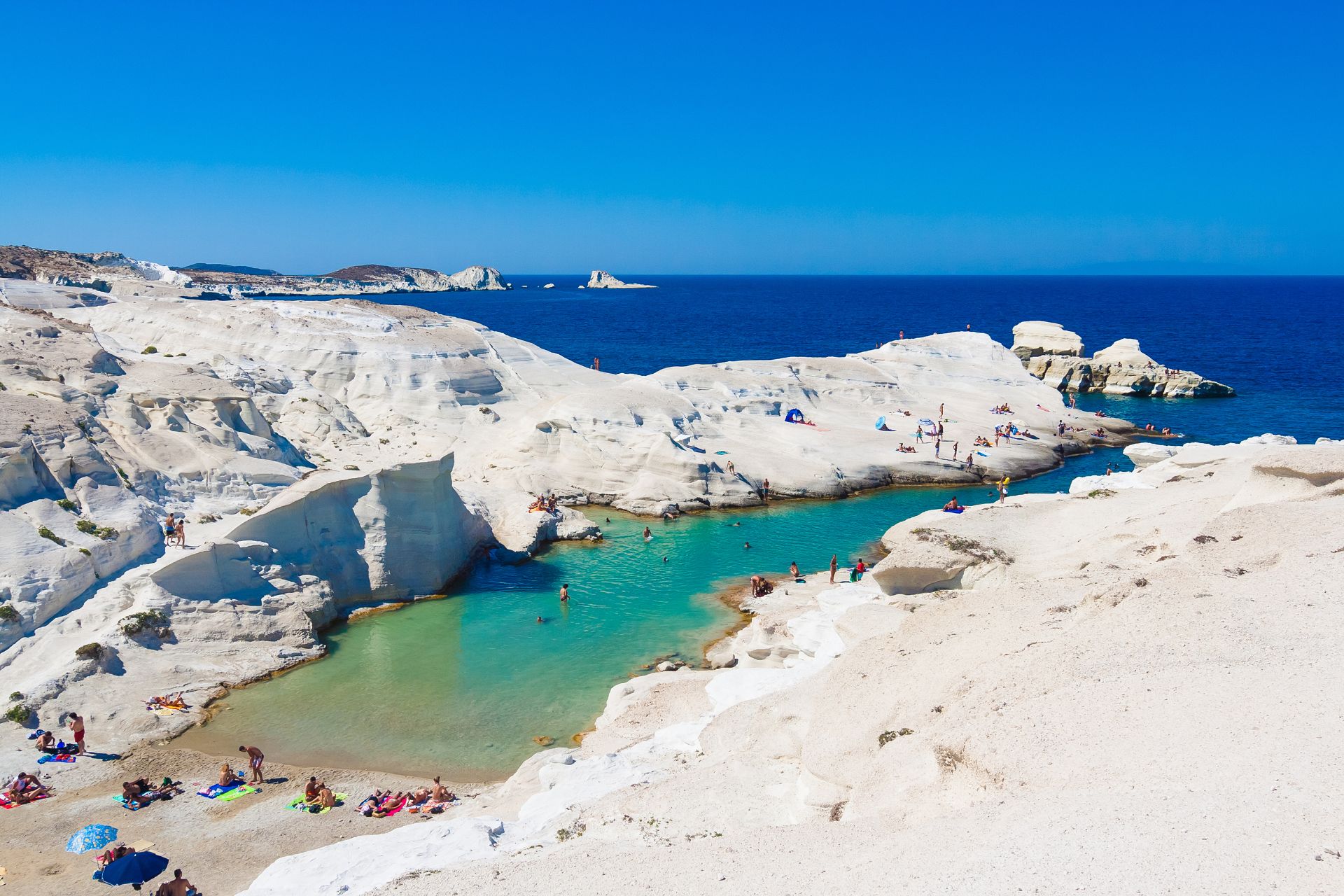
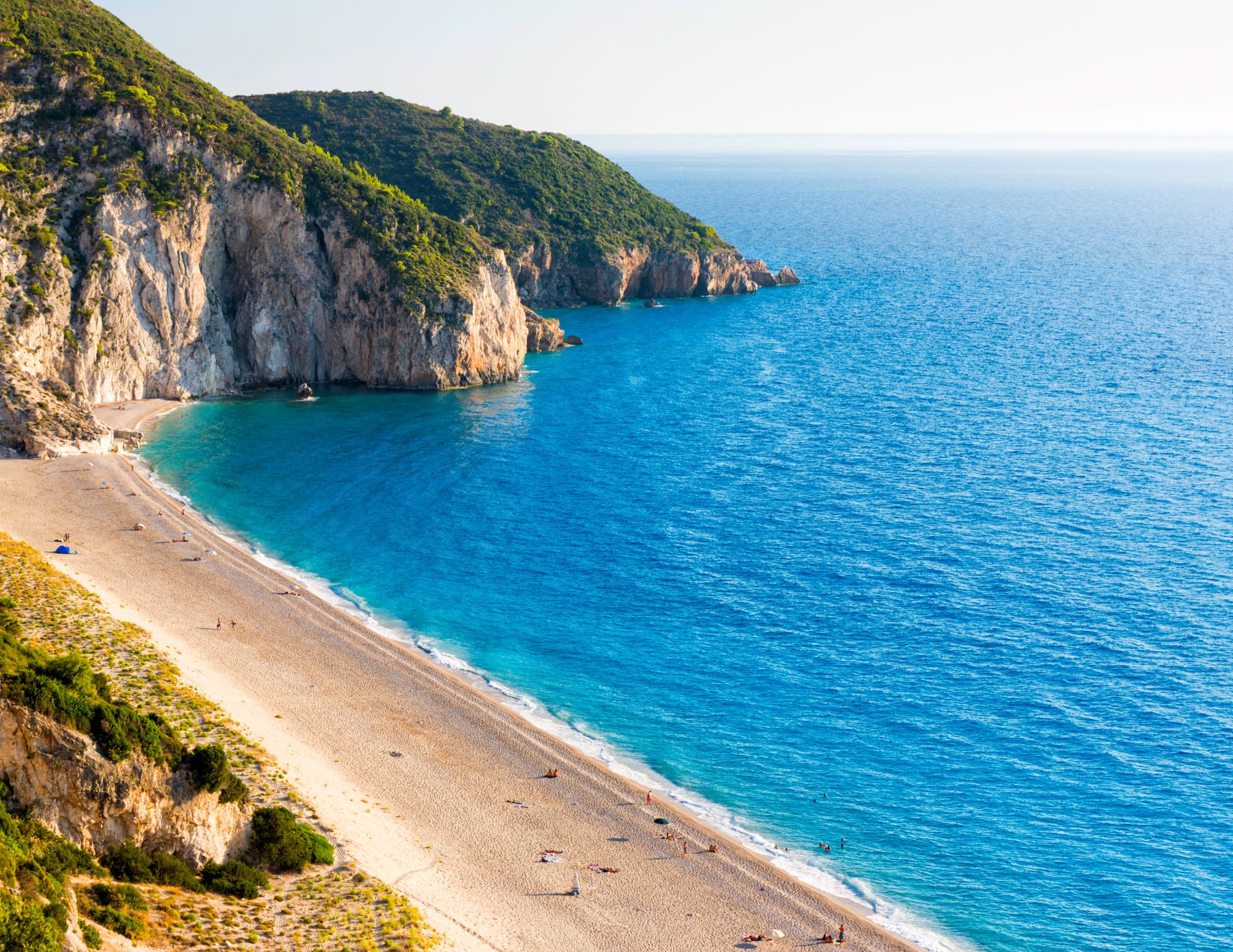
On to Milos, the route’s scenery jackpot: a volcanic island whose coastline changes colour every few miles, from chalk-white moonscape on the north shore to ochre sea caves on the south. It is also the largest sulphur and mineral producer in Greece, which is exactly why the rock here looks nothing like its neighbours.
Lunch: Sarakiniko
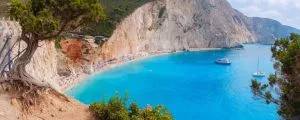
Anchor off Sarakiniko for lunch, a beach unlike any other in Greece: smooth white volcanic tuff, carved by wind and sea into ridges and shallow pools, until it genuinely looks like another planet. It is one of the most photographed landscapes in the Aegean for a reason.
Afternoon: swimming and exploring
The afternoon is for the water: swim off the boat, paddleboard the coves, or take the tender in for a closer look at Milos’ pale rock formations and the small pools carved into the tuff by generations of wind and waves.
Evening: Kleftiko, if the sea allows
Get the tender out for Kleftiko‘s white rock arches this evening if the sea allows, or save it for the morning. The name means “stolen” in Greek: 18th and 19th-century pirates hid their ships inside these sea caves between raids on passing merchant ships, and the arches are still only reachable by boat.
Overnight: Milos.
Don’t Miss
- Sarakiniko’s white volcanic moonscape
- Kleftiko’s pirate sea caves, tender access only
- Milos’ coastline changing colour mile to mile
Day 4 – Milos to Folegandros (about 33nm)
Morning: crossing to Folegandros
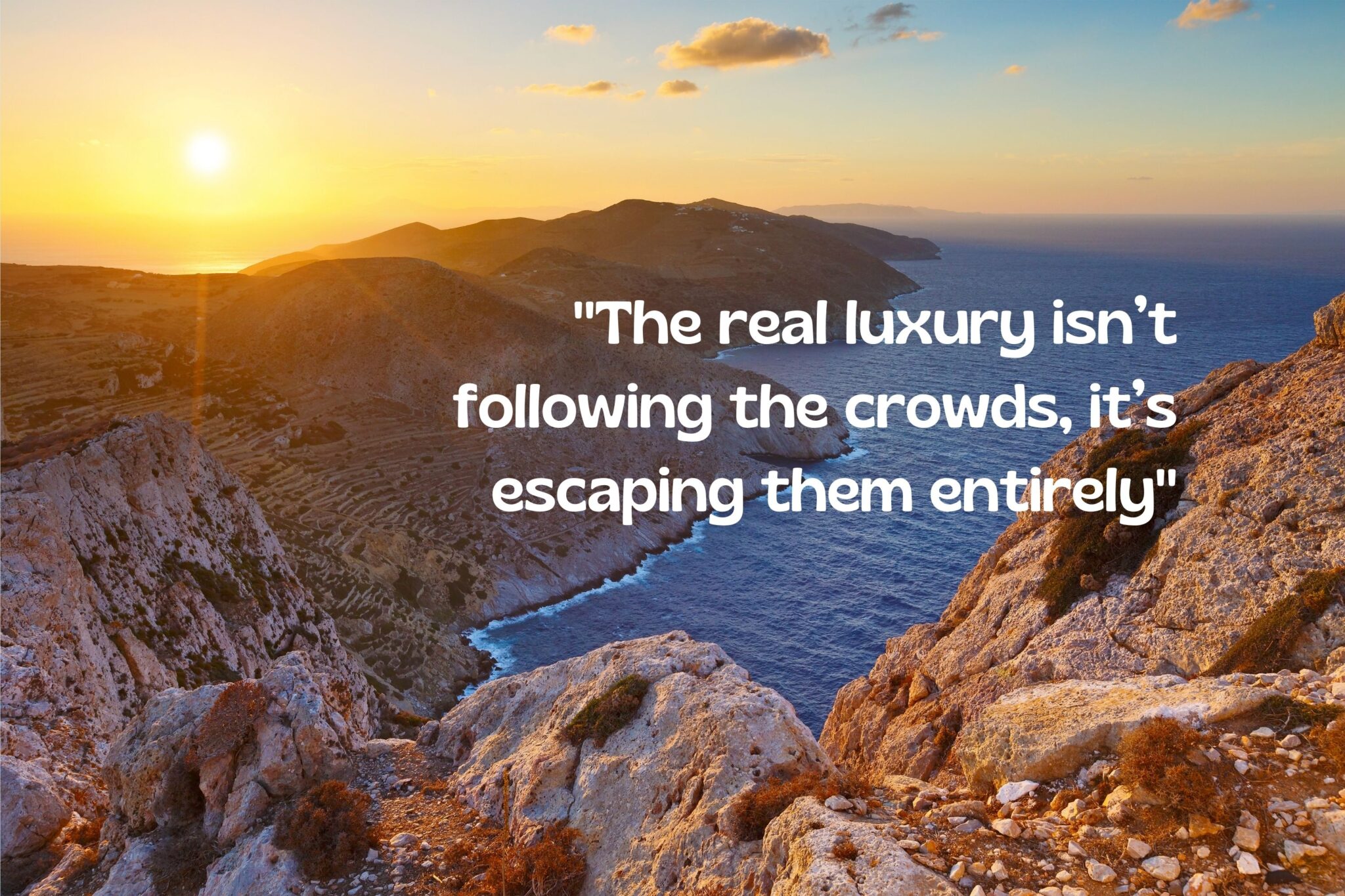
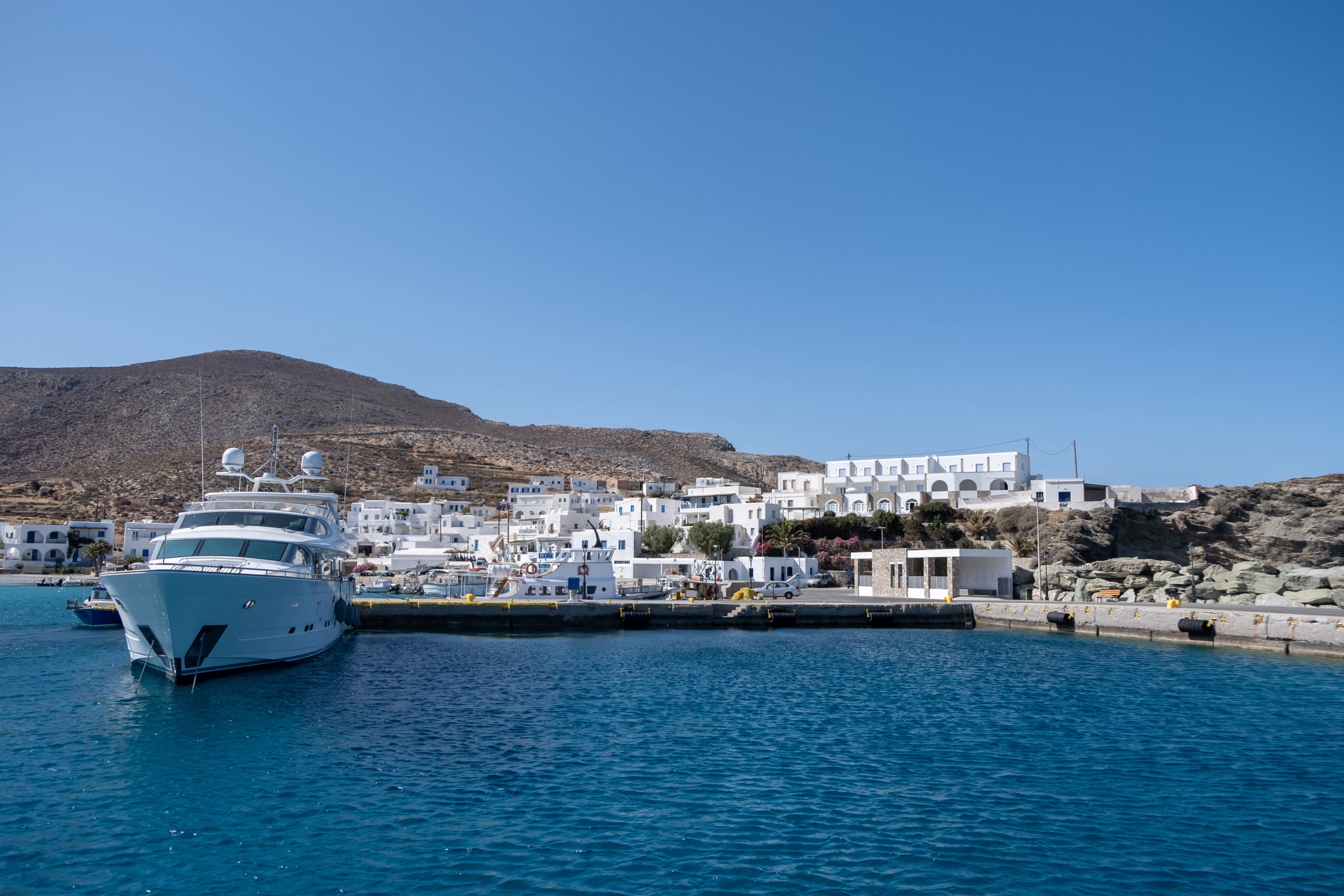
The longest crossing of the first half of the week, run in the morning so there is still a full afternoon ahead. Folegandros is one of the smallest and least developed islands in the Cyclades, and it shows the moment you arrive: no big hotels, no cruise-ship crowds, just cliffs and quiet.
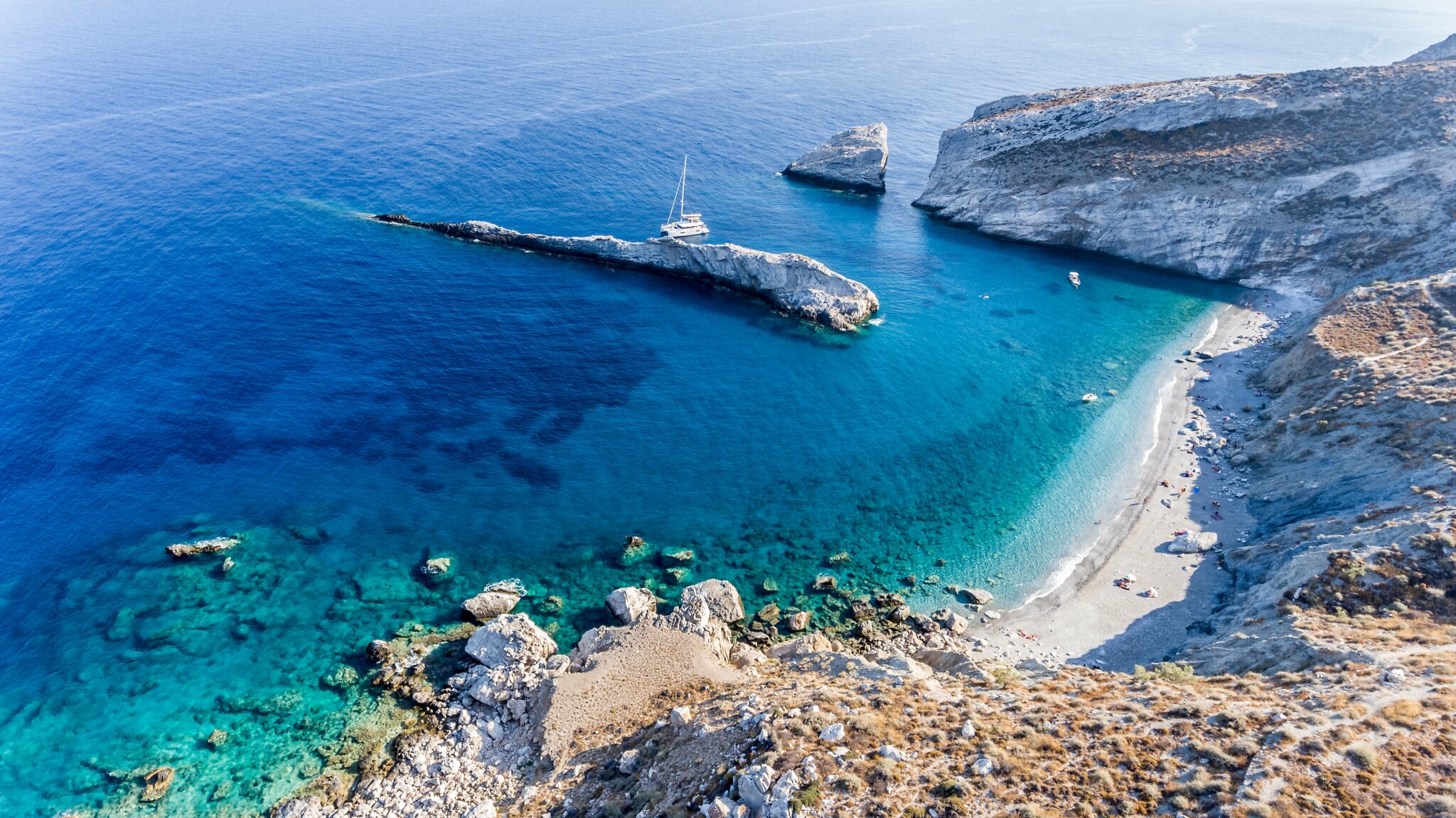
Lunch: Katergo beach
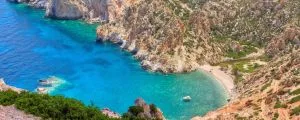
Lunch at anchor off Katergo, widely rated one of the best beaches in the Cyclades for its clear turquoise water, reachable only by boat or a steep hike from Livadi. There are no sunbeds or beach bars here, which is exactly the point.
Afternoon: swimming at Katergo
An easy afternoon in the water: Katergo has no facilities at all, so this is a bring-your-own-shade, swim-until-you’re-done kind of stop, with visibility good enough for snorkelling off the boat.
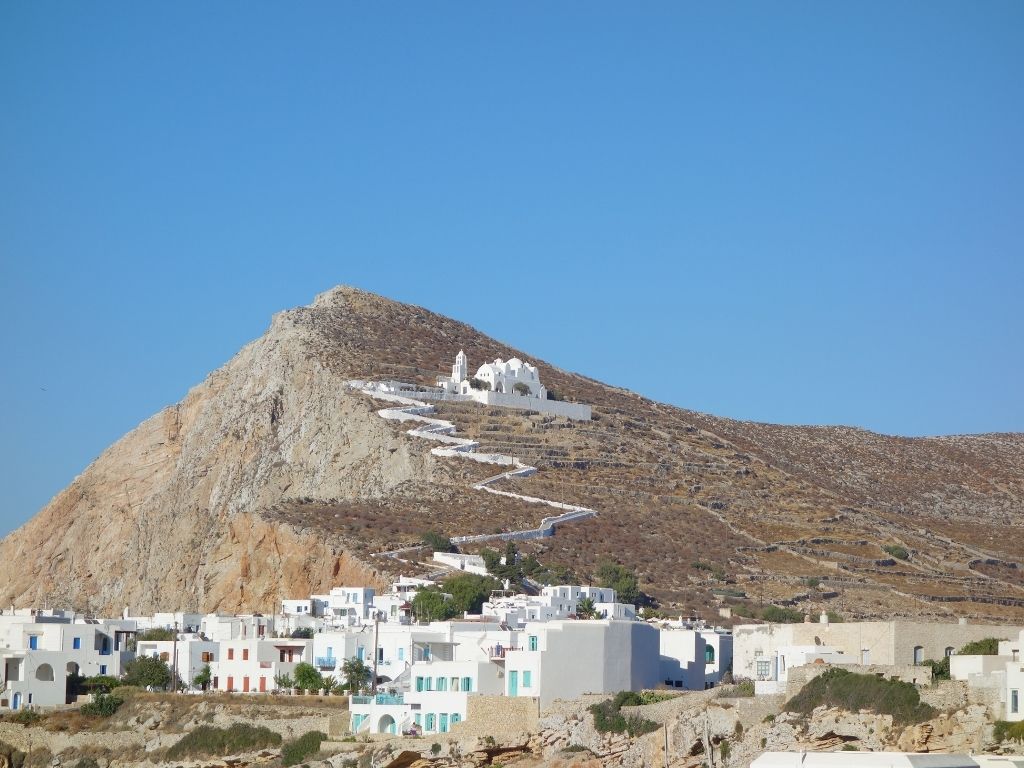
Evening: Folegandros Chora
Take the tender in and the path or bus up to the clifftop Chora for dinner, a village hanging 200 metres above the sea. The 13th-century Castro at its centre was built by the Venetian ruler Markos Sanoudos to protect islanders from the same pirates who used Kleftiko, and its three linked squares, still closed to cars, are as atmospheric after dark as anywhere in the Cyclades.
Overnight: Folegandros.
Don’t Miss
- Katergo beach, reached by boat or a steep hike
- Folegandros Chora’s clifftop Castro, one of the oldest in the Cyclades
- Dinner in squares that are still closed to cars
Day 5 – Folegandros to Santorini (about 27nm)
Morning: the crossing
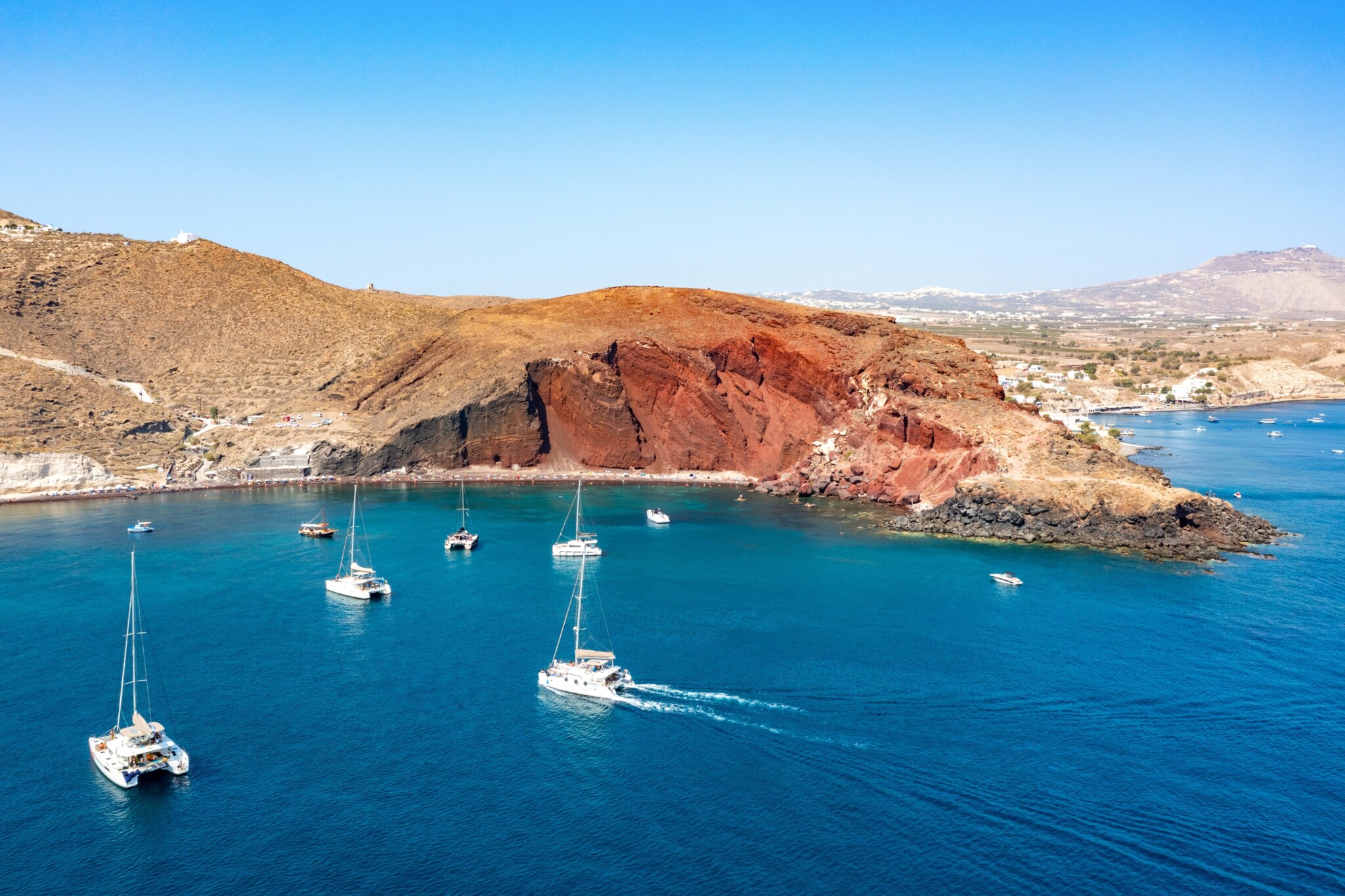
The morning crossing to Santorini, run early so you arrive at the caldera with the afternoon still ahead. Most guests spend the first stretch on deck watching the island’s cliffs come into view from miles out.
Lunch: the first look at the caldera
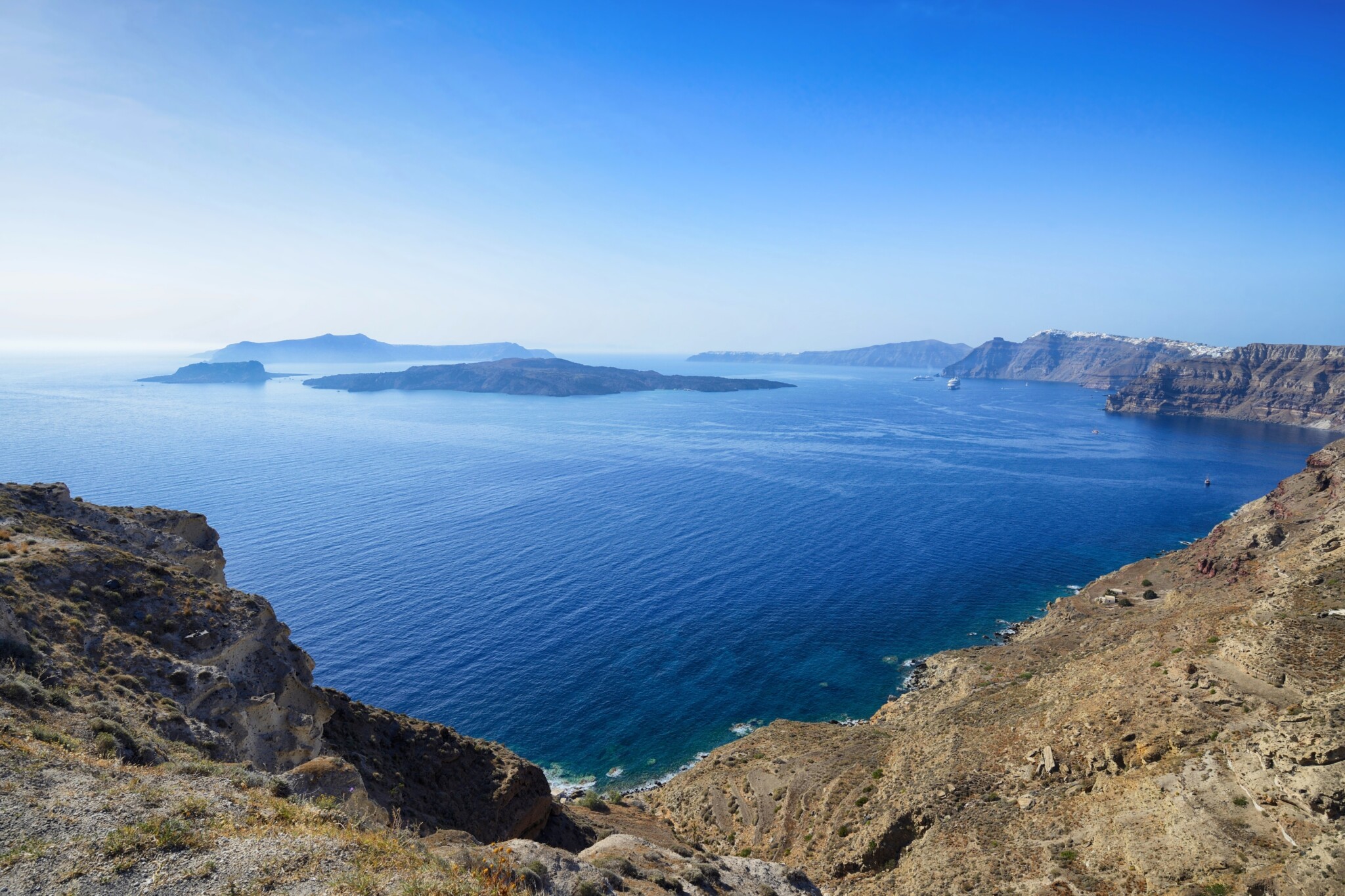
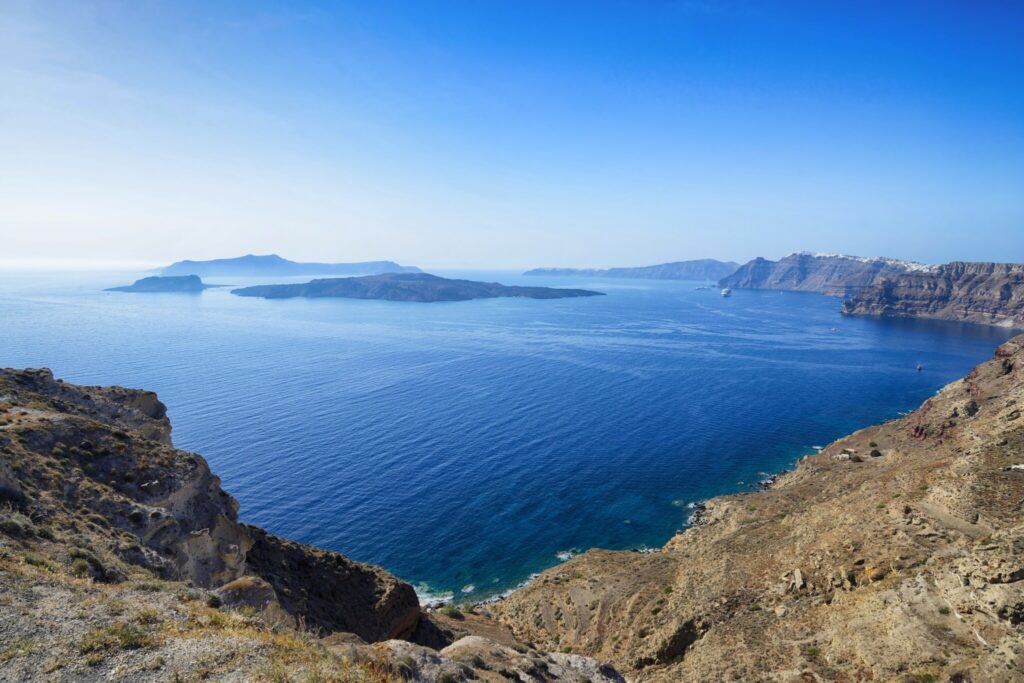
Lunch at anchor as you close in, with the caldera walls already visible: red and black volcanic rock banded like a layer cake, whitewashed villages perched along the rim high above the water.
Afternoon: entering the caldera
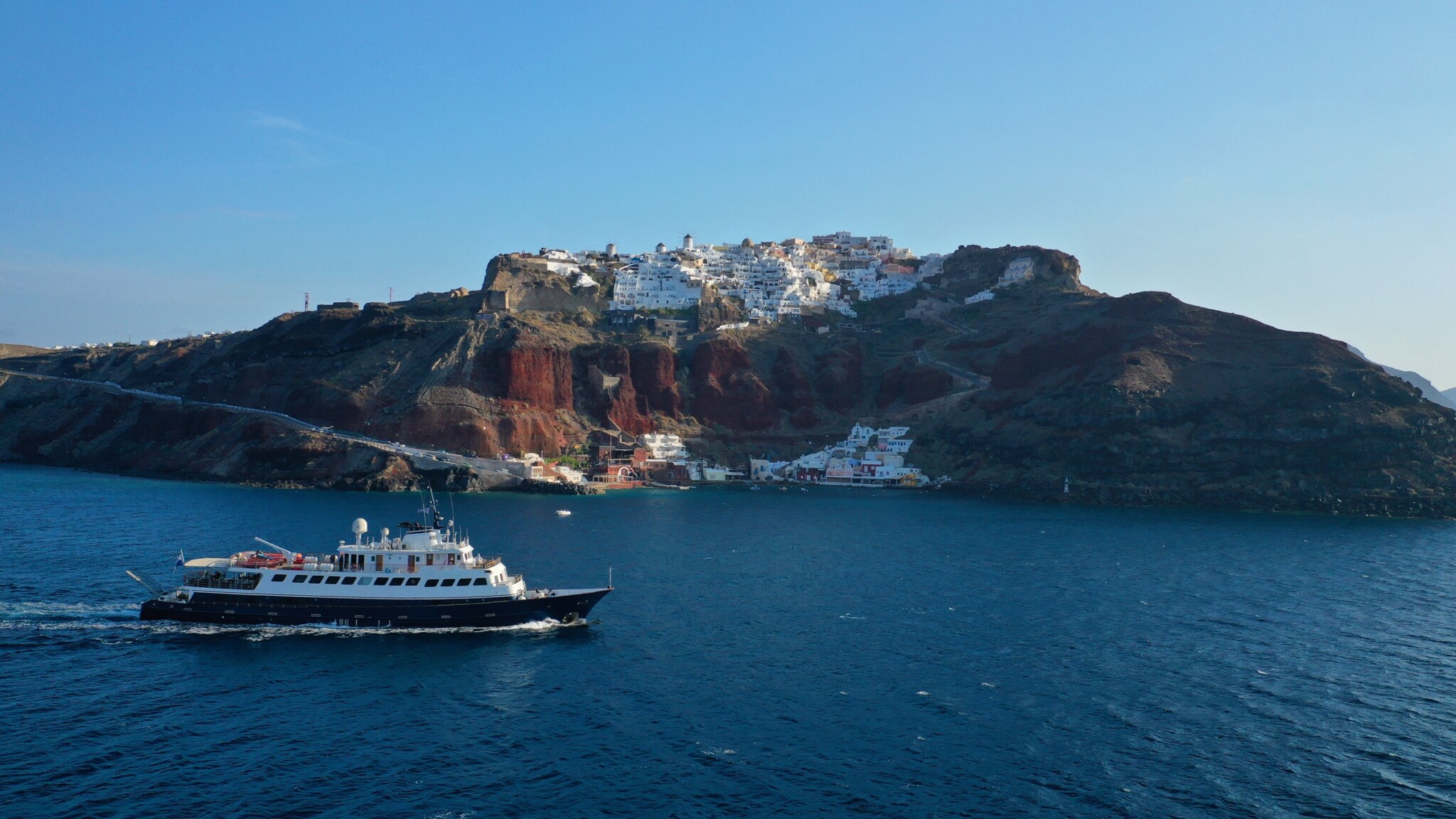
Entering Santorini by sea, cliffs banded red and black, villages like snow on the rim, is the way this island is meant to be seen, and it makes every land-based arrival look second-rate by comparison.
Evening: Oia or Fira
Go up to Oia or Fira late in the day as the cruise crowds leave, or hold the sunset for the deck. The caldera anchorages are exposed, so where you spend the night is the captain’s call.
Overnight: Santorini caldera.
Don’t Miss
- Entering the caldera by sea, cliffs banded red and black
- Oia after the cruise crowds have gone
- Sunset from the deck, if you skip going ashore
Day 6 – Santorini
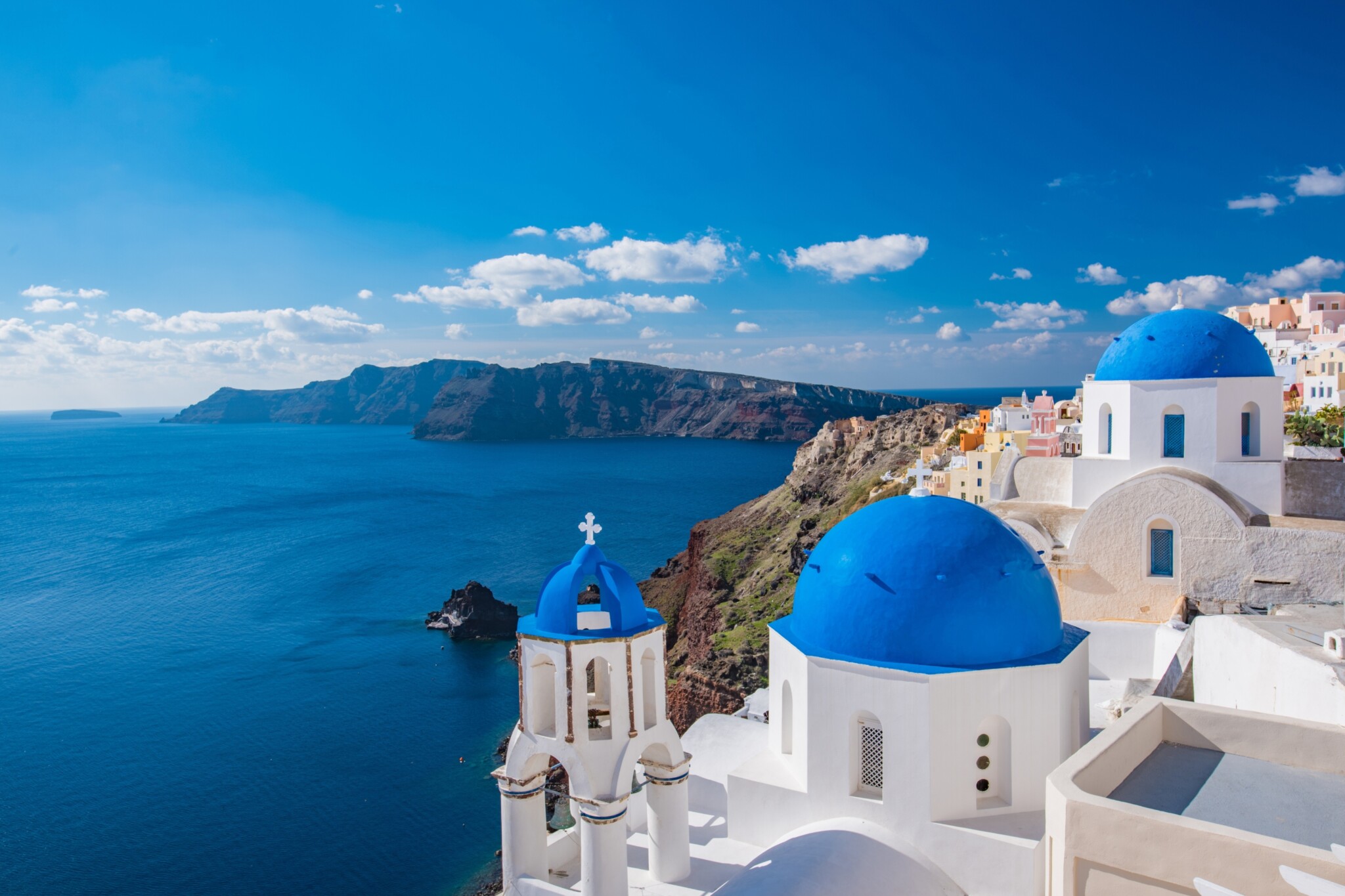
Morning: the hot springs
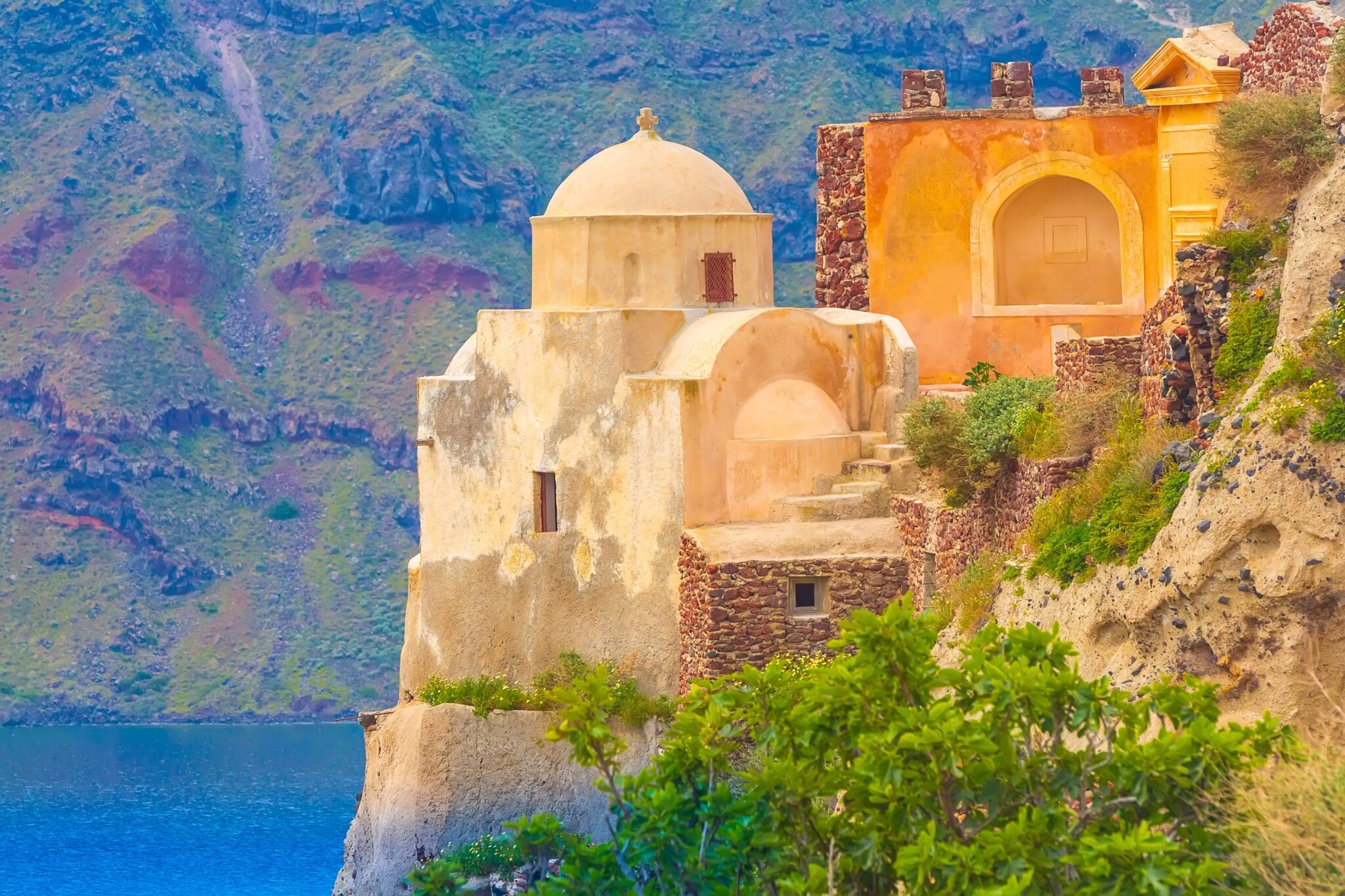
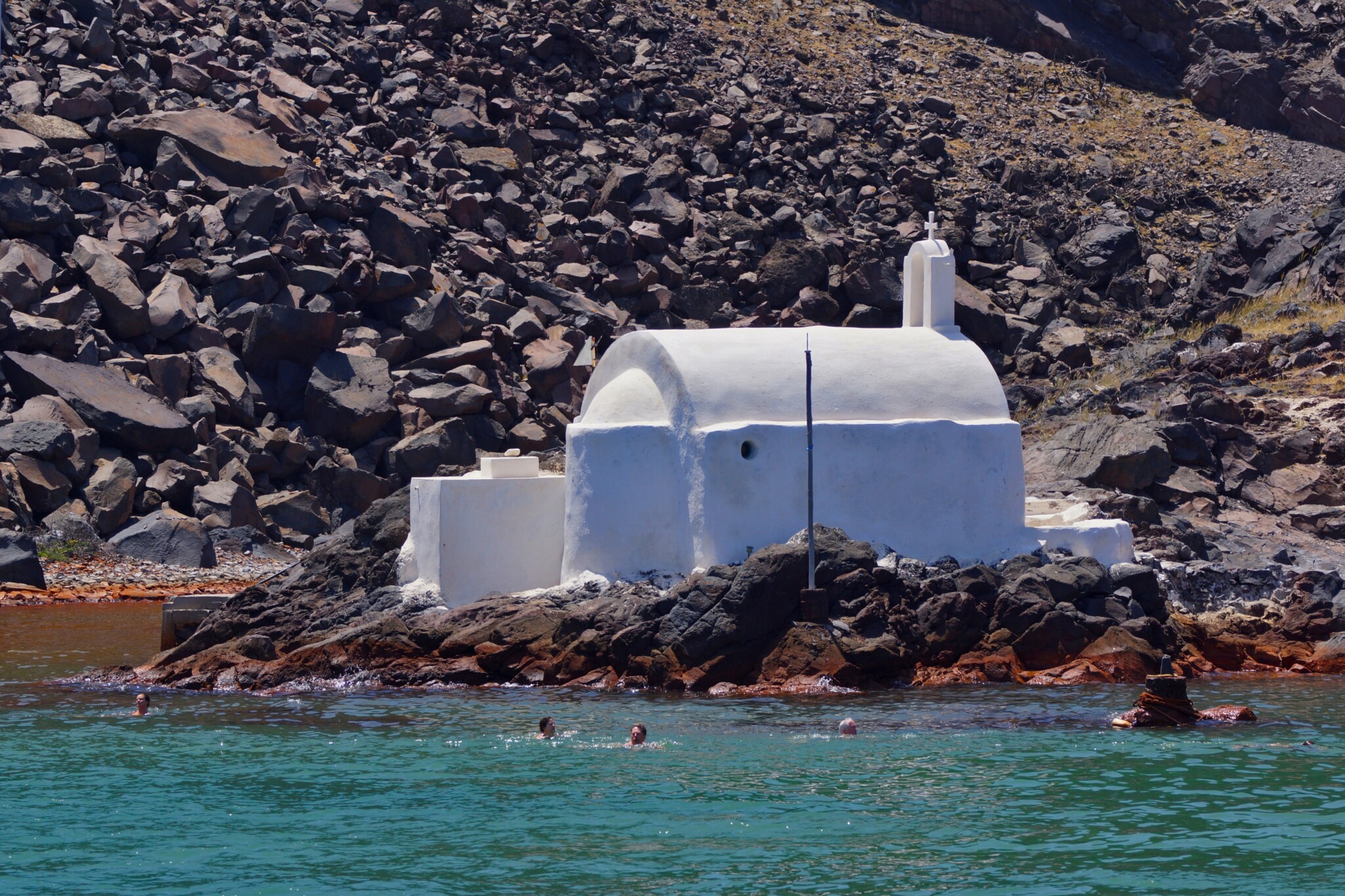
Morning at the hot springs off Palea Kameni, the smaller of Santorini’s two volcanic islets: a swim in mineral water stained rust-orange by iron oxide, warmed by the still-active volcano to around 30-35°C. Leave the light-coloured swimwear on board, it will stain.
Lunch: at anchor by the islets
Lunch at anchor near the volcanic islets before heading back to the caldera rim, with Nea Kameni’s black volcanic cone visible just alongside for anyone who wants the view without the swim.
Afternoon: the caldera rim, or a winery
The caldera-rim walk between Fira and Oia if your group likes to move, or a winery visit if it prefers to sit still with a view. Santorini’s volcanic soil is so poor and free-draining that the phylloxera louse that wiped out most of Europe’s vineyards never took hold here, so the assyrtiko vines are ungrafted and grow low in coiled wreaths called kouloura, some of them over a century old.
Evening: dinner ashore
Dinner ashore tonight is the one we most often book in advance, whether that is a caldera-view table in Oia or a quieter spot away from the crowds in Pyrgos or Megalochori.
Overnight: Santorini caldera.
Don’t Miss
- A swim in Palea Kameni’s warm, iron-stained water
- The caldera-rim walk between Fira and Oia
- A taste of assyrtiko from vines a century old
Day 7 – Santorini to Ios (about 22nm)
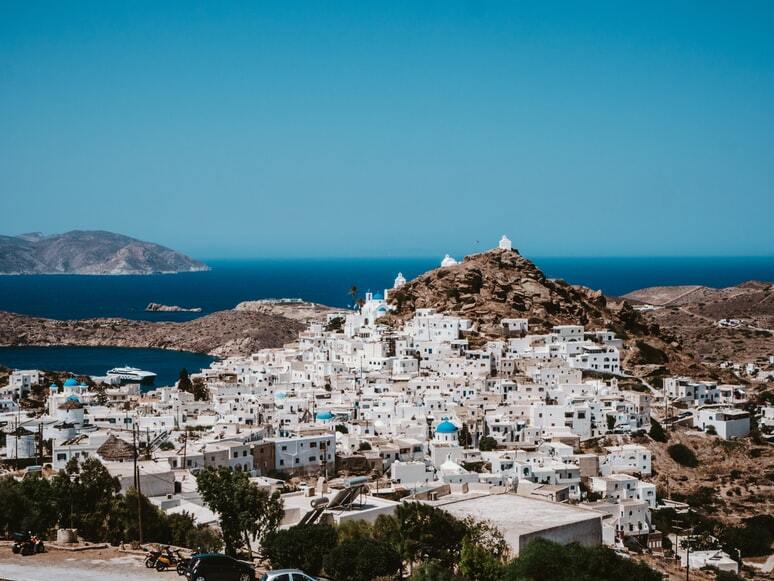

Morning: a short run north
A short run north puts you on Ios by lunch, one of the shortest crossings of the week after the length of the outbound loop.
Lunch: at anchor off Mylopotas
Lunch at anchor off Mylopotas, Ios’ main beach, before deciding how the rest of the day should go, sociable and lively, or quiet and out of the way.
Afternoon: pick your beach
The island wears two faces: the party beaches around Mylopotas, and quiet coves like Agia Theodoti and Manganari that most visitors never reach. Tell us which face your group wants and the day is planned around it.
Evening: Ios Chora
The hilltop Chora is far prettier than Ios’ reputation suggests, whitewashed lanes and a working windmill above the harbour, and evenings there are lively without Mykonos prices.
Overnight: Ios.
Don’t Miss
- Mylopotas beach, or a quiet cove at Manganari, your call
- Ios Chora’s lanes after dark
- A swim in Agia Theodoti’s sheltered bay
Day 8 – Ios to Mykonos, Return (about 45nm)

Morning: the run home
The longest leg of the week, run in the morning: back east to Mykonos, closing the loop. It is the one crossing on the route where a faster hull genuinely buys you a longer afternoon at the other end.
Broker insight
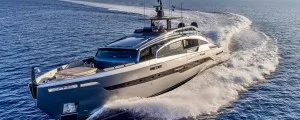
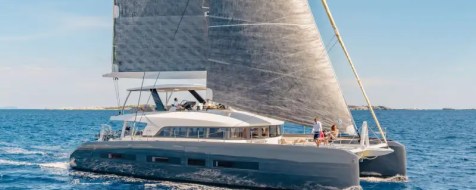
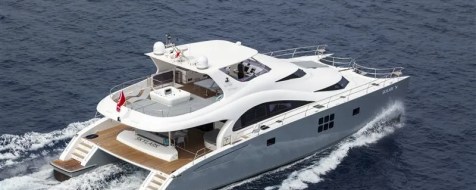
This is a proper Cyclades week, so expect real crossings and Meltemi wind. A catamaran or a capable motor yacht makes the longer legs far more comfortable.
 Daniel Asmus
Owner, Charter Broker, Active CYBA Member, IYBA, ECPY
Daniel Asmus
Owner, Charter Broker, Active CYBA Member, IYBA, ECPY
Lunch: a last swim
There is usually time for a last swim and an unhurried lunch at anchor before the final approach into Mykonos, the week’s easiest, most relaxed midday stop.
Afternoon: the final approach
The last stretch into Mykonos, with the island’s low hills and windmills coming back into view exactly where the week started, a tidy way for the loop to close.
Evening: one more night in Mykonos
Back where you started for a final evening: Little Venice at sunset again, and one more dinner in the old town before hand-back on Saturday morning.
Overnight: Mykonos.
Don’t Miss
- A last swim before the final approach
- One more sunset in Little Venice
- A final dinner in the Mykonos old town
Making This Week Work
The yacht you need
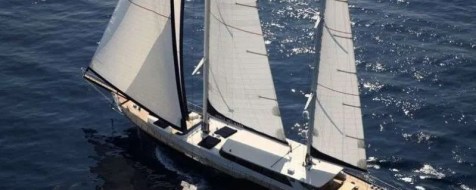
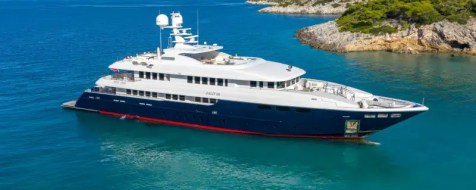
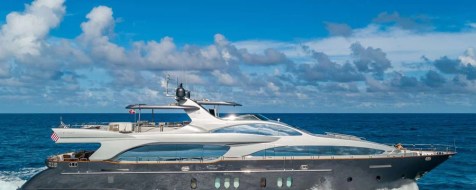
This is the best-value way to combine Mykonos and Santorini in one week: you fly into and out of the same airport, skip the long Athens crossings, and still get a full caldera day. It suits catamarans and motor yachts equally, the daily legs run 22 to 33nm, with the final run home to Mykonos the longest at about 45nm.
How weather can change the week
The meltemi is strongest in this stretch of the Cyclades in July and August. Your captain may run the loop in reverse so the long legs go downwind, or reorder days around a real spell rather than fighting it; the islands on the route stay the same either way.
Best Months to Book
- Best: June or the second half of September, when the meltemi is far softer
- Toughest: mid-July to mid-August, still very charterable, just build in flexibility around the crossings
Coming from Athens instead? See the Athens to Santorini round trip, or start closer to the middle of the chain with the Paros catamaran itinerary.
For a beach club afternoon on the Mykonos days, our guide to the Cyclades beach clubs worth arriving at by yacht covers where the yacht sits for Nammos, Scorpios and Principote and how each day works.





 iMessage
 WhatsApp