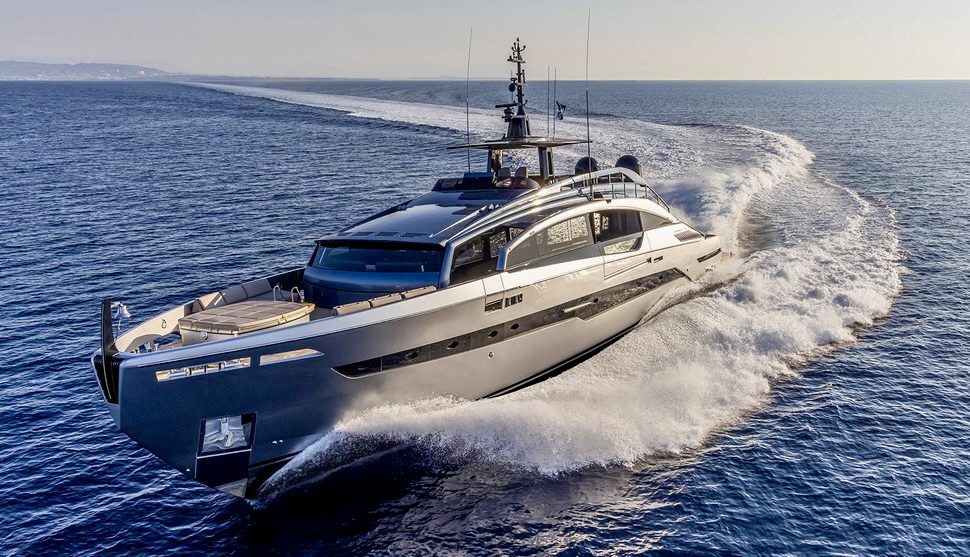
At 9 knots a yacht covers about 20 to 27 nautical miles in the 2 to 3 hours a day we actually recommend cruising. At 15 or 16 knots the same morning covers 30 to 45. That is the whole difference, and in a Greek week it decides which islands are realistically yours.
The 2 to 3 hours is the part people miss. You came for the islands, not the transit, so we do not plan long days underway: you swim in the morning, move while everyone is having coffee, and are anchored somewhere new in time for lunch. Plenty of days are a 1 hour hop. A faster yacht does not buy you longer days at sea. It puts more of Greece inside that short morning.
Quick answer
- We plan 2 to 3 hours of cruising a day at most, and often just 1. A 9 knot yacht covers roughly 20 to 27 nautical miles in that window, a 15 knot yacht roughly 30 to 45.
- The Saronic Gulf works beautifully at 9 knots, which is why it is where we send most catamaran charters.
- The wider Cyclades open up from about 12 knots. Santorini is the furthest island from Athens and needs a plan on any yacht.
- Spec-sheet speed is a best case in flat water. Your captain will go slower in summer wind, so we plan with a little less.

What 9 Knots and 16 Knots Actually Buy You
These are the numbers behind a real week, using the 2 to 3 hour window rather than a full day at sea. Every yacht page on this site lists her cruising speed, so you can check any shortlist yourself: start with the motor yachts or the catamarans.
| Cruising speed | Typical yacht | A 2 to 3 hour hop covers | What that opens up | On our Greek list |
|---|---|---|---|---|
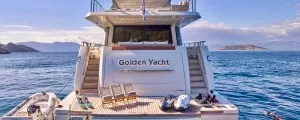
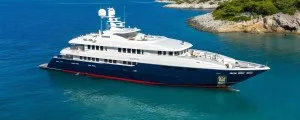
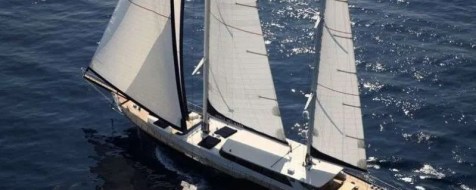
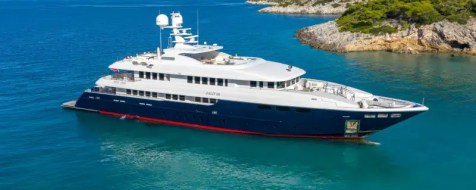
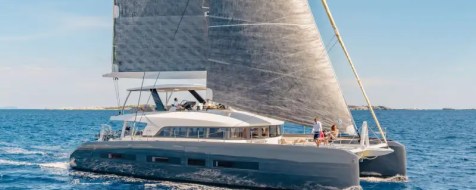
| 9 to 10 knots | Sailing catamaran, gulet, displacement motor yacht | 20 to 27 nautical miles | The Saronic Gulf at its best, and the inner Cyclades once you are among them | MY EDEN, 149 ft Golden Yachts, 10 knots |
| 12 to 13 knots | Semi displacement motor yacht, power catamaran, larger sailing yacht | 24 to 36 nautical miles | The standard Cyclades loop without giving up a swim stop to make the distance | SWEET MARYI, 171 ft Amels, 13 knots |
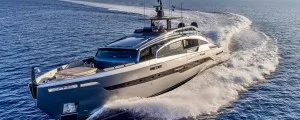
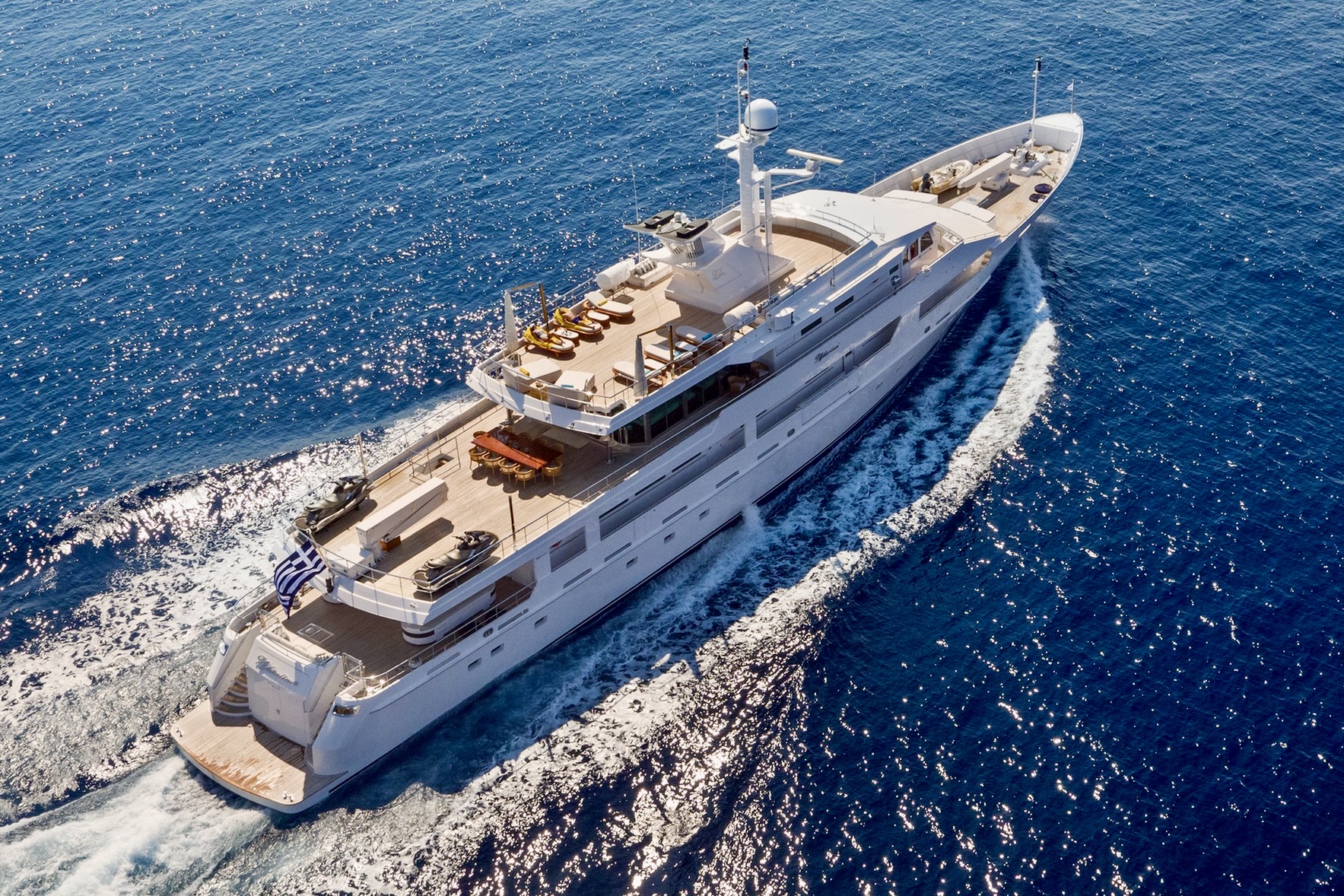
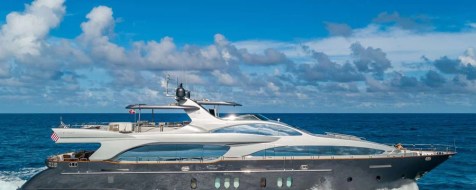
| 15 to 16 knots | Planing motor yacht | 30 to 45 nautical miles | The outer islands on a normal morning, and Santorini as a choice rather than a problem | YAMI, 146 ft Heesen, 16 knots |
| 20 knots and up | Fast planing motor yacht | 40 to 60 nautical miles | Distance stops deciding your route. Only the weather does | HOKULANI, 149 ft PalmerJohnson |
The pattern is simple. Below about 12 knots you plan the week around a compact area and it is genuinely lovely. Above it, you can be greedier about which islands make the list. Nothing about a slower yacht makes for a worse holiday, it just makes for a smaller map.
The one leg that catches slower yachts out is the first one, the crossing from the Athens area out to Kea, which eats most of a morning at 9 knots. Starting from Lavrio instead, or running that crossing overnight, solves it. There is more on that choice in our guide to starting in Athens or out in the islands.
Broker insight
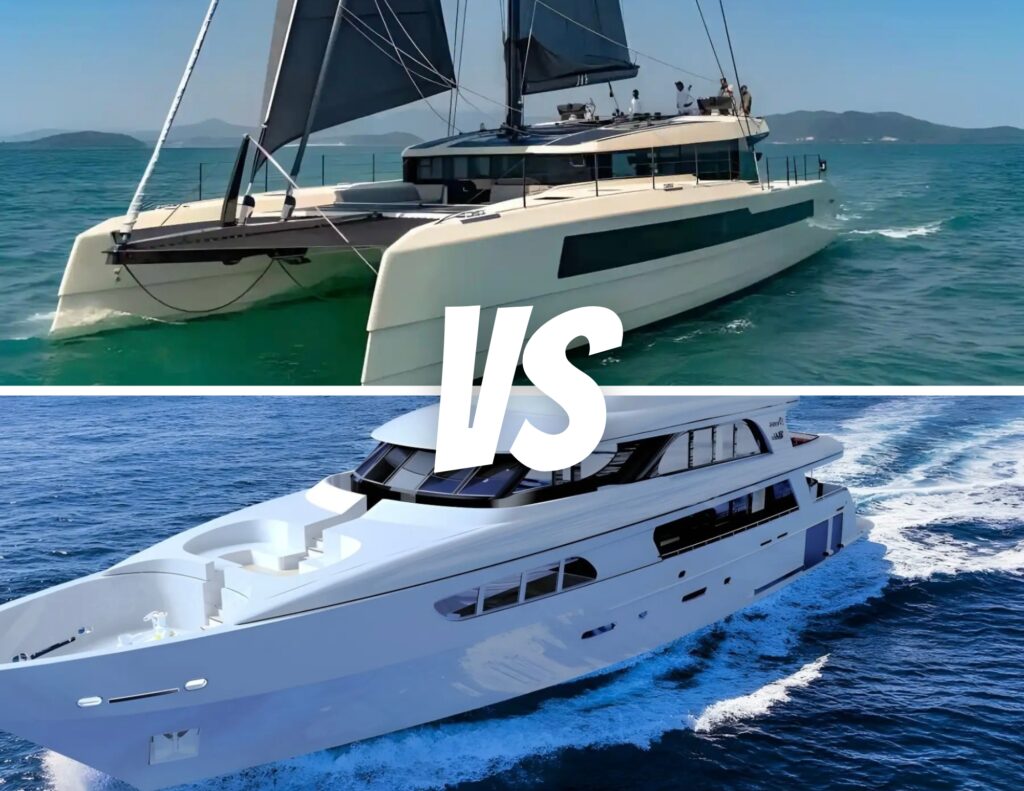
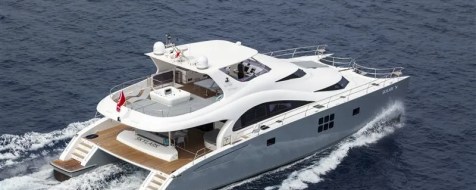
There are not so many power catamarans in Greece, and they offer roughly a 30 percent speed increase depending on conditions. A journey out of Athens that can take a sailing yacht 5 or 6 hours, a big power catamaran covers in around half the time. And with modern, economical engines, your APA for the week is going to be significantly less than on a thirsty older motor yacht.
 John Boullin
Charter Broker
John Boullin
Charter Broker
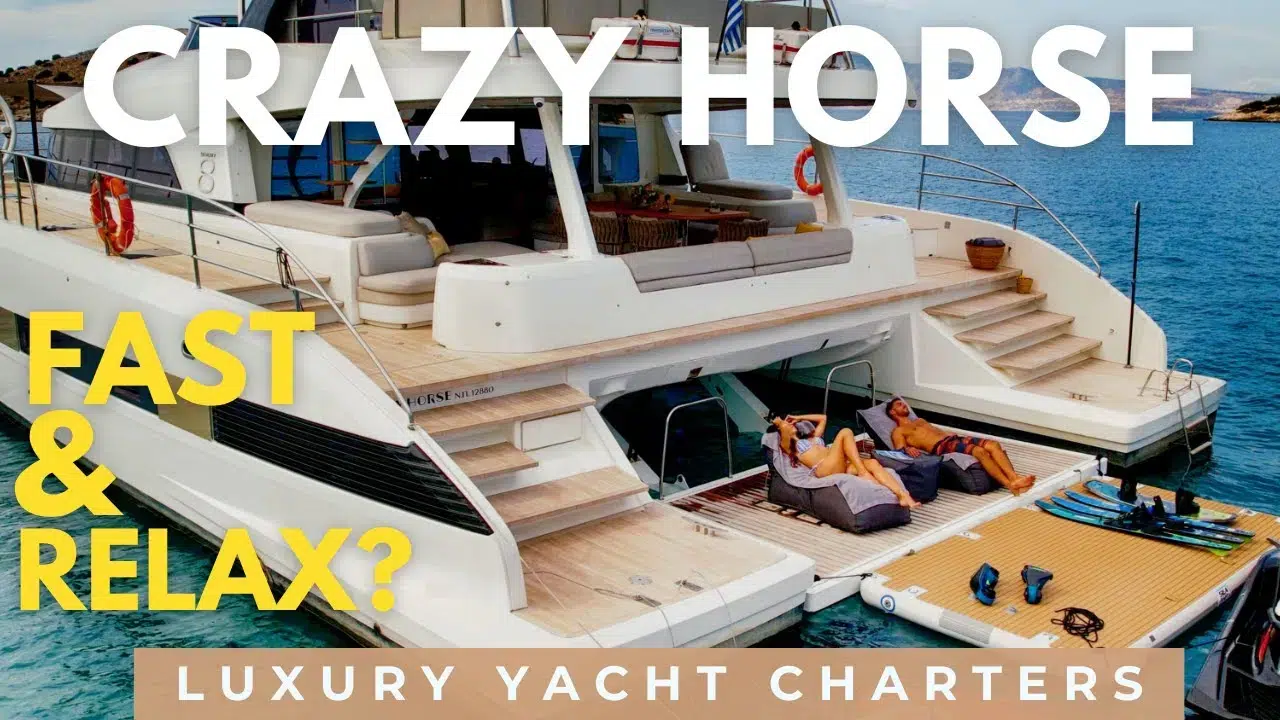
CRAZY HORSE, a Lagoon Seventy 8 power catamaran on our Greek list, is the clearest version of this. Her captain puts the run out of Athens into the Saronic islands at about 2 hours, against the 5 or 6 hours a sailing yacht needs for the same water. That is the trade in one line: a faster hull hands you back the morning. On a short route you may not need it, which is exactly why the answer depends on where you are going.
Santorini: The One Island That Needs a Plan
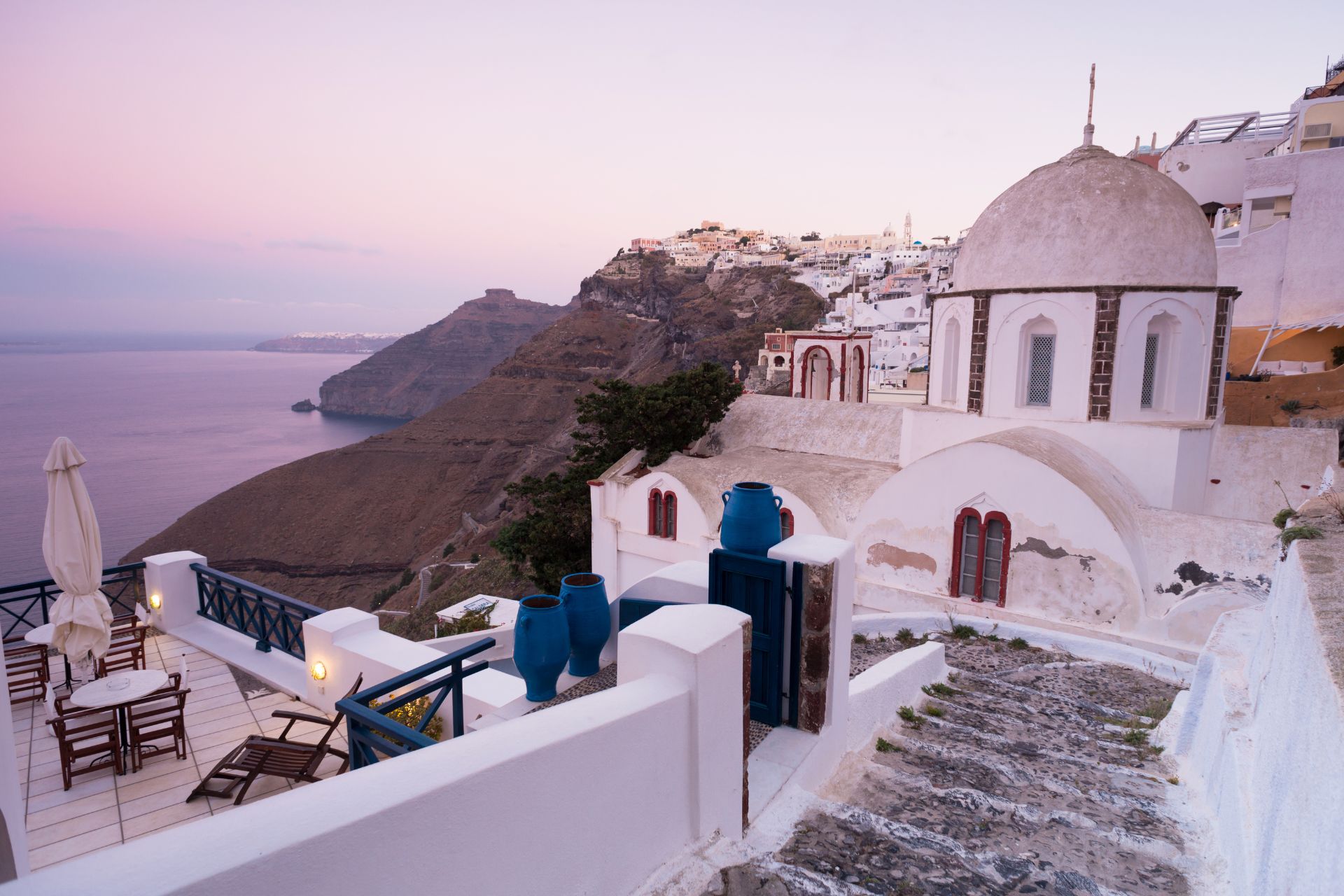
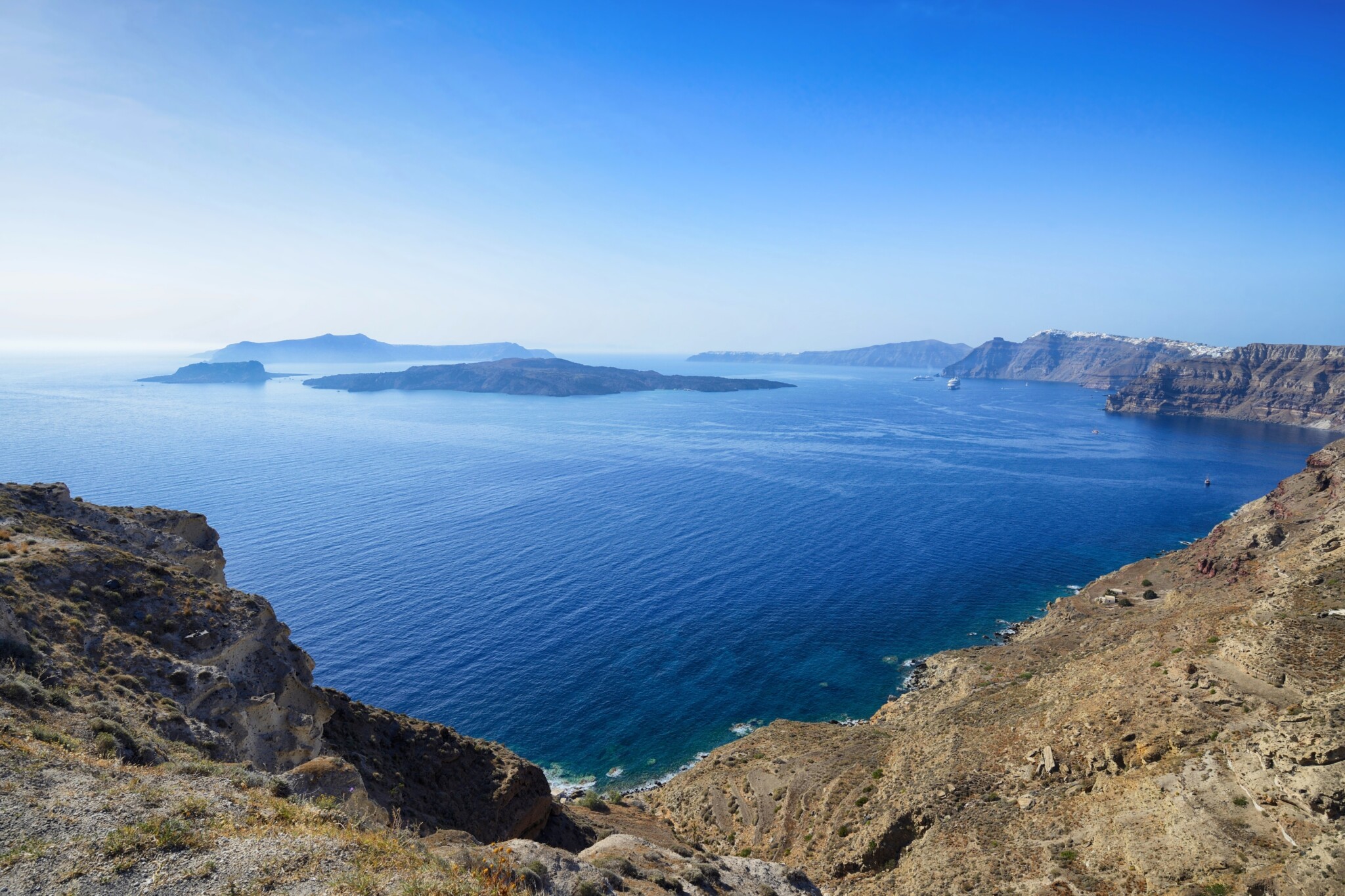
Santorini is the furthest of the Cyclades from Athens, roughly 130 nautical miles, and it is the one island that needs a plan on any yacht, fast or slow. Out and back is around 260 nautical miles before you have visited anywhere else, and it is not symmetrical: the Meltemi blows from the north, so the run down is the easy half and the way back is the slow, uncomfortable one.
At the pace we plan, that is not a morning hop at any speed. So we do it 1 of 3 ways: run the long leg overnight while you sleep, book a one way southbound and fly home from Santorini, or start you inside the islands at Paros, Naxos or Mykonos so it is close from day 1. A faster yacht makes all 3 easier. It does not remove the distance.
One port fact worth knowing early: the yacht cannot go into port at Santorini, so guests go ashore by tender. It works perfectly well, but finishing a charter there is the harder version and usually carries an extra day on the rate. The 7-day Santorini itinerary shows how the week is normally built, and round trip versus one way covers the direction decision.
Why the Real Speed Is Lower, and Why Faster Is Not Always Better
Two things to hold lightly when you read a spec sheet.
The first is that the number is a best case, measured in flat water. The Aegean in July and August often is not flat, and when the wind is up your captain simply goes slower so the ride stays comfortable. That is good seamanship, not a fault in the yacht. It means we plan with a little less than the printed figure, and if a yacht only just manages your route on paper she will not manage it in August.
The second is that fast is not automatically better. A hull built to make 20 knots rides differently from a displacement yacht ambling at 9, and in a chop your group feels it. Stabilizers, not speed, are the comfort lever we check first. Faster is better at one thing: covering distance. Fuel follows speed too, and it comes out of your APA, though on a week in the usual six-figure range it is rarely the number that decides the yacht. The real figures are in our guide to fuel costs on a Greece charter.
Broker insight
I am sceptical of a yacht listed as cruising at 23 knots. A few times when it comes to it, the captain says ah no, the cruising speed is more like 15 to 18 knots, and that throws out the cruising distances you planned around.
 Louis Lamprell
Charter Broker, Active CYBA Member
Louis Lamprell
Charter Broker, Active CYBA Member
What If Your Yacht Does Not Reach Where You Want to Go?
It usually is not, and when it is we have 4 fixes we work through in order.
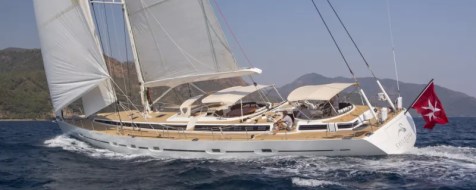
Change the yacht. Normally a faster hull in the same budget band. If speed is the whole reason, our comparison of sailing catamarans and power catamarans settles it more cleanly than length does, and the fastest motor yachts we charter in Greece is the shortest route to a boat that solves it outright.
Change the start point. The cheapest fix out of Athens is not a different island, it is a different port. Lavrio takes a real bite out of the first crossing to the Cyclades.
Change the direction. Running the route southbound with the Meltemi behind you, rather than fighting back north, can save hours on the same itinerary.
Drop or swap one stop. Usually the one nobody in the group is attached to. It is remarkable how often that single change turns a stretched route into an easy one.
All 4 leave you with the week you wanted. None of them is a downgrade.
Tell Us the Week, We Will Find the Yacht
Tell us the islands you have in mind, or just describe the week you are picturing, and we will come back with the yachts that genuinely do it at a relaxed 2 to 3 hours a day. If something on your list does not fit, we will say so plainly and tell you the single change that fixes it. Working out distances and checking cruising speeds is our job, not yours.
If every yacht on your list already reaches where you want to go, here is how we choose between them. Still picking a region rather than a boat? Start with our comparison of the Cyclades, the Ionian and the Saronic.
People also ask
What is a good cruising speed for a Greece yacht charter?
About 9 knots is fine for the Saronic Gulf and for hopping between the inner Cyclades once you are there. For a wider Cyclades route, 12 knots or more keeps every day inside a short morning. If Santorini is non negotiable, look at 14 knots and up, an overnight leg, or a start inside the islands.
How many hours a day do you actually cruise on a Greek charter?
We plan 2 to 3 hours at most, and plenty of days are a 1 hour hop. You are there for the islands, not the transit. The only time we would run a long leg is overnight, while everyone is asleep, and only when the route genuinely needs it.
Can a 9 knot yacht get to Santorini in a week?
One way southbound from Athens, yes, and that is how we would book it. What we would not do is spend 2 days of your week getting there and back at 9 knots. Either the crew run the long leg overnight while you sleep, or we start you inside the Cyclades so Santorini is close from the first morning.
Does a faster yacht mean a rougher ride?
It can. A planing hull at speed rides differently from a displacement yacht at 9 knots, and in a chop your group will notice the difference. Faster is better at covering distance, not automatically better.





 iMessage
 WhatsApp