Stabilizers make more difference to comfort than any other single piece of equipment on a Greek yacht charter. At anchor they settle a rolly bay to a gentle sway, and underway they smooth the crossings between islands. In the Cyclades during meltemi season, that can be the difference between enjoying the itinerary and enduring it. In the sheltered Saronic and Ionian, they matter far less.
You do not have to sort any of this out yourself. Our brokers write stabilizers into the client brief before almost anything else when a group is heading for open water or traveling with someone sensitive to motion, and every shortlist we send is filtered accordingly.
Here is what stabilizers do in plain English, where in Greece they earn their keep, and how we use them when we match you to a yacht.
Fins and Gyros: The 2 Kinds of Stabilizers, Translated
Spec sheets use 2 phrases worth knowing:
- stabilizers underway
- stabilizers at anchor
Underway stabilization smooths the crossings. At-anchor stabilization, sometimes called zero speed, is the premium tier, and it is the one that fixes the rolly night in an open bay.
Fin stabilizers
Fin stabilizers are wing-like foils under the hull. Underway, water flowing past them creates lift that pushes against the roll, and manufacturers quote reductions of up to 90 percent in the right conditions. Older fin systems need forward speed to work, so they stop helping the moment the yacht anchors.
Modern zero-speed fins keep working at anchor by sweeping like paddles instead of flying like wings, a little less effectively than at cruising speed but enough to change how the night feels.
Gyroscopic stabilizers
Gyroscopic stabilizers are a heavy flywheel spinning inside the hull, with nothing sticking out of the boat. They work at anchor and underway, are strongest when the yacht is stopped or moving slowly, and are common on smaller motor yachts.
A gyro needs about 20 to 40 minutes to spool up, so a good crew switches it on before it is needed rather than after the rolling starts.
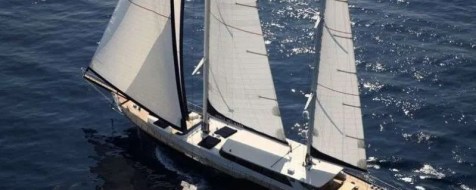
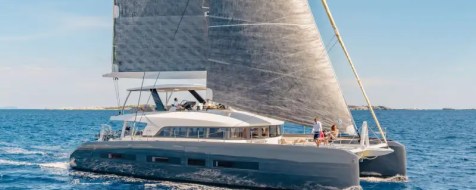
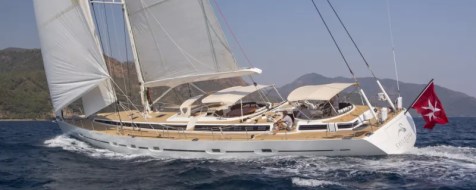
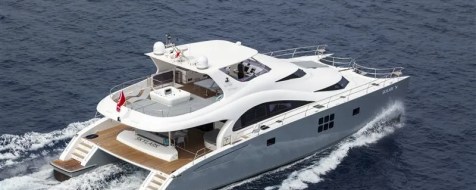
Catamarans and sailing yachts play by different rules. A catamaran’s twin hulls resist roll by design, and a sailing yacht under sail is steadied by its keel and the press of its canvas, so neither type usually carries stabilizers at all. That is not a gap in the spec sheet. It is a different route to the same comfort.
Where Stabilizers Matter in Greece, and Where They Do Not
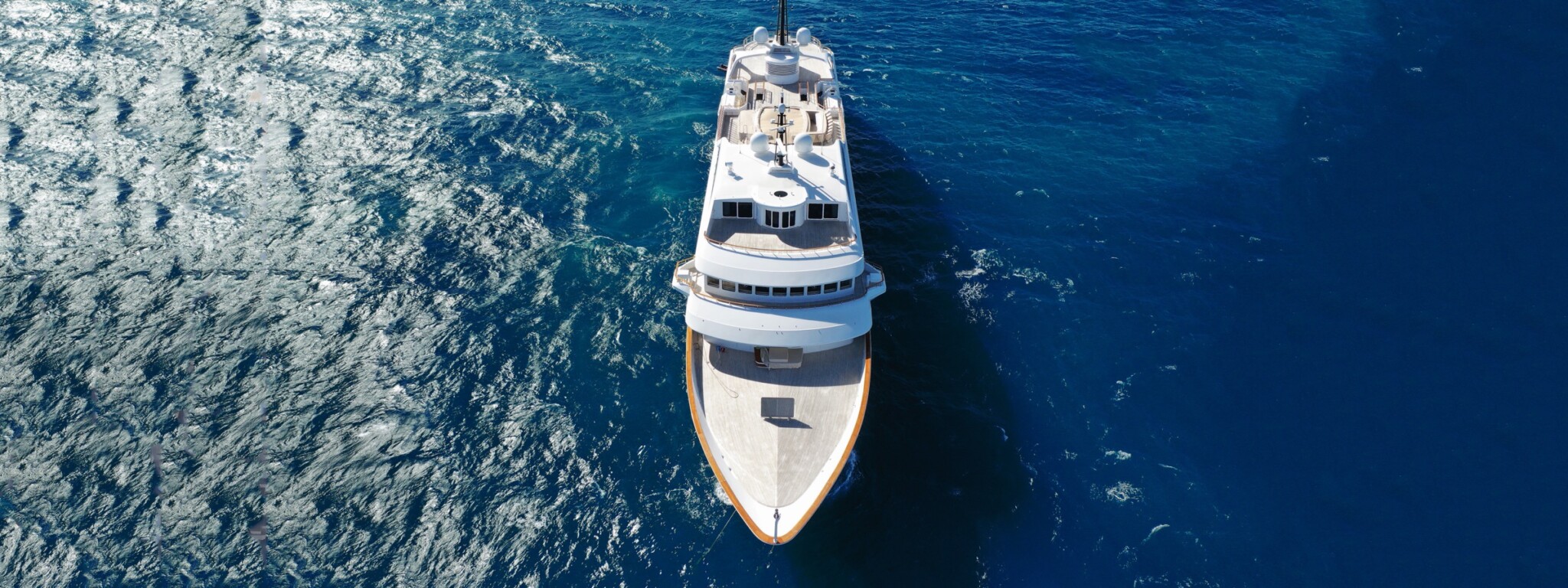
The Cyclades are where stabilizers earn their keep. The meltemi, the dry northerly wind that peaks from July into mid-August, builds short, steep seas in the channels between islands and wraps swell into open anchorages. On a monohull motor yacht with no at-anchor stabilization, a bay that looked calm at sunset can roll the boat until morning.
With zero-speed fins or a gyro running, the same bay settles to a gentle sway you stop noticing.
3 things decide how the meltemi feels on board:
- the hull form
- the stabilizer setup
- and the captain’s choice of anchorage.
The captain’s share is bigger than most people expect, because tucking behind the right headland removes most of the swell before any hardware gets involved. Stabilizers handle what still sneaks in.
The Saronic and the Ionian are a different story. Both are far more protected, the crossings are shorter, and plenty of our clients have excellent weeks there on yachts with no stabilizers at all. If still water matters to your group above everything else, choosing one of those regions is the most effective single decision you can make, before any spec sheet gets read.
One honest limit: stabilizers smooth the ride, they do not open closed ports. When a strong blow shuts down departures, every yacht waits it out, stabilized or not. That is why we plan Cyclades comfort with the calendar and the routing first.
June and September are kinder than the peak meltemi weeks, and every itinerary we build there carries a sheltered plan B. Stabilizers then make the crossings you do take, and the bays you do anchor in, feel far better.
Expert insight
Stabilizers buy comfort, not access. No matter whether the yacht has stabilizers or not, if the wind is howling, no motor yacht can leave port. That is why we set the season and the route before we talk hardware, and treat the Cyclades in high summer as a gamble we plan around.
 Daniel Asmus
Owner, Charter Broker, Active CYBA Member, IYBA, ECPY
Daniel Asmus
Owner, Charter Broker, Active CYBA Member, IYBA, ECPY
How Our Brokers Shortlist for Stabilizers
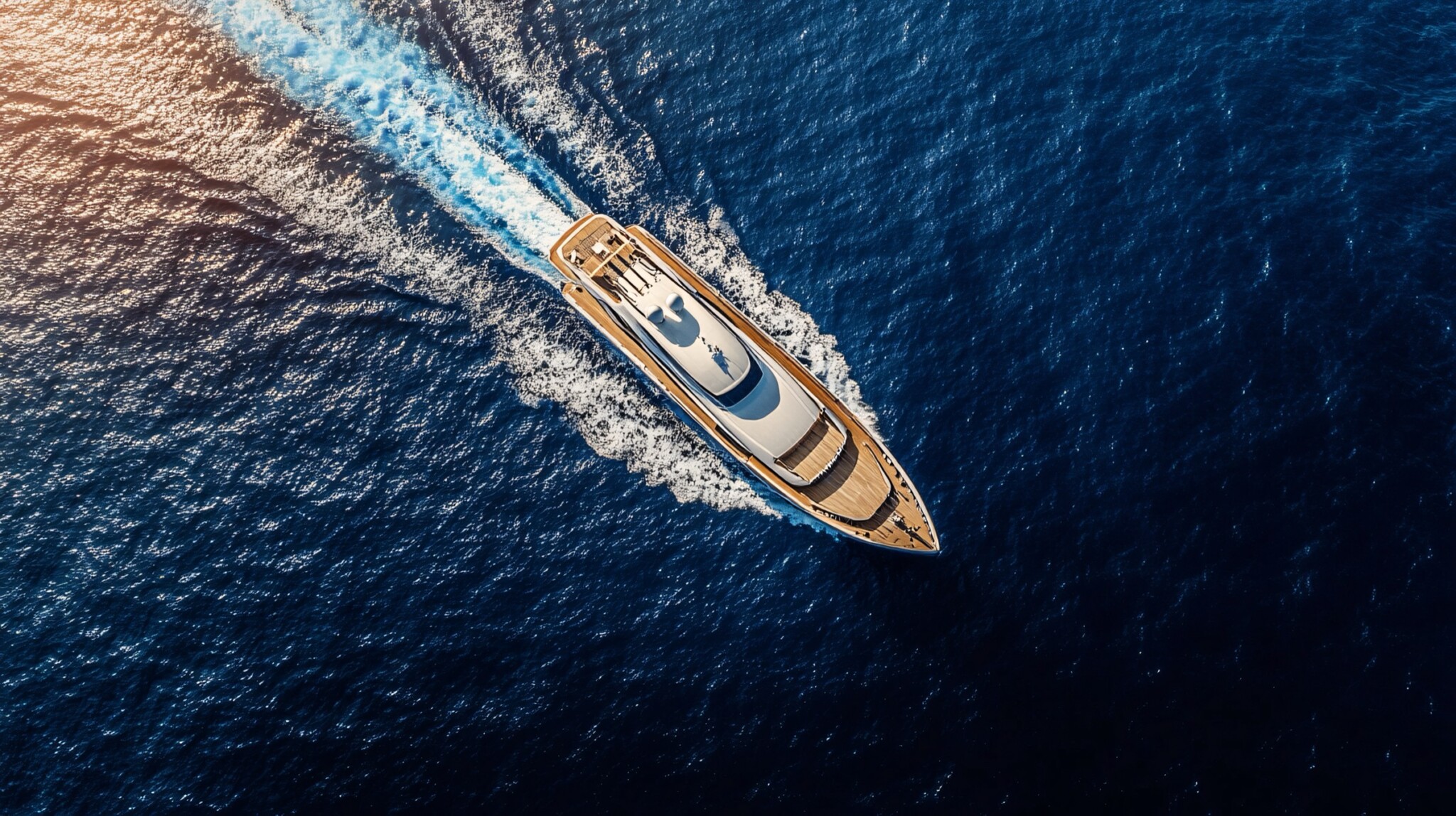
A motor yacht with stabilizers for the Cyclades is one of the most common requests in our internal broker channel, and the answers come back in minutes, because our brokers keep a running list of which Greek yachts stabilize underway, which also stabilize at anchor, and which do not. That list is not published anywhere, and it is a large part of what you hire a broker for.
The way we route it is simple. For the Saronic, a catamaran is usually the easy answer. For the Cyclades, we shortlist motor yachts with stabilizers, ideally at anchor as well as underway. And when someone wants the surest possible motion comfort, we go bigger or we go sail, because a heavier hull rides more steadily and a sailing yacht under canvas steadies itself.
Your part is a single line in your first inquiry: tell us if anyone in your group is sensitive to motion. That line changes the shortlist. We drop the yachts that only stabilize underway, we confirm the exact setup with each yacht before you commit, and we route the week around protected water.
Stabilizers are one tool in a bigger kit that also includes region, season, and pacing, and we walk through the whole kit in our guide to avoiding seasickness on a Greek yacht charter.
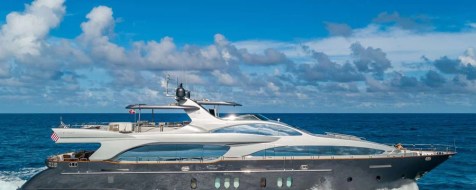
3 Stabilized Yachts on Our Greek List
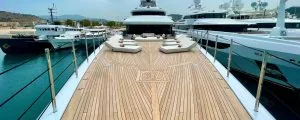
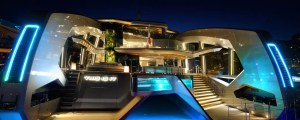
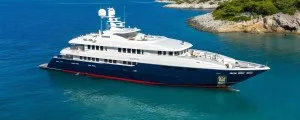
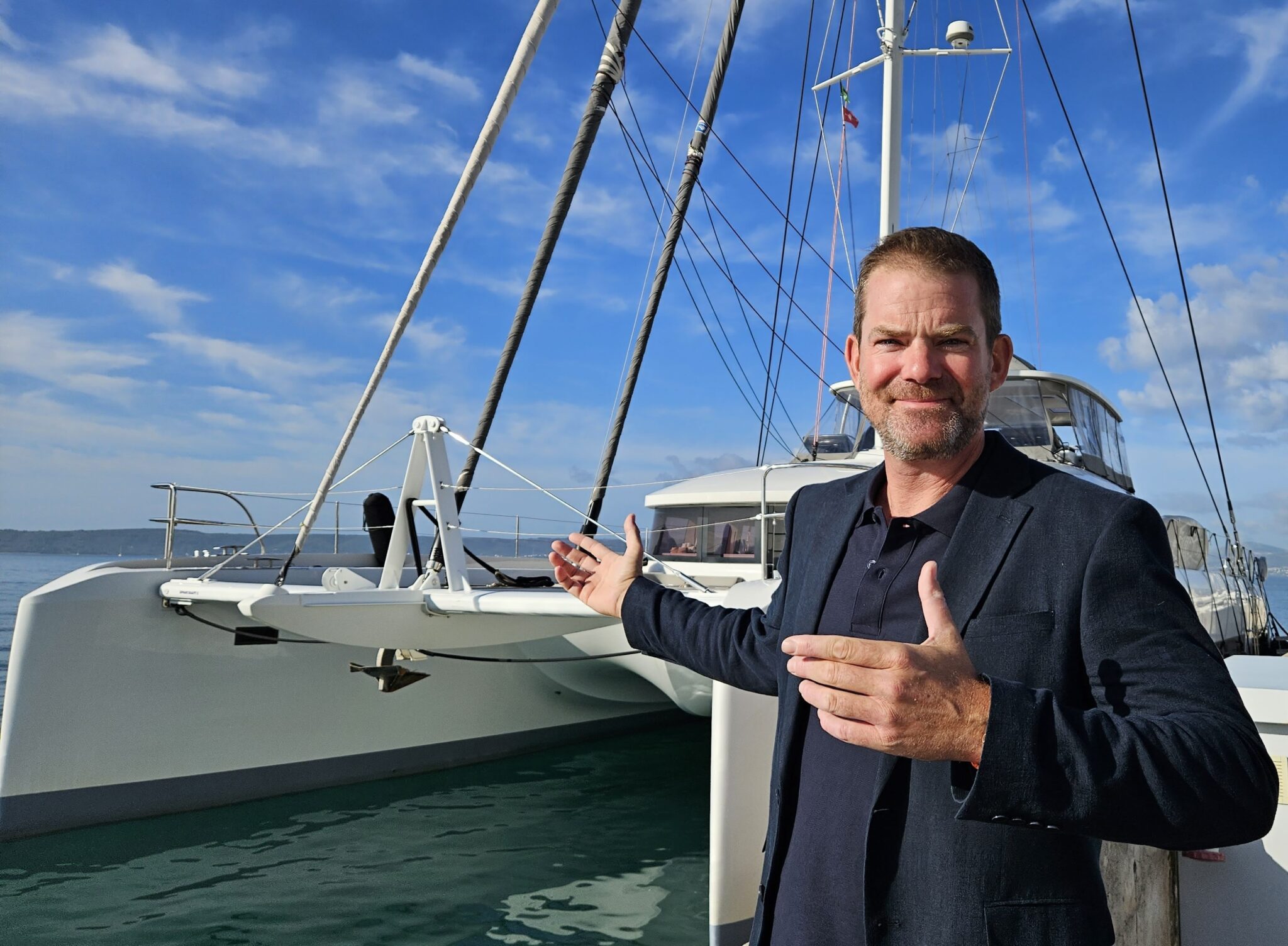
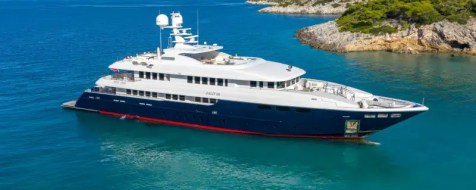
These 3 crewed motor yachts from our current Greek list all note stabilization at anchor as well as underway, at 3 different budget levels. Listings age and refits happen, so we confirm the exact stabilizer setup with the yacht before you commit.
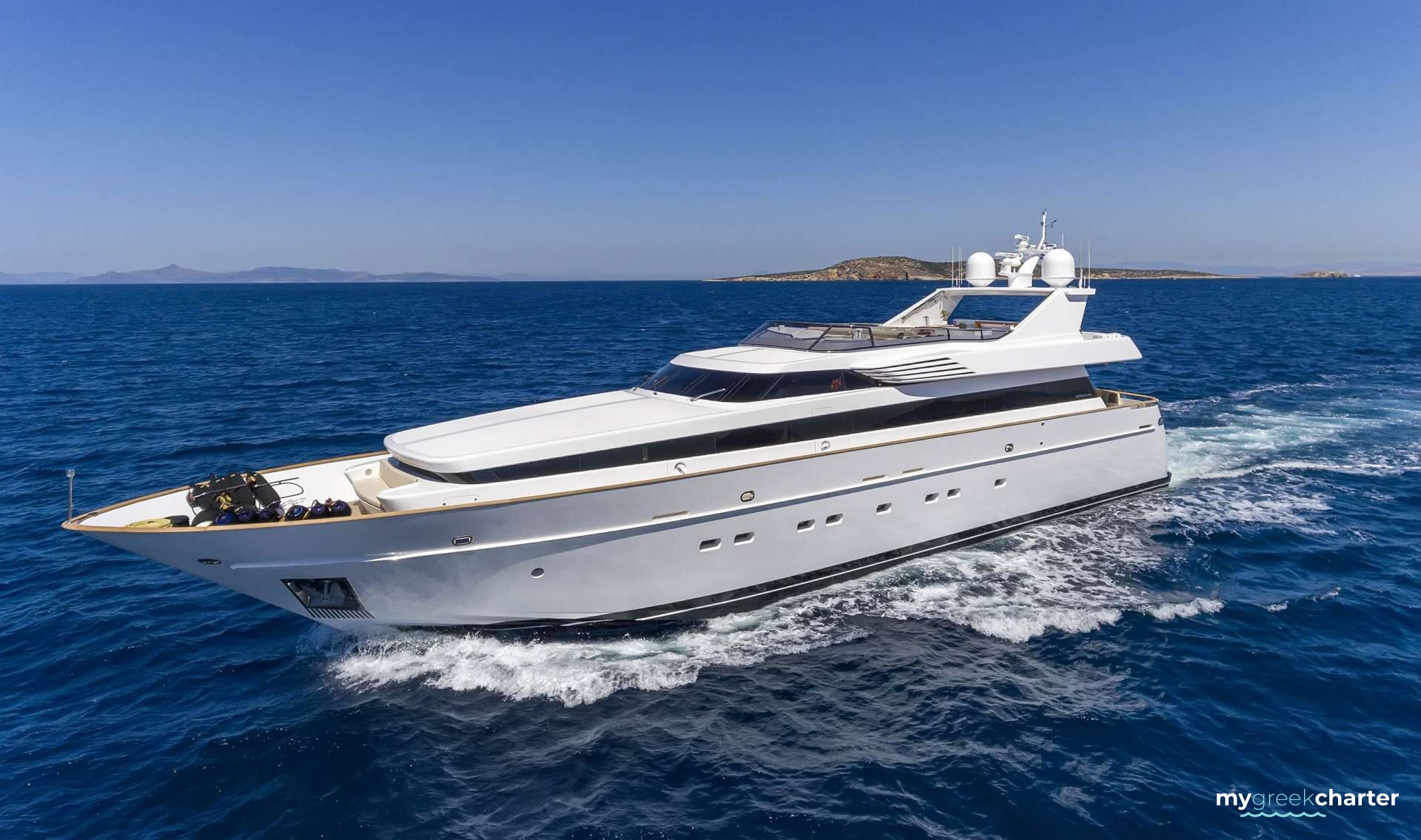
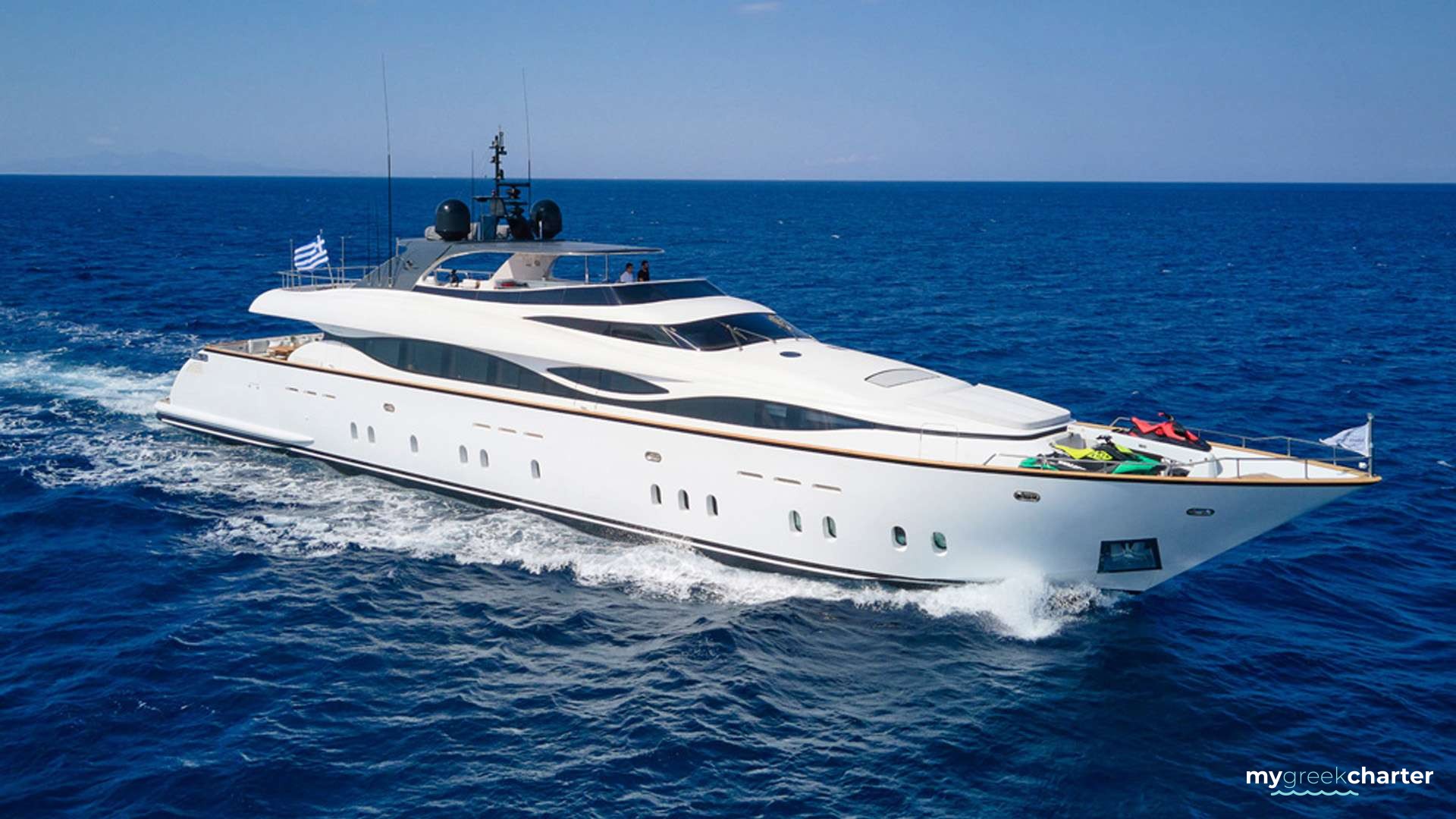
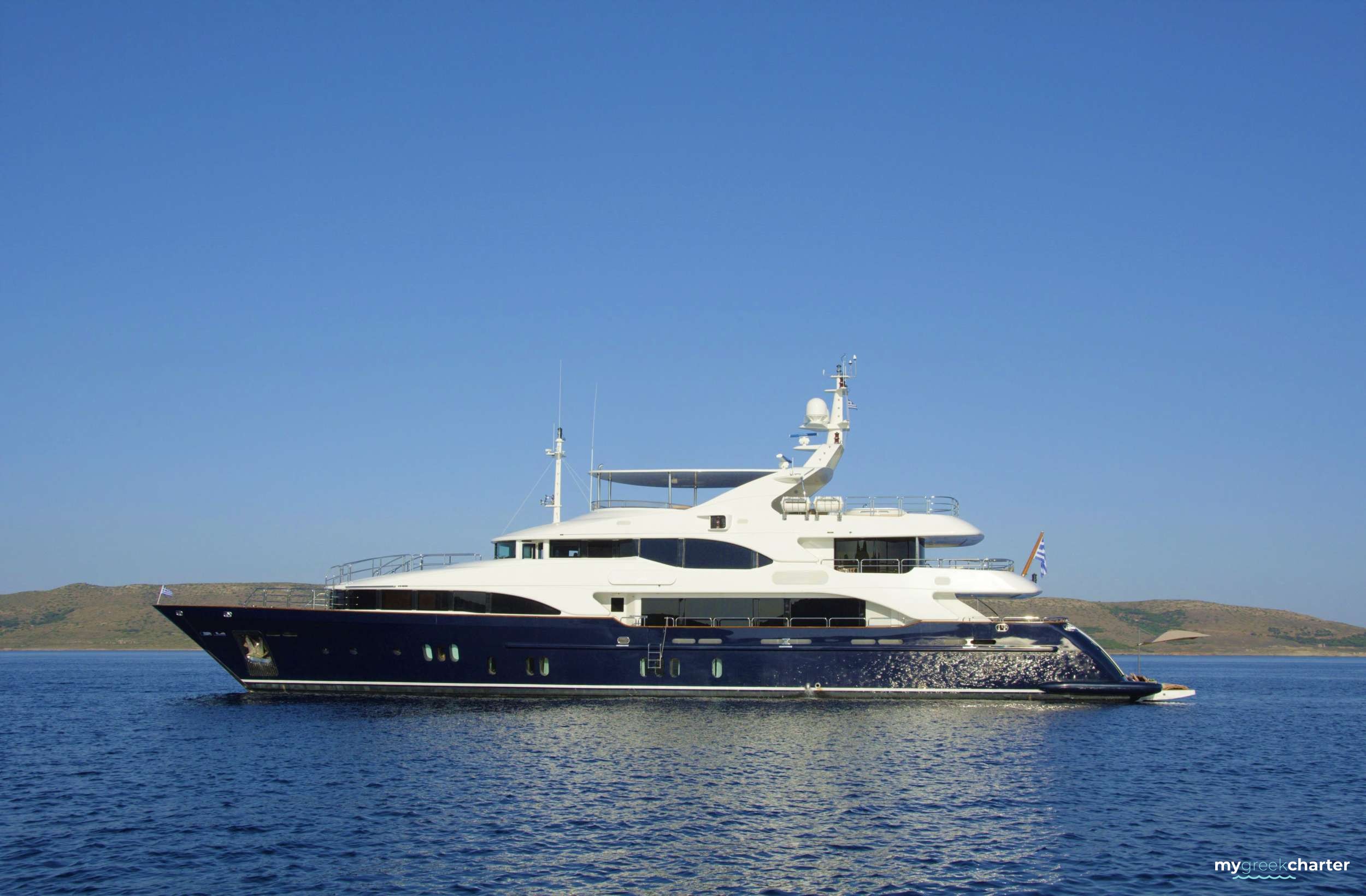
None of these 3 is the whole answer. The Greek fleet holds dozens of stabilized motor yachts across every size and budget above them and below them, and the right one depends on your dates, your group, and your route.
How We Would Plan Your Week
Tell us where you want to go, who is coming, and whether anyone worries about motion. If the Cyclades are the dream, we shortlist stabilized motor yachts, steer the dates toward June or September where we can, and build a route with sheltered fallbacks, so a windy day changes the plan rather than the mood.
If still water matters more than the postcard, the Saronic and the Ionian deliver it with less hardware required. Either way, finding the yacht that does the week you have in mind is our job.
See where you feel the difference between a Greek yacht with stabilizers and one without:

People also ask
Do all charter yachts in Greece have stabilizers?
No. Stabilization is close to standard on larger modern motor yachts, common on mid-size motor yachts, and rare on sailing yachts and catamarans, which manage roll through their hulls and rigs instead. Among stabilized yachts there is a second split that matters more: some only stabilize underway, while others also stabilize at anchor.
We check the exact setup with the yacht before we recommend her.
Do stabilizers help with seasickness on a yacht charter?
Yes, noticeably. Roll is the motion stabilizers fight, and it is the motion guests complain about most, on crossings and at anchor. They are one tool among several though: region choice, season, itinerary pacing, and hull type all stack with the hardware. Our guide to avoiding seasickness on a Greek yacht charter walks through the full toolbox.
Do catamarans need stabilizers?
No, and almost none carry them. A catamaran’s 2 hulls make her far more roll-stable at anchor than a monohull, which is why we so often recommend catamarans for motion-sensitive groups in the Saronic and the Ionian. Catamarans still move, with a quicker pitching motion in chop rather than a slow roll, but the rolly night at anchor that stabilizers exist to fix is mostly not their problem to begin with.
Can you charter the Cyclades without stabilizers?
Yes, and people enjoy doing it every season. The keys are the calendar and the routing rather than the hardware: June and September are gentler than the peak meltemi weeks, catamarans handle the anchorages well by design, and an experienced captain picks bays that stay protected.
Stabilizers raise the comfort ceiling in peak season, which is why we filter for them then, but they are one lever among several, not an entry requirement.
Do sailing yachts have stabilizers?
Rarely. Under sail, the keel and the press of the canvas steady a sailing yacht naturally, so dedicated stabilizers add little underway. At anchor a sailing monohull can still roll in a beam swell, and a small number of larger sailing yachts carry zero-speed systems for exactly that reason, but it is the exception.
If overnight stillness is the priority, we would point you at a stabilized motor yacht or a catamaran first.





 iMessage
 WhatsApp