The Meltemi is the dry northerly wind that blows across the Aegean from June to September, strongest from mid-July to mid-August, and it is the single biggest factor in what a summer Cyclades charter week actually looks like. It is not a storm system. The sky stays blue, the sun stays out, and the wind simply blows, sometimes for days at a time.
We route charters around the Meltemi every season. This article explains what the wind is, where it hits hardest, and the simple planning logic our captains and brokers use so that a windy forecast changes your route, not your vacation. If your real question is whether you will get seasick, start with our honest answer to exactly that.
And if you want to be sure of sticking to your route in mid-July without thinking about weather at all, there is a simple fix: charter the Ionian. It sits outside the Meltemi system entirely, and June and September stay gentle even in the Aegean.
Quick answer
- The Meltemi is a seasonal northerly wind, June to September, peaking mid-July to mid-August, typically Force 4 to 5 in the Cyclades with spells of Force 6 to 7.
- The central Aegean and Cyclades get it hardest. The Saronic Gulf feels far less of it, and the Ionian sits essentially outside the system, which makes it the easy pick if you do not want to think about wind at all.
- It is a blue-sky wind. It changes comfort and routing, not the sunshine.
- Crews plan around it with morning cruising windows, sheltered anchorages, and flexible middle days. In gale spells, the port authority can hold vessels in harbor.

Broker insight
We have had summer charters where a motor yacht could not leave the dock for days. I tell all my clients this very clearly: build flexibility into the plan. In peak season I would not commit to a fixed-date Athens to Santorini run without a fallback route agreed in advance.
 John Boullin
Charter Broker
John Boullin
Charter Broker
What the Meltemi Actually Is
The Meltemi is the modern name for the etesian winds, from the Greek word for annual, because they return every summer on schedule. The ancient Greeks personified this north wind as Boreas. The mechanics are simple: a stable high-pressure system over the Balkans and a heat-driven low over Anatolia create a pressure slope across the Aegean, and air pours down it from the north all summer.
Two things make it different from weather you may know from other coastlines. First, it is a fair-weather wind: it arrives with clear skies, low humidity, and superb visibility, not clouds and rain. Second, it works in spells. A typical Meltemi spell lasts 3 to 6 days. Within each day the wind usually builds toward an afternoon peak, and in an established spell it does not reliably die at night. Between spells, the Aegean can be near calm.
When It Blows
The working window is June through September, and the strongest, most consistent period is mid-July to mid-August. Late May, June, and late September bring far fewer and softer episodes, which is one reason we so often point flexible clients at the shoulder season. For the full month-by-month picture, see when to charter a yacht in Greece.
Where It Hits Hardest
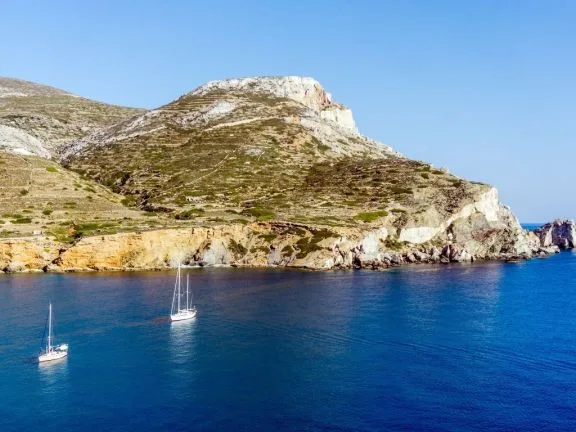
The Meltemi is strongest where the Aegean is most open: the central corridor running down through the Cyclades. Direction shifts as you move south, from northeast in the northern Aegean to north over the central Cyclades and northwest toward Santorini and the Dodecanese.
The forecast number is only half the story. The wind accelerates in the channels between islands, and the passages around Kea, Andros, and Tinos are famous for delivering noticeably more wind than the open-water forecast. Long stretches of open water also give waves room to build, so a 25-knot afternoon can mean a 2-meter sea on an exposed crossing.
The flip side is that Greece gives you real alternatives. The Saronic Gulf, tucked behind the mainland, sees much less of the wind and offers short, protected hops. The Ionian, on the west side of the country, sits outside the Meltemi system entirely and runs on a milder, more predictable afternoon sea breeze instead. We compare all 3 areas in where to go in Greece by cruising area.
What the Wind Numbers Change on a Crewed Charter
Here is the part forecasts do not tell you: the same 25-knot day can be a great day or a rough one depending on where the yacht is. At anchor on the lee side of an island, 25 knots overhead often means flat water, swimming, long lunches, and a cooling breeze. On an exposed 3-hour crossing, the same number means spray, motion, and guests who stop enjoying the trip. Our captains manage the difference by choosing when to move and where to sit, which is why the itinerary flexes.
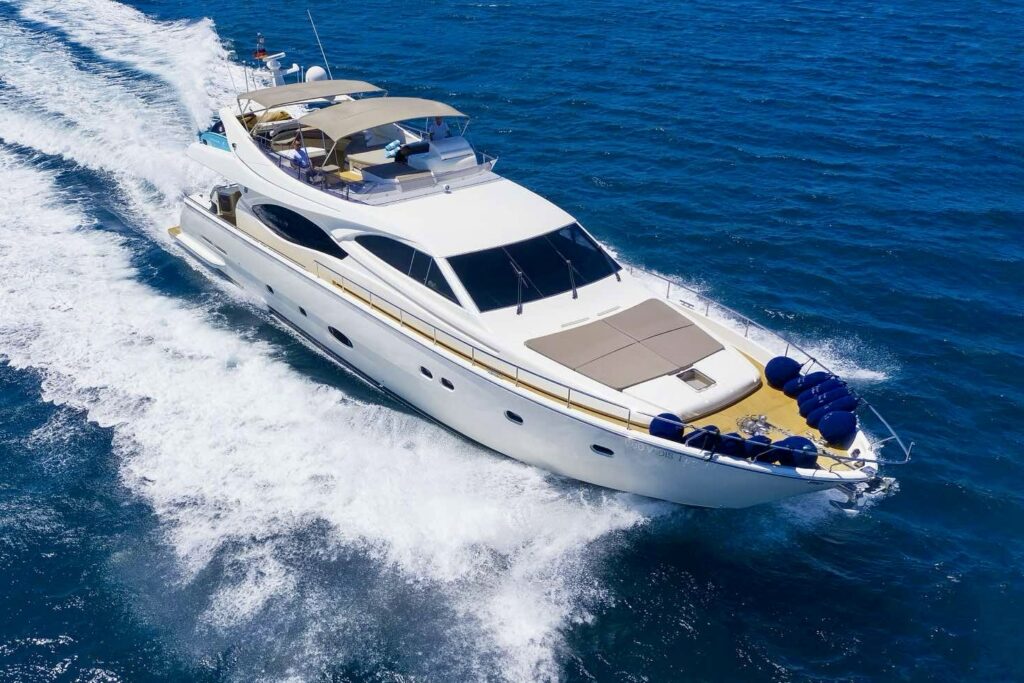
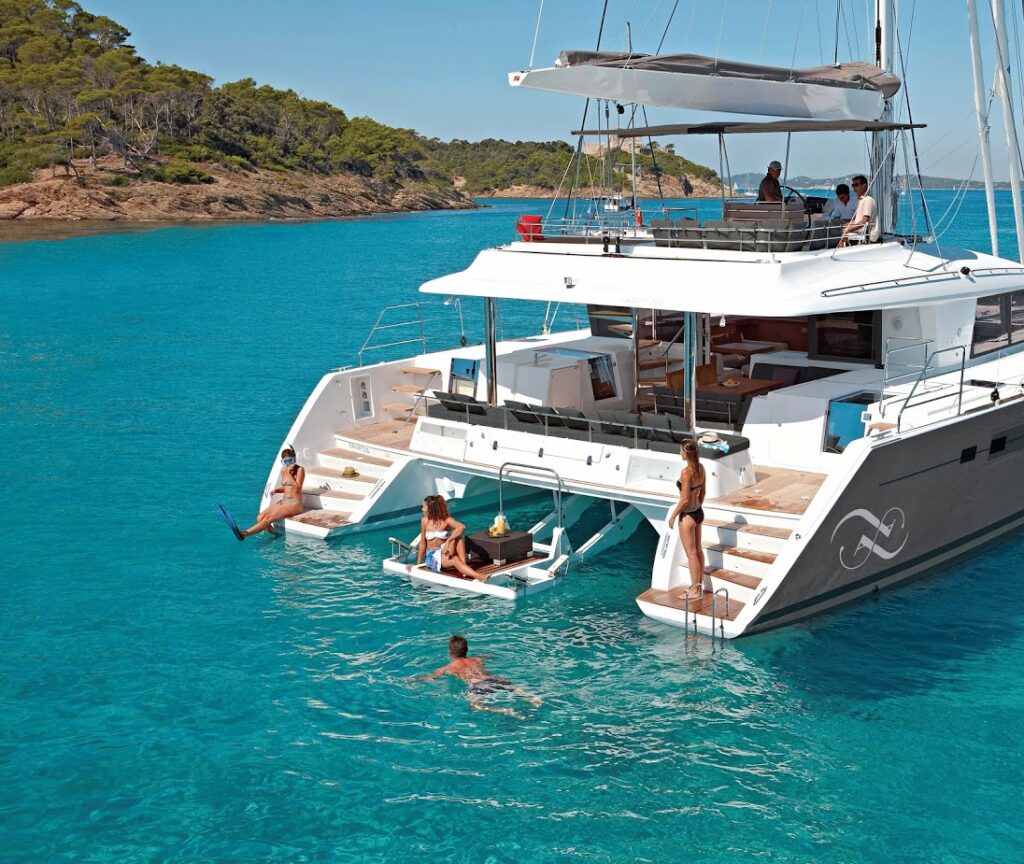
Yacht type shifts the comfort line but does not erase it. A displacement motor yacht takes a head sea steadily, a fast planing yacht can outrun a building afternoon inside a morning window, and a catamaran rewards patient routing between sheltered stops. A motor yacht with stabilizers holds the comfort line best of all, and we cover what difference stabilizers make in its own guide.
What no yacht changes is the official layer: when forecasts climb into gale territory, Greek port authorities can restrict departures, and the coast guard applies those holds by vessel class. In August 2025 we had guests held in port at Antiparos for several nights longer than planned while the coast guard, on high alert after 2 search-and-rescue callouts nearby, kept charter traffic in harbor even as some larger and differently flagged vessels moved. Frustrating, yes. Negotiable, no. A good crew turns those days into beach, taverna, and spa days rather than staring matches with the forecast. Weeks like that are rare: most summer charter weeks run at plan 1 or 2 on the table below.
The Cutoff Table Captains Carry in Their Heads
Every experienced Aegean captain runs an informal version of the same logic: at this much wind for this many days, we do this route instead of that one. We think that logic works even better when it is agreed before the charter, so a route change feels like the plan working rather than the plan failing.
Broker insight
Ask for a table with 4 itineraries, ideal to worst case, chosen by the weather prediction. Simple cutoffs: wind speed, say 25 knots, and number of days. Keep the numbers on the safe side, so the captain is celebrated for moving from plan 4 up to plan 3 instead of blamed for dropping from plan 1 to plan 2.
 Mo Pristas
CharterGuru
Mo Pristas
CharterGuru
Here is what that table looks like in practice for a 1-week Cyclades charter. Treat the bands as conservative guidelines, not contract terms: every yacht has its own numbers, and the captain and port authority always have the final word.
| Plan | Forecast for the days ahead | What the week looks like |
|---|---|---|
| 1. Full ambition | A light forecast across the week | The whole Cyclades wish list is on the table, southern islands included, with crossings timed for comfort rather than necessity. |
| 2. Managed | A moderate forecast on some days | Central and western Cyclades routing, crossings in the calmer morning hours, afternoons in lee anchorages. Southern targets only with a clean window. |
| 3. Protected | Strong sustained wind for several days | A tight short-hop cluster or a Saronic week: legs under about 2 hours, sheltered bays, beach and village days while the wind runs overhead. |
| 4. Hold | Gale warnings in the forecast | The nearest well-protected harbor, official restrictions possible, and a crew that fills the days ashore and at anchor until the window opens. |
The value of agreeing on this before you board is simple: nobody argues with a table. The route change stops being a disappointment delivered on day 1 and becomes a decision you already understood when you booked.
How Crews Route Around It
Watch a good Aegean crew work a windy week and you will see the same 3 moves repeated. They cruise in the morning, when the wind is usually at its lightest, and are moored or anchored by early afternoon when it peaks. They sit on the lee side of islands, where even a strong Meltemi day gives flat water. And they keep the middle of the week flexible: fix the first and last nights around your flights, and let the crew reorder the days in between to match the windows.
The one habit we encourage from clients is naming your non-negotiables early. If a specific island matters more than anything else, we would rather design the route around it from the start than promise a loop the wind may not allow. We have seen a September Cyclades booking turn into a Saronic week on day 1, and the difference between a disappointed group and a delighted one was whether anyone had discussed that possibility before boarding.
Planning a Week the Meltemi Cannot Ruin
The Meltemi is a scheduling factor, not a reason to avoid Greece in summer. Pick your area with the wind in mind, keep the middle days flexible, agree on the fallback logic before you board, and the windiest weeks of the year still produce superb charters. If you want to go one layer deeper, read what happens if the weather changes on a Greece yacht charter for the process side, and use our cruising-area comparison if the destination itself is still up for discussion. Or simply tell us the week you have in mind: we will tell you what the wind will think of it, and build this plan 1 to 4 fallback logic into your proposal from the start.
Wind is the first of 13 things worth knowing before you charter in Greece.
People also ask
Is the Meltemi dangerous on a crewed yacht charter?
Not when the week is run to plan. On a crewed charter it is a comfort and routing factor, because your captain plans crossings around it and Greek port authorities restrict departures in the strongest spells. The trips that go wrong are the ones with rigid plans, not the ones with wind.
Does the Meltemi blow every day in July and August?
No. It comes in spells, typically 3 to 6 days, with calmer periods in between. Even inside a spell, mornings are usually the quietest part of the day and lee-side anchorages stay comfortable.
Which Greek charter areas avoid the Meltemi?
The Ionian sits outside the Meltemi system almost entirely, with a softer afternoon breeze that eases by evening. The Saronic Gulf feels some wind but is far more protected than the Cyclades, with short crossings and easy shelter.
Can a motor yacht just power through the Meltemi?
Speed widens your options because a fast yacht can complete a crossing inside a morning window. It does not cancel sea state or port-authority holds, which apply to everyone. Smart routing beats horsepower every time.






 iMessage
 WhatsApp