The first question we ask is simple: do you care about sailing? If yes, there is a follow-up that matters even more: do you care about sailing well? Your answers to those 2 questions decide this comparison faster than any spec sheet.
Here is the honest version most brochures skip. The majority of large luxury catamarans in Greece motor most of the time, so a sailing catamaran often describes the rig, not the week you will actually have. Once you know that, the choice between a sailing catamaran and a power catamaran becomes much clearer.
Quick answer
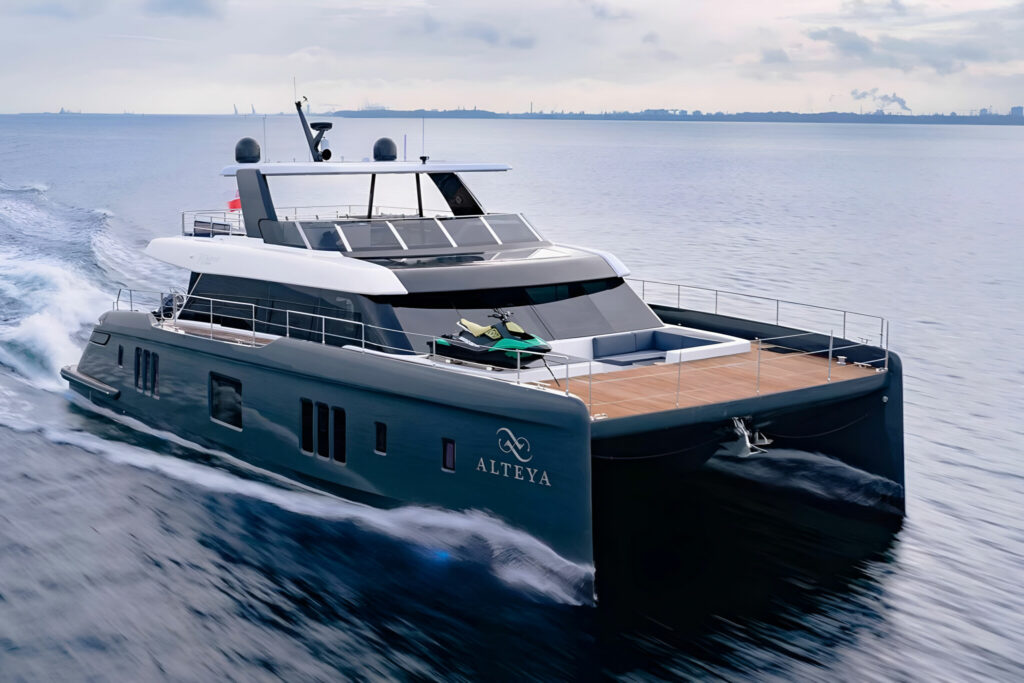
- Most luxury-first catamarans, the Sunreef 80 style, are heavy and tall, so in practice they cruise on their engines.
- If real sailing matters to you, we point you toward performance-minded builds such as Fountaine Pajot, which balance luxury and sailing ability.
- If sailing does not matter to you at all, a power catamaran gives you catamaran space and stability with motor yacht speed.
- Fuel use, pace, and how far you can comfortably go in a week differ a lot between the 2, so match the boat to your route, not just the photos.

Why most luxury catamarans in Greece motor most of the time
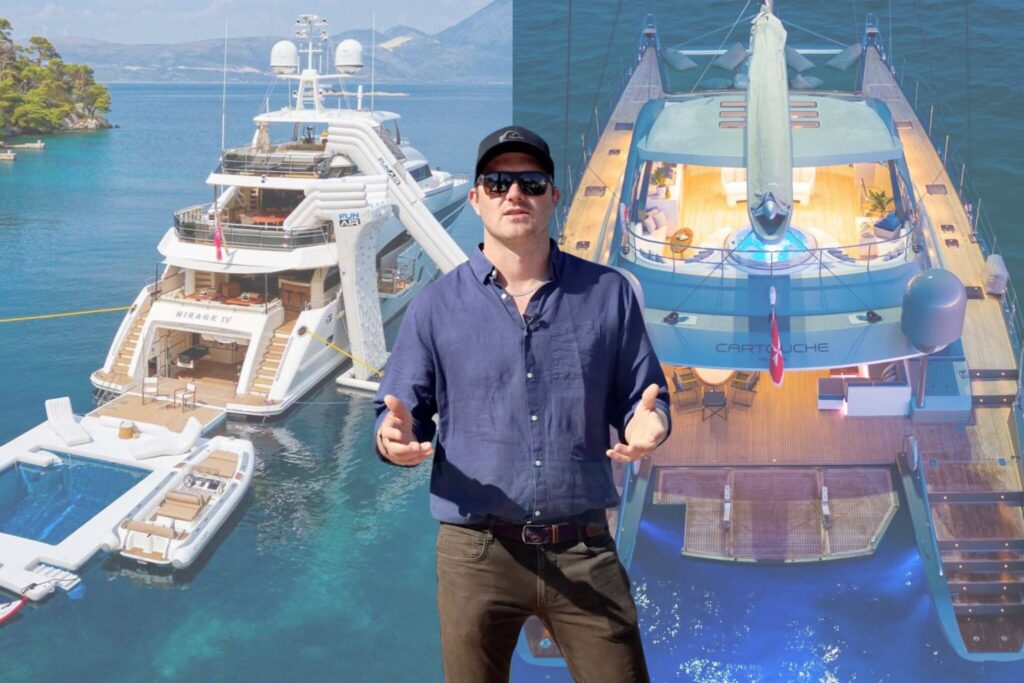
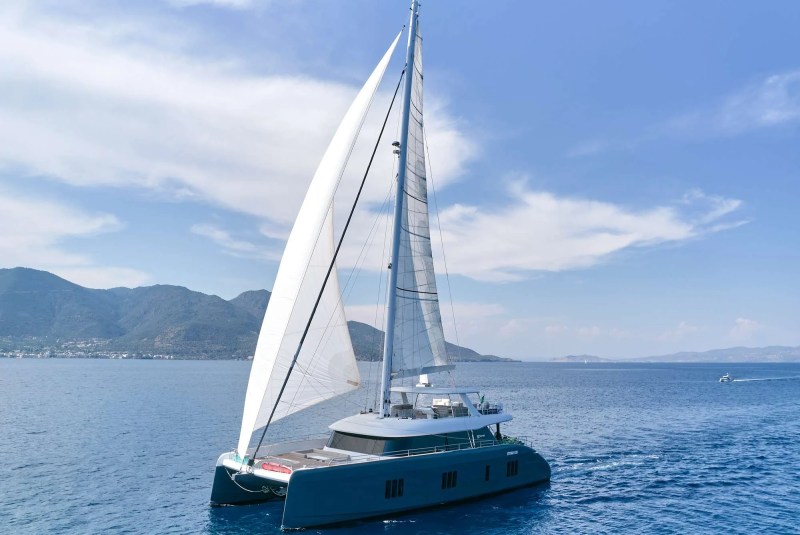
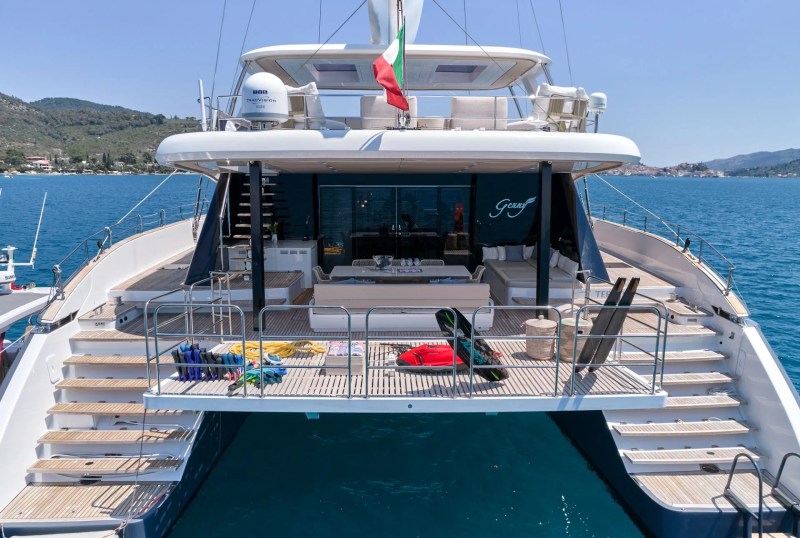
Most modern luxury catamarans are built with a luxury-first mindset, and the Sunreef 80 is a prime example: as big and impressive as possible, with spacious decks, maximum interior volume, and a large flybridge. The trade-off is weight and windage, which means a catamaran that does not sail very well. That is why most charter catamarans in Greece use their engines most of the time.
This is not a flaw, it is a design choice. If your dream week is about the platform, the cabins, the flybridge dinners, and the swim stops rather than the passage itself, a luxury-first catamaran is exactly the right boat, and you lose nothing by motoring between islands.
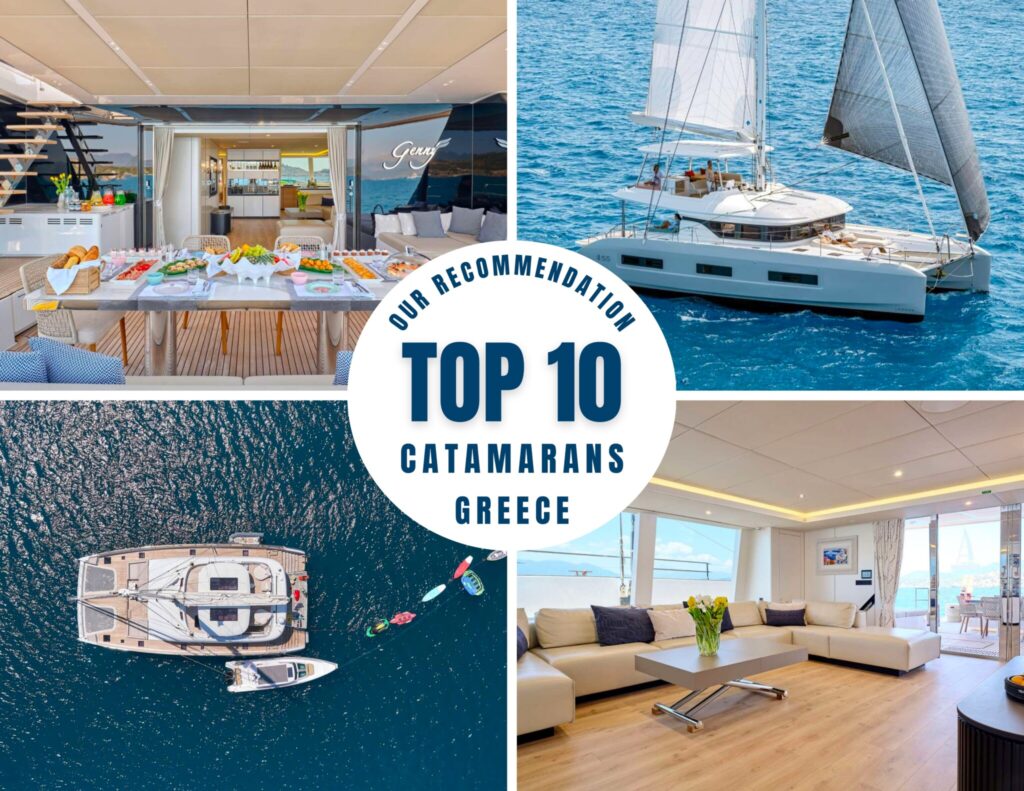
GENNY, a Sunreef 80 based in Greece, shows what that looks like in real life:
Broker insight
A sailing catamaran under engine burns roughly 40 liters per hour, while a big power catamaran is more in the region of 150 liters per hour, plus around 40 liters per hour for the generator that runs the air conditioning. Fuel is paid from your APA, so have us run the numbers for your route before you settle on a boat.
 Chris de Kock
Charter Broker, Sales Broker, Active CYBA Member
Chris de Kock
Charter Broker, Sales Broker, Active CYBA Member
The sailing catamarans we still recommend
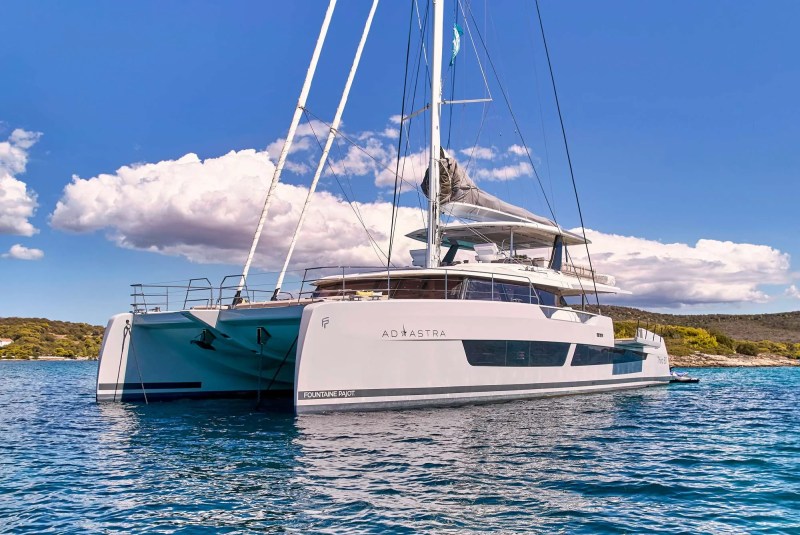
Good news for the sailing enthusiast: luxury sailing catamarans that genuinely perform do exist. We often point clients toward Fountaine Pajot, a French builder that balances interior volume and sailing ability very well. Their flagship Thira 80 gives you the space a luxury charter needs and still sails properly when the breeze fills in.
And even if you do not care about sailing at all, we sometimes still recommend a sailing catamaran. The sailing fleet in Greece is far larger than the power catamaran fleet, so you get more choice in your dates, often better value for the same cabin count, and lower fuel bills across the week. In Meltemi season a good crew will also turn the wind into the best afternoons of your trip.
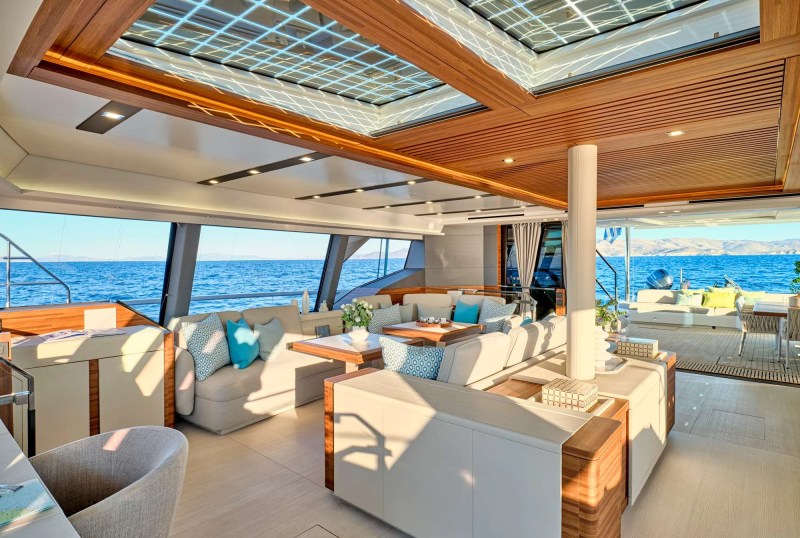
AD ASTRA, a Fountaine Pajot Thira 80, is the boat we show clients who want both:
When we recommend a power catamaran in Greece
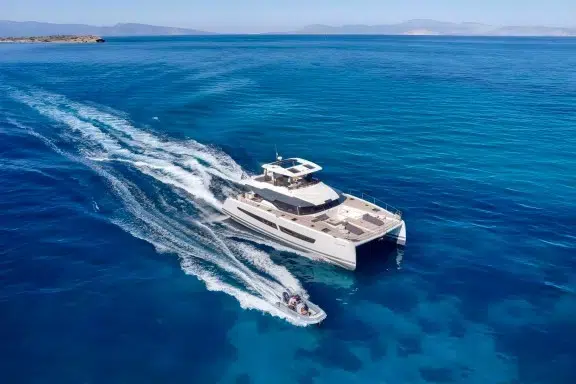
We recommend a power catamaran when a client is really describing a motor yacht: speed, space, and no interest in sails. Power catamarans are generally more spacious than their sailing sisters because there is no rig to carry and no sailing balance to respect, and their engines are the sole drive, so they are more powerful and faster. Think of it as a hybrid: the layout and stability of a catamaran with the speed of a motor yacht.
Speed changes what a Greek week looks like. Passages that eat half a day under sail become short morning hops, which matters on longer routes like the Cyclades. There are not many power catamarans in Greece, so if this is your boat, book early.
Broker insight
There are not so many power catamarans in Greece, and they offer roughly a 30 percent speed increase depending on conditions. A journey out of Athens that can take a sailing yacht 5 or 6 hours, a big power catamaran covers in around half the time. And with modern, economical engines, your APA for the week is going to be significantly less than on a thirsty older motor yacht.
 John Boullin
Charter Broker
John Boullin
Charter Broker
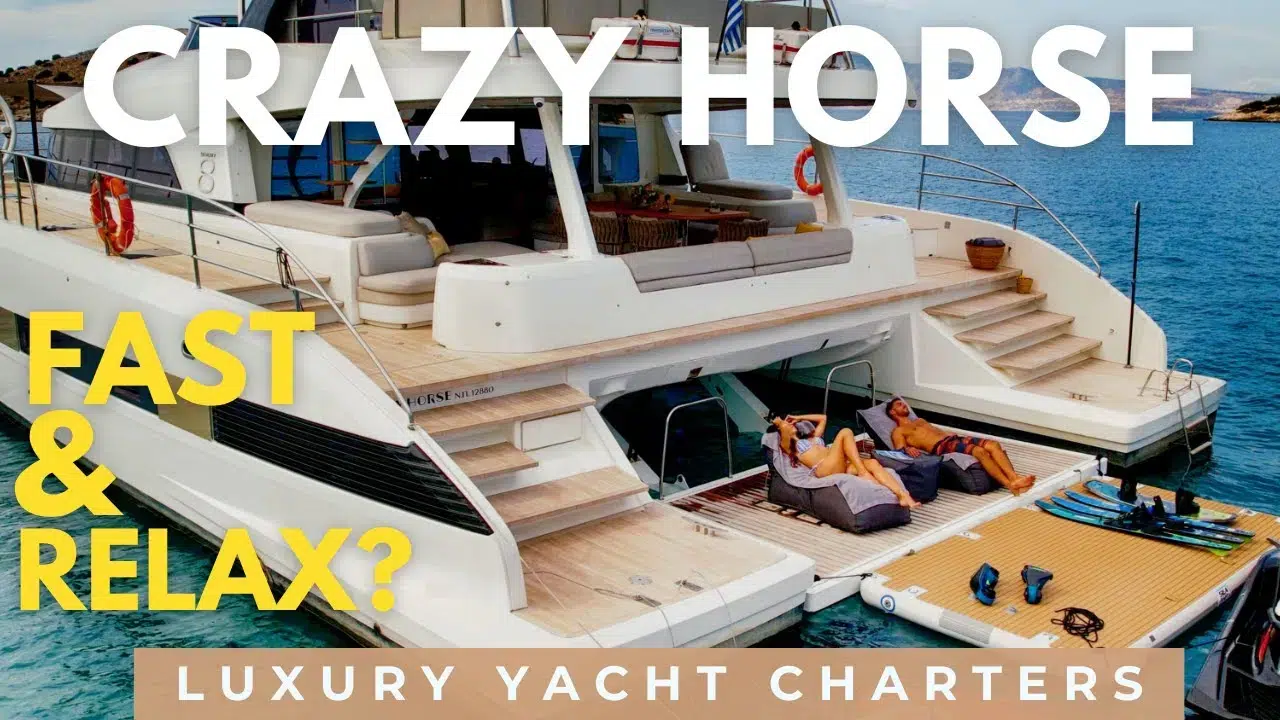
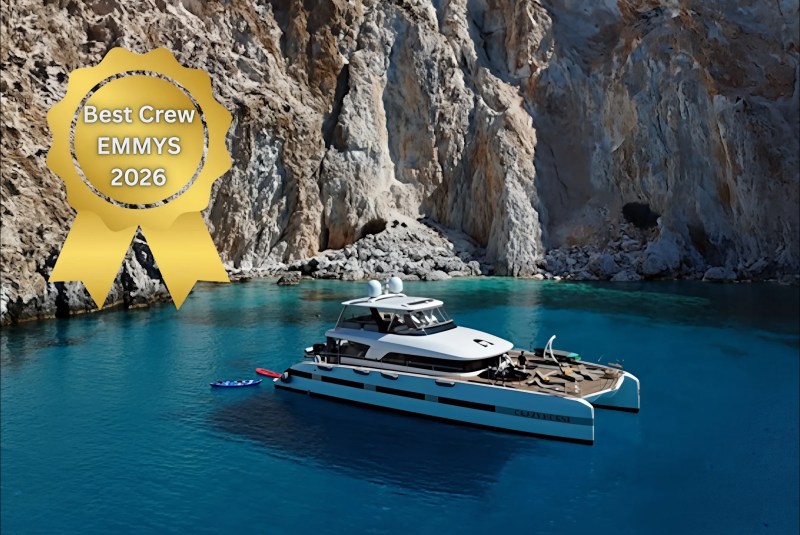
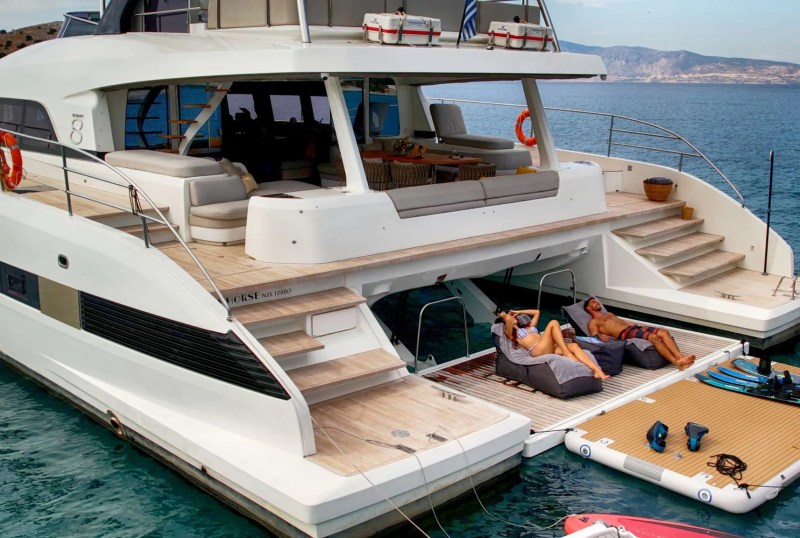
CRAZY HORSE, the Lagoon Seventy 8 in the video above, is the flagship of that idea in Greece:
How we help you decide
When you inquire, we ask the same 2 questions this article started with, then match the answers to the fleet. If you want to sail, and sail well, we shortlist performance-minded sailing catamarans. If you want the biggest, most impressive platform and the passage is just transport, a luxury-first sailing catamaran still makes a wonderful week. And if you keep drifting toward motor yacht listings, a power catamaran usually gets you more boat for the money.
Browse the full collection of catamarans for charter in Greece and our dedicated power catamaran fleet. Still weighing a catamaran against a classic motor yacht? Our guide to motor yachts vs catamarans in Greece walks through the 3 questions that decide it.
| Sailing catamaran | Power catamaran | |
|---|---|---|
| How they cruise | Luxury-first builds motor most of the time | Engines only, by design |
| If sailing matters | Fountaine Pajot and similar actually sail | Not the boat for you |
| Space | The rig and balance shape the layout | More of it, no rig to carry |
| Speed | Passages can eat half a day | Short morning hops |
| Fuel | Lower across the week | Higher |
| Fleet in Greece | Far larger, so more dates and value | Very few, book early |
People also ask
Do charter catamarans in Greece actually sail?
Some do, most do not do it often. Large luxury catamarans are heavy, so crews motor to keep schedules comfortable. If sailing matters to you, tell us on the first call and we will shortlist boats that genuinely perform under sail, like the Fountaine Pajot Thira 80.
How much faster is a power catamaran than a sailing catamaran?
Roughly 30 percent faster depending on conditions, and on some runs close to half the passage time. A trip out of Athens that takes a sailing yacht 5 or 6 hours can take a large power catamaran around 2 to 3 hours, which turns a travel day into a morning hop.
Are power catamarans expensive to run?
They burn more fuel than sailing catamarans, roughly 150 liters per hour against 40 under engine, but noticeably less than a comparable older motor yacht. Fuel is paid from your APA, so the difference shows up on your final statement. Our guide to fuel costs on a Greece yacht charter breaks down the real numbers.
Which catamaran type is better for the Cyclades?
The Cyclades combine longer open-water legs with the Meltemi wind in July and August. A power catamaran shortens the exposed passages, which most groups appreciate. A performance sailing catamaran turns the same conditions into the best sailing in Greece, so it comes down to whether that sounds like a highlight or a chore.