A day on a Greek yacht charter has almost no structure, and that is the whole point of it. You wake up in a bay, swim before breakfast, talk the day through with the captain over coffee, move for a couple of hours to somewhere new, and spend the rest of it in the water, ashore, or doing nothing at all. Our guide to Greece yacht charter prices has the full picture.
Nobody hands you a schedule and nobody expects anything from you. Even in July and August, when the meltemi is blowing through the Cyclades, the shape of the day holds: your captain moves you to the sheltered side of an island and the week is re-cut around the wind. That is the honest answer to what you actually do all day. Here is the day itself.
Quick answer
- Nobody hands you a schedule. There is no wake-up time, no breakfast window, and no job on the boat with your name on it.
- The route is agreed with your captain on day 1 and stays open all week, so it bends around the wind and around what your group feels like doing.
- Most days involve 1 move of roughly 2 to 3 hours. The first hop out of Athens to the Cyclades is the one long one, around 5 hours. A Saronic or Ionian start is much shorter.
- Charters run noon to noon, so the first afternoon usually starts with a swim stop, and the last morning still starts in a bay. On a 3 or 4 night charter that shape matters even more; our guide to chartering for less than a week explains why.
- If the meltemi blows, you are not stuck in a rolling anchorage. The captain repositions to the lee side and reorders the route.
- A Greek week tends to land near 3 nights at anchor and 4 in a harbor town, weighted to your preference wherever the conditions allow.

A Typical Day on a Greek Charter, Hour by Hour
- Morning, 8 to 10. You wake at anchor and can be in the sea 20 seconds later. Your chef cooks breakfast whenever each of you appears.
- Late morning, 10 to 12. Coffee with the captain, the day gets agreed, the anchor comes up, and the yacht moves 2 to 3 hours to somewhere new.
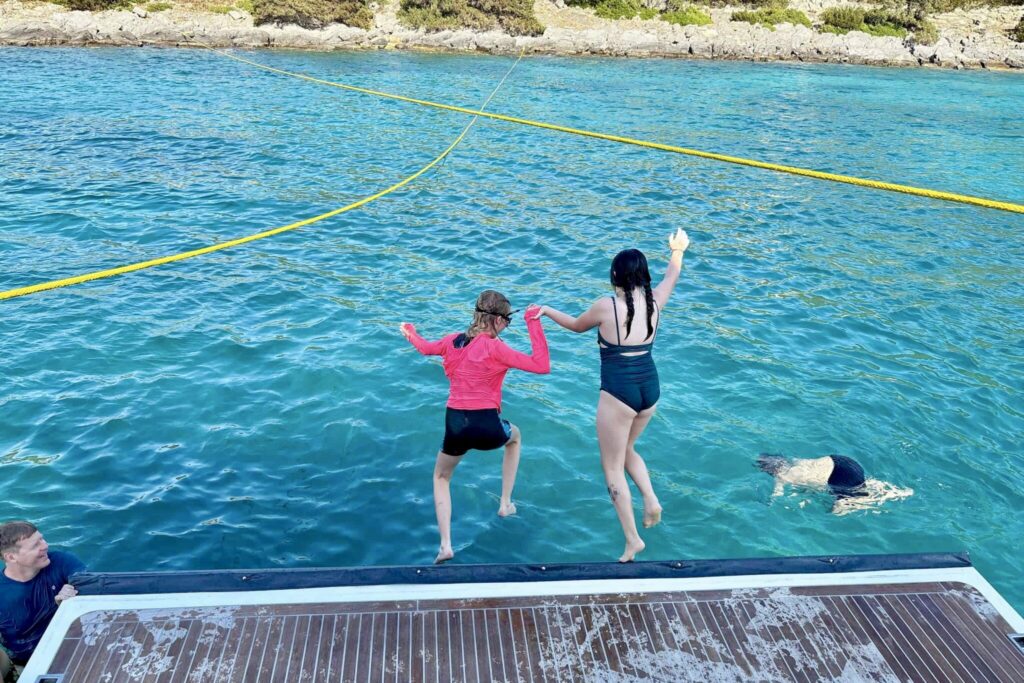
- Midday, 12 to 4. The long anchorage. Swim ladder down, toys in the water, lunch served on deck between swims.
- Afternoon, 4 to 7. The group splits: water, tender into town, or an empty deck and nothing at all.
- Evening, 7 onward. Sundowners appear on the foredeck, then dinner on board or ashore, with the tender running you in and collecting you whenever you are done.

You Wake Up at Anchor, and the First Thing You Notice Is the Silence
No engine, no road, no corridor outside your door. What you hear instead is water against the hull, the occasional footstep on the deck above you, and sometimes goat bells somewhere up the hillside.
Somebody in your group is always up first, and it is never who you expect. Coffee is already on when they come up. The best part of a night at anchor is that you can be in the sea about 20 seconds after you decide to be, before anyone else has surfaced. Our clients talk about that swim more than almost anything else, and families with kids most of all.
Broker insight
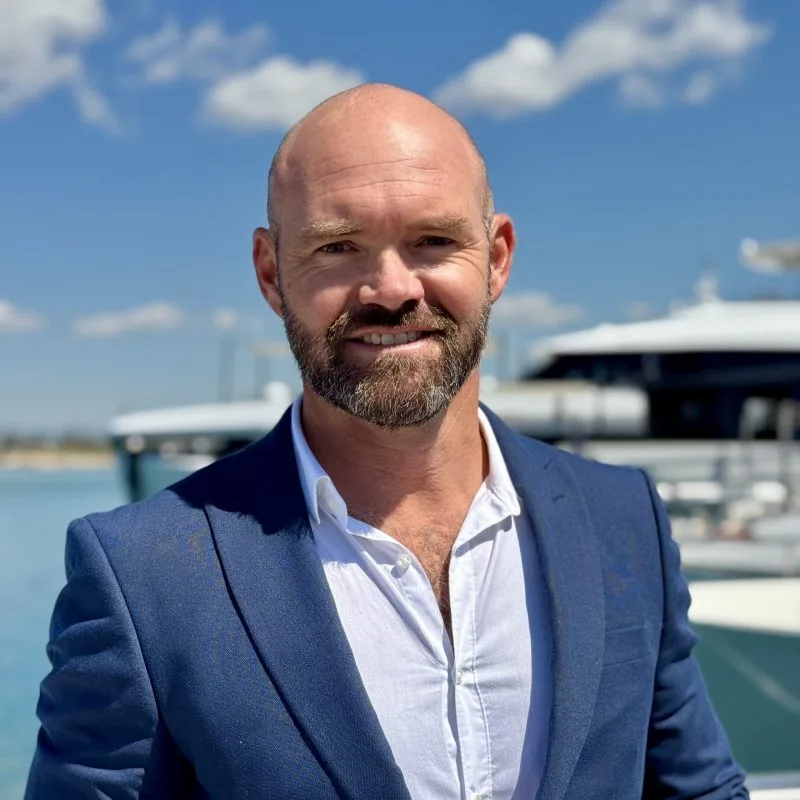
I think for first-time charterers, their biggest bonus is the attention from the crew. You have 3 dedicated crew members who are really making it a luxury experience for you. Until you have done your first charter, that is a little unexpected.
 John Boullin
Charter Broker
John Boullin
Charter Broker
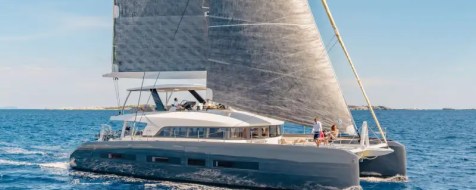
He was talking on board a 67ft catamaran, where 3 crew is the standard complement. That number climbs with the yacht: a 30m motor yacht usually runs 5 or 6, and at 40m and above it is closer to 8 or 9, with a dedicated chef and deck crew whose whole job is the water and the toys. The attention he is describing goes up with the yacht, not down.
Breakfast Happens When You Get Up, Not on a Hotel Schedule
This is not a hotel with a service window. Your chef cooks breakfast when you appear, and it is completely normal for 6 people to eat at 4 different times while 2 of them are still swimming. Eggs at 7 for the early riser, a full spread at 10 for everybody else, and coffee running the whole way through.
That flexibility is the tell of a good crew. A good chef cooks around the day instead of making the day wait for the galley, and a good captain lifts the anchor when your group is ready rather than at a fixed hour, so you reach the next bay with the whole afternoon still in front of you. That is a crew quality rather than a yacht spec, which is the part of the shortlist we do by hand: we meet crew in person at the charter shows, we watch how they work instead of reading a brochure bio, and we call the yacht’s agent for first-hand feedback from the clients who chartered before you. If the boat is right and the crew is not right for your group, we say so. More on how well a crew fits your group.
The Morning Move, and How Many Hours a Day the Yacht Is Actually Moving
Your captain checks the wind before the day starts, and if it changes what is sensible, they will say so. That conversation starts on day 1: once you board, the captain runs a short safety briefing and then sits down with you to talk through what you want from the week, and by then they already know what the weather is doing. Every morning after that you hear over coffee what the day allows and what they would suggest, and you decide together. The plan you talked about months ago is a direction, not a contract.
The anchor comes up and the yacht moves, usually for 2 to 3 hours. The first hop out of Athens to the Cyclades is the one long one, around 5 hours to the first island. A Saronic start puts you in a bay inside 2 hours, and an Ionian week rarely has a leg that long at all. After the first day the moves get shorter.
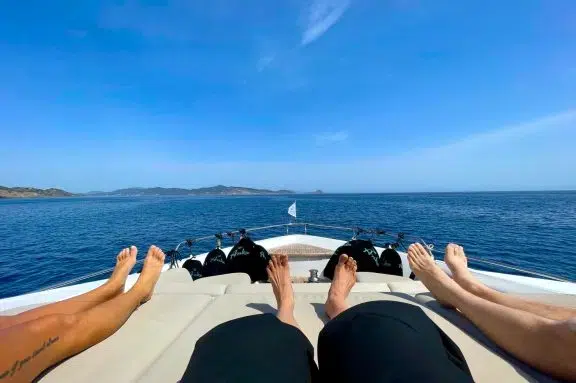
Here is the part first-timers ask about most: what do you do while it is moving? Nothing, if you want. People sleep in again. People read. Somebody always ends up on the bow with their legs over the side, and somebody always ends up next to the captain asking how deep it is. No job on the boat has your name on it.
Broker insight
I was working on an alternative itinerary for clients who want to board and disembark in Athens but head toward the Ionian. This is how day 1 reads on the vessel Flori: embarkation at Astir Marina, a swim stop, the Corinth Canal, then Nafpaktos for the night.
 Chris de Kock
Charter Broker, Sales Broker, Active CYBA Member
Chris de Kock
Charter Broker, Sales Broker, Active CYBA Member
What Happens if the Meltemi Blows All Week
In July and August the meltemi, the north wind that runs down the Aegean, can blow for several days at a stretch. It does not cancel your week and it does not leave you rolling at anchor all night. What it changes is which side of an island you sleep on: the captain repositions to the lee, swaps an exposed bay for a sheltered one, and reorders the route so the long legs run with the wind rather than into it.
You notice it as a different island than the one on the original list, not as a lost day. The Saronic and the Ionian sit largely out of it, which is one reason we point wind-nervous groups and families with small children that way in high summer. There is more in our guide to what happens when the weather changes mid-charter.
The Lunch Anchorage Is the Center of the Day
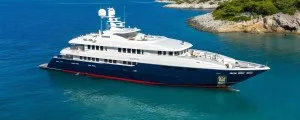
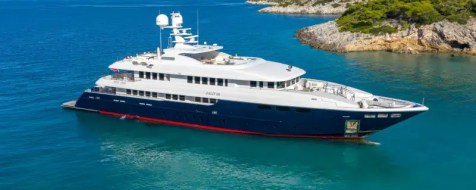
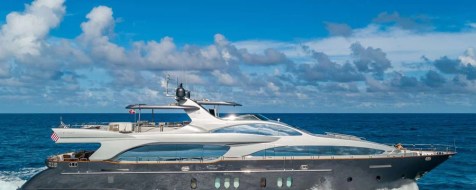
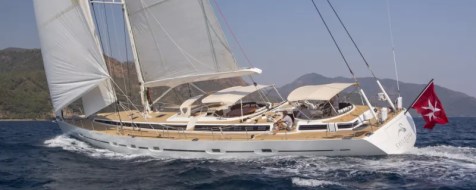
You arrive somewhere late morning, the anchor drops, and the swim ladder goes down before the engines have stopped ticking. This is the long, slow, wet part of the day, and it is why people book a yacht instead of a villa. The villa does not move, and it does not come with a chef who has lunch on the deck by the time you climb back out of the water. The range of what that looks like runs from 3-crew catamarans to full-crew motor yachts, and you can see it across the yachts we charter in Greece.
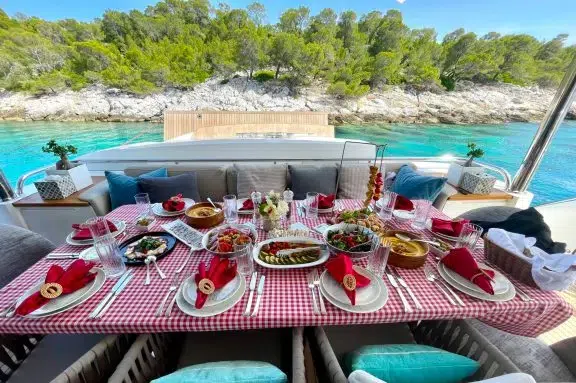
Lunch gets served on deck in the middle of it, between swims, and nobody dresses for it. Your chef cooks to what the day turned into rather than to a menu fixed in advance, so a long swim simply moves lunch later. The toys go in the water at the same time, put there by the crew rather than handed to you with a manual. Our guide to the most popular water toys on Greece charters covers what is realistically on board.
The Afternoon Is the Part People Underestimate
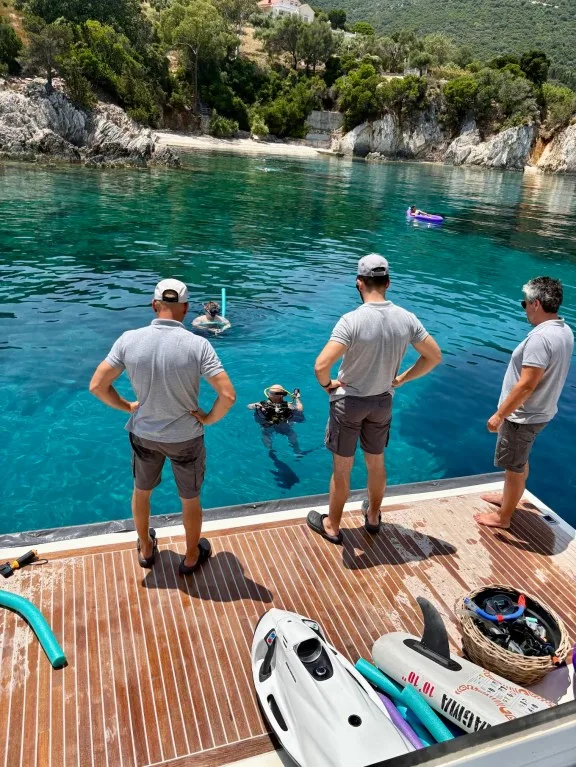
By early afternoon the day splits 3 ways, and people in the same group choose differently. Some stay in the water until the light goes. Some take the tender into town to walk and drink something cold in a square. And some do absolutely nothing, which is the option nobody plans for and most people end up wanting by midweek. When our clients describe the week to us afterwards, it is almost always an empty afternoon they pick out, not the famous anchorage.
Sundowners, and How Dinner Gets Decided
Around the time the light drops, glasses and an ice bucket appear on the foredeck, and nobody asked for them. That is when most guests realize how much of the day was quietly arranged for them.
Dinner is the one real decision you make each day, and it gets made that afternoon, not at booking. Most weeks run breakfast and lunch on board, cooked by your chef, and treat dinner as a choice. Most people assume you have to be tied up in a port to go out. You do not. The tender is your taxi, so you can be anchored off a village, dropped at the quay at 8, and collected whenever you are done.

Nights at Anchor Versus Nights in a Harbor Town
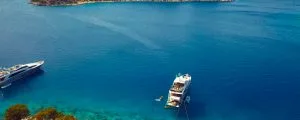
The captains we work with tend to land near 3 nights at anchor and 4 in a harbor town over a week. You say which way you lean, and the captain places those nights where the conditions allow. Shelter decides it first: in a 2 to 2.5 m sea an exposed bay comes off the list no matter how good it looks in the photo.
Anchor nights are quiet and they feel private. Nothing is happening around you that you did not choose, and the deck at midnight is one of the best places in Greece. Harbor nights are for stepping off the boat straight into a town and coming back late. Groups with teenagers usually end up wanting more harbor nights. Families with small kids usually want more bays. That balance gets set before the week starts, with your broker, once we know who is on board, and it reaches the captain through your preference sheet.
Where the Crew Are While All This Is Happening
Present when you want them, invisible when you do not. They eat and sleep in their own quarters, and they spend the day reading the room: clearing a table you have drifted away from, putting the paddleboard back, having towels on the swim platform before you have climbed out. If your group wants a quiet morning with nobody around, say so once and it happens. We wrote the long version separately, on what it is like sharing a yacht with crew, including how to ask for privacy without it being awkward.
What This Means When You Plan Your Week
The week shapes itself around you rather than the other way around. Our part happens before it starts: we match the yacht and the crew to who is actually on board and to the week you are coming in, then give the captain enough about your group that day 1 already fits. When you want to picture where the days go, our complete guide to Greece yacht charter itineraries lays out the realistic routes, and for the 1 or 2 days you want to be more than ordinary, these unique onboard charter activities are worth building a day around.
People also ask
Do you have to get up at a certain time on a yacht charter?
No. There is no set wake-up time and no breakfast window. Your chef cooks when you appear. The only fixed points in the week are embarkation and disembarkation, usually at noon.
How many hours a day does the yacht actually move?
Usually 2 to 3 hours, and some days you do not move at all. The exception is the first hop out of Athens to the Cyclades, which runs around 5 hours to the first island. A Saronic or Ionian start is much shorter.
What happens if the meltemi is blowing?
Your week gets re-cut rather than cancelled. The captain repositions to the sheltered side of an island, swaps an exposed anchorage for a protected one, and reorders the route so the long legs run with the wind. You end up on a different island, not stuck in a rolling bay. Our guide to weather changes mid-charter covers it in full.
Can you change the plan during the week?
Yes. The itinerary is a direction, not a contract. Your captain reads the weather and reshapes the week with you as it goes. Our complete guide to Greece yacht charter itineraries shows the routes most weeks are built from.
Do you eat every meal on board?
Most weeks, breakfast and lunch are cooked on board by your chef and dinner is a daily choice, including from an anchorage rather than a port. The tender runs you ashore and collects you.






 iMessage
 WhatsApp