Greece for the icon islands, the range, and the boat list. Croatia for a traditional gulet, the shortest possible passages, or the one way Split to Dubrovnik route. If you are already leaning Greece, you are probably right, and we will say that even though we also run My Croatian Charter.
Greece gives you the islands your whole group has already heard of, 5 genuinely different cruising grounds, and more real candidates when you want a big crewed catamaran or a serious motor yacht than the Adriatic can put in front of you.
If wind or seasickness is the hesitation, the fix does not involve leaving the country. Charter the Ionian or the Saronic and the Meltemi is simply not part of your week. There are 3 situations where we do move a Greece client to Croatia, and they are all easy to recognize.

| Greece | Croatia | |
|---|---|---|
| Cruising grounds | Five areas, 227 inhabited islands | One coastline, 47 inhabited islands |
| Passage length | Short in the Saronic and Ionian, longer in the Cyclades | Short almost everywhere |
| Summer wind | Meltemi across the Aegean in July and August | Calmer, and the channels stay sheltered |
| Fleet | Deep on big catamarans and motor yachts | The best gulets and motorsailers |
| One way | Usually a loop from Athens, Mykonos or Corfu | Split to Dubrovnik is the standard route |
| Budget and tax | EUR 100k to 250k, tax depends on the yacht | Flat 13 percent VAT |
What Greece Has That Croatia Does Not
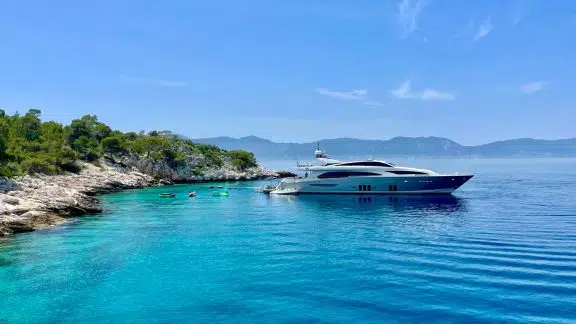
Scale, and the names. Greece has roughly 6,000 islands and islets, 227 of them inhabited. Croatia has the Mediterranean’s second largest archipelago, genuinely impressive, with 47 inhabited islands. That gap is not a bragging number. It is why a Greek week can be rebuilt around the weather or the group’s mood and still be a good week.
Then there is the draw. Santorini and Mykonos pull a crowd from every continent, and Croatia has no island that does that. If seeing them from your own deck is what this trip is for, that settles it. The icons do sit further apart than the photos suggest, which is a yacht question rather than a problem, and we come back to it below. Our Greece itinerary guide shows what a realistic week looks like around them.
Five Cruising Grounds, Not One Coastline
This is the argument Croatia cannot make. Croatia is one beautiful coastline with a dense island chain along it, and it does that one thing extremely well. Greece is 5 different charters under 1 flag.
The Saronic starts 16 nautical miles from Athens at Aegina, and Poros, Hydra, and Spetses follow in short sheltered hops. The Cyclades are the icons and the open water. The Ionian is green, calm all summer, and full of Venetian harbor towns. The Dodecanese give you Rhodes, Symi, and Kos, different again. The Sporades are pine covered, quiet, and almost nobody outside Greece has them on a list.
Groups who want the Aegean and the Ionian in 1 trip can, when the canal is open, transit the Corinth Canal, where the rock walls feel close enough to touch.
Our guide to where to go on a Greek catamaran charter compares the 3 busiest grounds side by side.
Broker insight
We have chartered the Ionian for years and it has always been a personal favorite of mine. As yachts improve their watermakers and other onboard systems they can stay off grid for longer, so you can explore the rural Ionian islands without constantly returning to port. Most importantly, the weather here is much calmer than the Cyclades.
 Daniel Asmus
Owner, Charter Broker, Active CYBA Member, IYBA, ECPY
Daniel Asmus
Owner, Charter Broker, Active CYBA Member, IYBA, ECPY
Meltemi vs the Adriatic: Wind and Seasickness
If somebody in your group gets seasick, you do not have to leave Greece to solve it. The Ionian and the Saronic are sheltered, green, short hop cruising all summer, and the Meltemi does not reach them. That is the whole fix, and it costs you nothing except the Cyclades.
The Meltemi itself is a July and August wind, and it blows across the Aegean rather than over the Cyclades alone. It funnels hard around Kos, Patmos, and Kalymnos as well, and Rhodes is the milder corner of the Dodecanese rather than an exception to the system. Where it blows, it decides the day more than the calendar does, which is why our crews build a backup anchorage into every leg instead of hoping.
Croatia’s answer is structural rather than seasonal. The islands lie parallel to the mainland, so the channels between them are sheltered by the land itself, and the Adriatic in high summer is the calmer sea. If the wind question is the entire conversation for your group and the Ionian has not settled it, that is a fair reason to look at Dalmatia. For most groups it is not the entire conversation. Our Meltemi guide explains what the wind actually does to a week, and how often it changes anything.
The Fleet Is the Strongest Reason to Stay With Greece
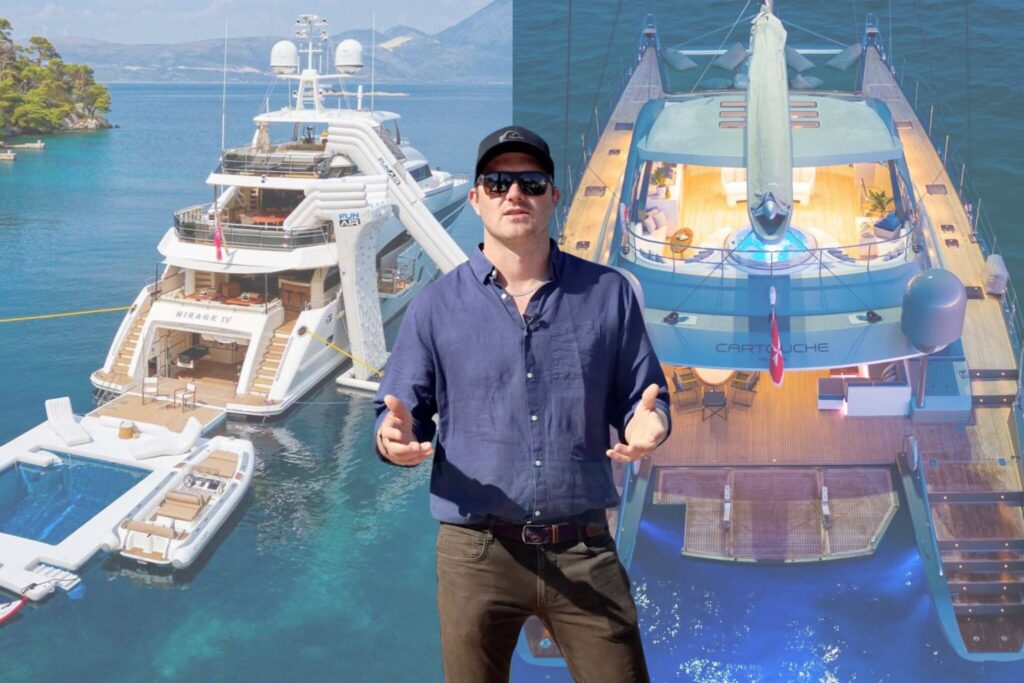
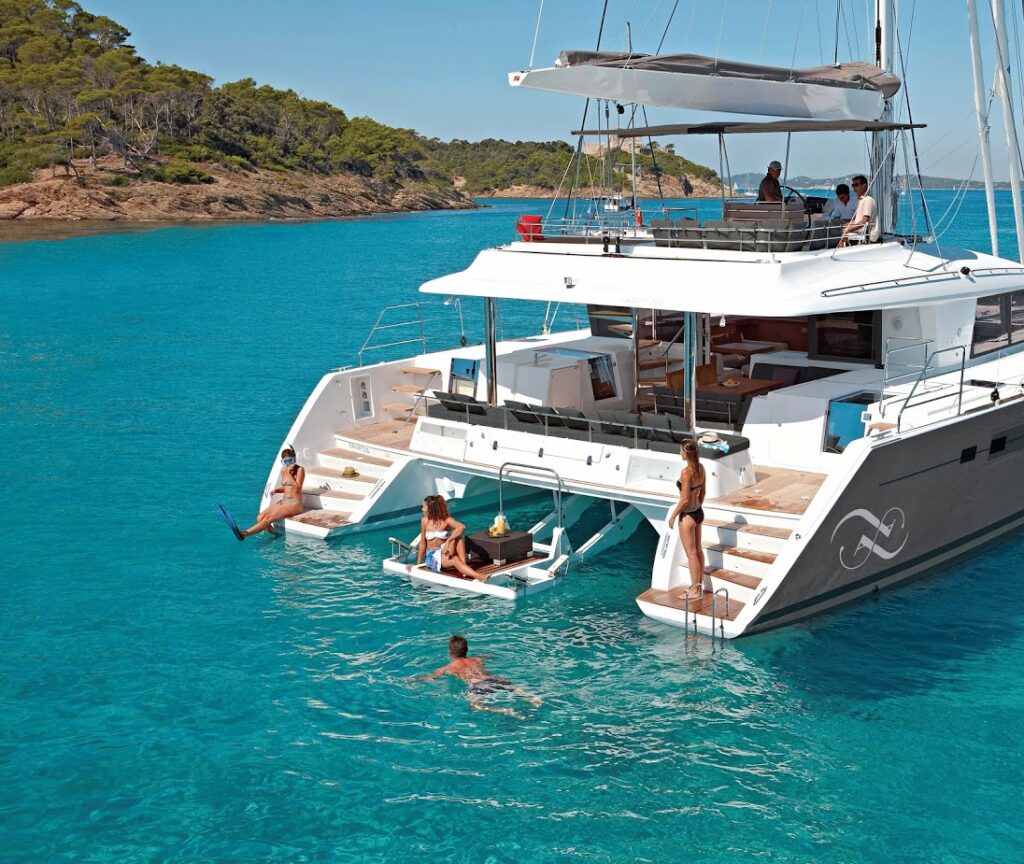
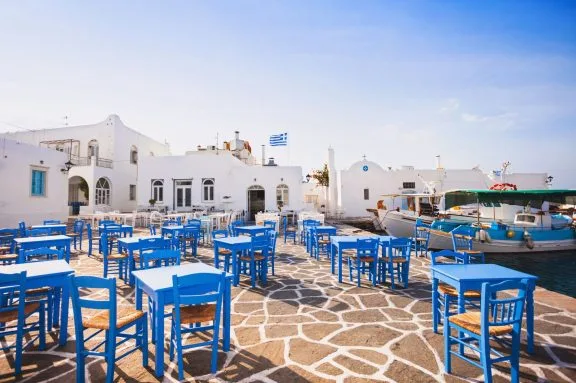
The country you pick is also the boat list you pick from, and this is where Greece is hardest to beat. In our experience no other eastern Mediterranean market puts as many large crewed catamarans and serious motor yachts in front of a group. That matters most at the top of the market, where having 3 or 4 real candidates is the difference between a compromise and the right boat. Look through the Greek motor yacht fleet or the crewed catamarans and you are looking at the pool we build a shortlist from.
Above 12 guests on a single hull the market thins everywhere, and Greece keeps going further than most people expect. Our Greek large group list runs from motor sailers up to small ships such as VARIETY VOYAGER, certified for 71 guests. That list is a specialist corner of the fleet rather than its ceiling, and the largest yachts we quote in Greece sit well above anything on it.
Where Greece is thinner is the traditional gulet and motorsailer category. Mykonos has motorsailers taking well over 20 guests, but Croatia simply has more of them, and more of the good ones. When a group outgrows 1 hull here, our usual answer is 2 yachts cruising together, which is a real answer rather than a fudge. It is also the first reason we sometimes point people at the Adriatic instead.
The 3 Times We Move a Greece Client to Croatia
The first is comfort. If somebody aboard is wind-averse or gets seasick and the Ionian has not convinced them, Croatia’s channels are sheltered by the islands themselves, and a first-timer who wants the most islands for the least time under way will get more of that in Dalmatia.
The second is a single hull for a big group. If 14 or 20 people need to sleep and eat on the same yacht and the gulet or motorsailer character is part of the appeal, the Adriatic fleet answers that better than ours does.
The third is the one way route, which Croatia owns outright.
Broker insight
Croatia is the most common place in the world for a one way charter, usually Split to Dubrovnik or the other way round. I do sometimes advise against it, though. If the group is flying in from all over and some of them are tight on time, I will recommend Split to Split instead, because in August the drive between the 2 gets very busy.
 John Boullin
Charter Broker
John Boullin
Charter Broker
The Route Math Nobody Does Before Booking
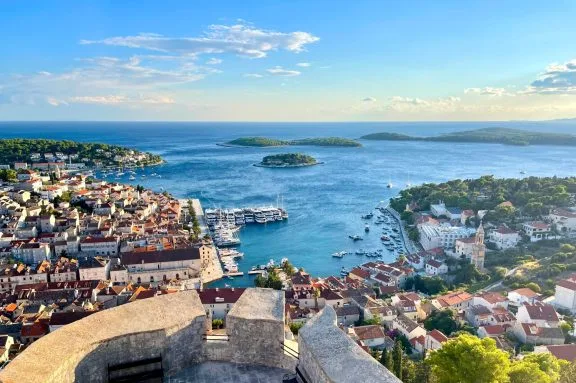
Here is the calculation that decides most Greek weeks, and almost nobody runs it before they enquire. Mykonos to Santorini is about 65 nautical miles. On a crewed catamaran cruising near 8 knots that is an 8-hour day. On a planing motor yacht cruising near 18 knots it is under 4 hours, and you are swimming off the back by early afternoon. Most of the larger displacement yachts sit closer to 12 knots, which puts the same run near 5 and a half hours, so the boat moves that number far more than the route does.
So the real question is never whether Greece is too spread out. It is which yacht type and which month. When a route looks tight we do 1 of 3 things: start deeper into the Cyclades instead of from Athens, cut 1 icon and give the rest of the week room, or move the whole charter to the Ionian and stop watching the forecast. Our month by month guide shows why June and September solve much of it on their own.
If you already have a week and a group size in mind, send them over and we will run this math on 2 or 3 real yachts before you commit to a country.
Cost: What Your Budget Actually Buys in Greece and Croatia
Most of our Greek clients land between 100,000 and 250,000 euros for the week on the right crewed motor yacht. What that buys is not scenery, because both countries have that in full. It buys a crew who already know which bay is workable when the afternoon breeze fills in, a chef cooking to your brief instead of a set menu, a tender quick enough to run the whole group ashore for dinner in 1 trip, and a toy locker with seabobs, e-foils, and diving when the crew is certified for it.
Most of all it buys a yacht with enough weight and beam to stay comfortable at anchor rather than moving everyone to a marina at 5pm. That is the least discussed and most valuable thing money does in the Aegean, and it is the difference between a week off Mykonos and a week beside it. At that level the comparison between the 2 countries stops being about coastline and becomes about which boat you can actually have, and Greece is where the shortlist stays long. Here is what a Greek week actually costs, band by band.
On tax, Croatia charges a flat 13 percent charter VAT while the Greek rate follows how the yacht is certified and where it sails, which is why we put your exact figure in the written quote rather than a rule of thumb.
So, Greece or Croatia?
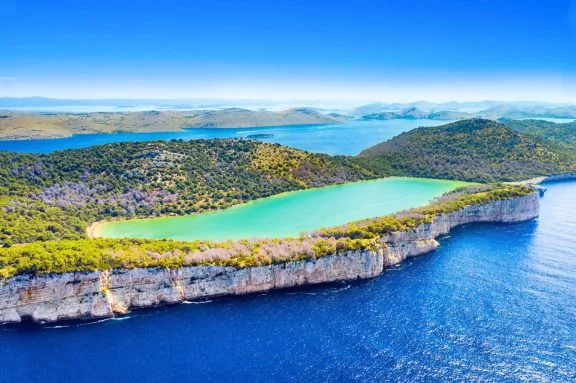
For most people reading this, Greece. You want the icons, the range, or the fleet, and Greece is the only one of the 2 that gives you all 3. Choose Croatia if somebody aboard needs the shortest possible passages, if a traditional gulet for a large group is what you have in mind, or if the one way Split to Dubrovnik route is the trip you have pictured.
If you recognize your group in any of those 3, read the same comparison from the other side: our sister brand’s Croatia vs Greece guide makes the Adriatic case in full. Then send us the brief anyway. We run both countries, so the same broker can price a Greek week and a Dalmatian one and tell you straight which is the better trip for your group.
Send the week, the group size, and the 2 or 3 islands that matter most, and we will come back with a real shortlist and an honest note on which country fits it.
People also ask
Which Greek islands cruise as easily as Croatia?
The Saronic and the Ionian. The first Saronic island is 16 nautical miles from Athens, and Poros, Hydra, and Spetses follow on from it in short hops through sheltered water. The Ionian islands are green, calm, and near each other all summer. Both give you the short-hop feel without leaving Greece, and our guide to the 3 main Greek cruising grounds shows how each area reads on the water.
Is Greece or Croatia cheaper for a yacht charter?
Croatia is the softer entry point and its charter tax is the simpler number, a flat 13 percent. Once the brief is a proper crewed motor yacht the gap narrows fast, because at that point you are paying for the boat and the crew rather than for the country. Most of our Greek weeks land between 100,000 and 250,000 euros, and at that level Greece gives you more boats to choose between. Our Greece charter cost guide sets out what each band buys.
Can we really see Santorini and Mykonos in 1 week?
Often yes, but the yacht decides it. The 2 islands sit about 65 nautical miles apart, a long day on a catamaran and a comfortable half day on a fast motor yacht. In July and August we plan a backup route regardless, and if both are non-negotiable we would rather move you to June or September. Our month by month guide explains why those 2 months work so well.
Is there anything Croatia does that Greece cannot?
Three things. It has more crewed gulets and motorsailers for a big group that insists on a single hull, it owns the one way Split to Dubrovnik market, and its island hops are shorter than anything outside the Greek Saronic. If none of those is what your trip is built around, Greece is the stronger choice.