No. On a Greek crewed charter you will almost never earn a card without going ashore for part of it, and it is worth knowing that before you book rather than after.
An entry-level course needs a licensed instructor, the theory, confined-water skills and 4 open-water dives spread over at least 2 days. Very few charter yachts in Greece carry the crew or the air to do all of that on board. What a charter does well is fit the course around your week, or, if you are already certified, put guided diving straight into your itinerary. Tell us before you book and we will match you to a yacht and a route that supports it.
What our own fleet actually looks like
We list 603 crewed yachts in Greece. Almost all of them mention diving somewhere in their brochure, which tells you nothing. The numbers that matter are much smaller.
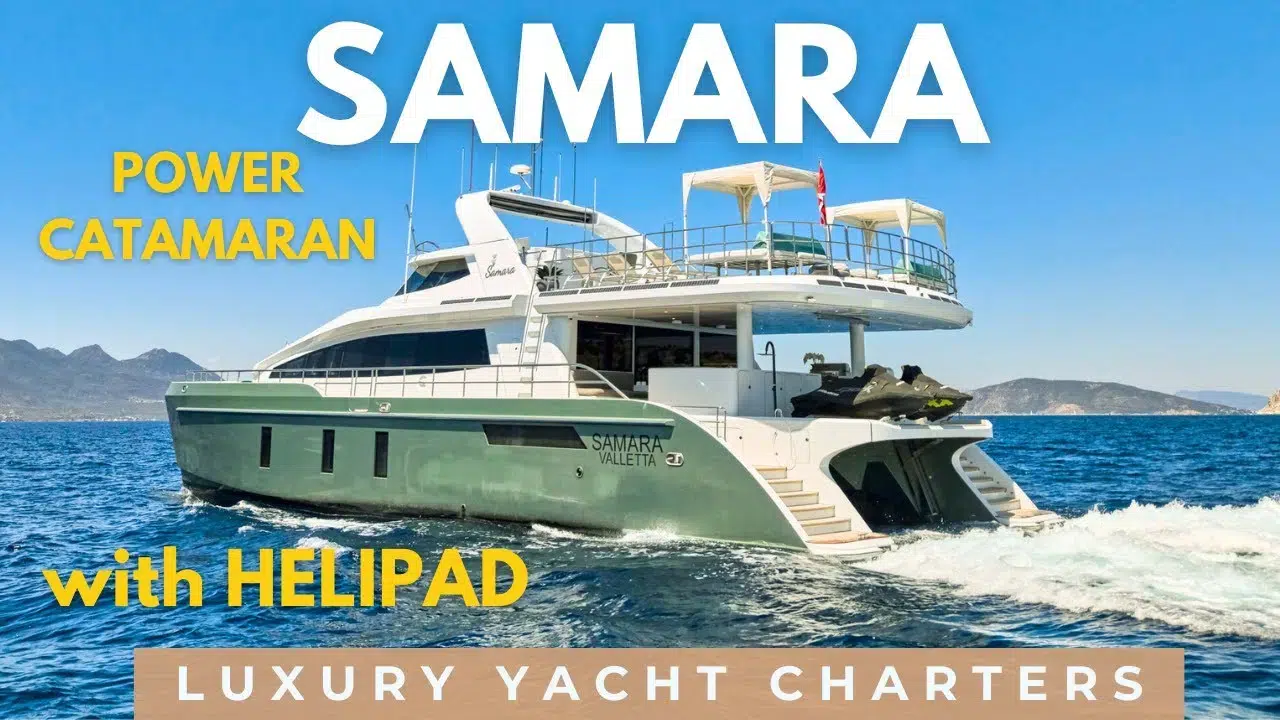
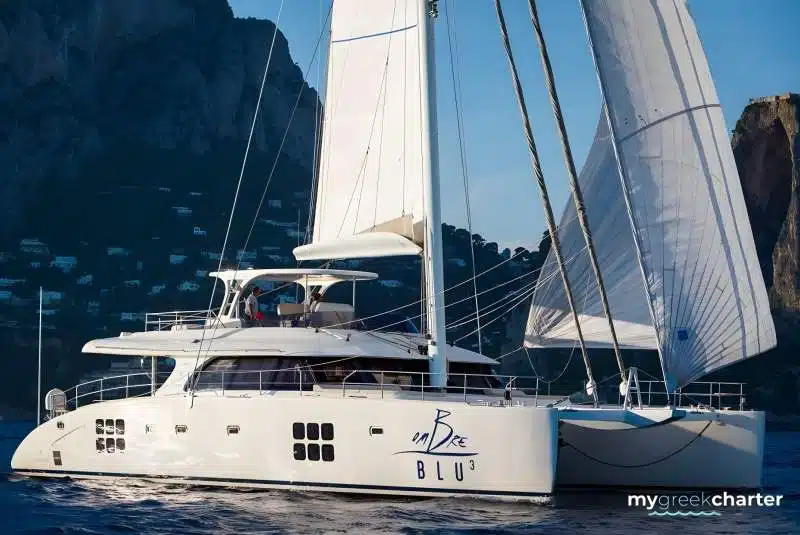
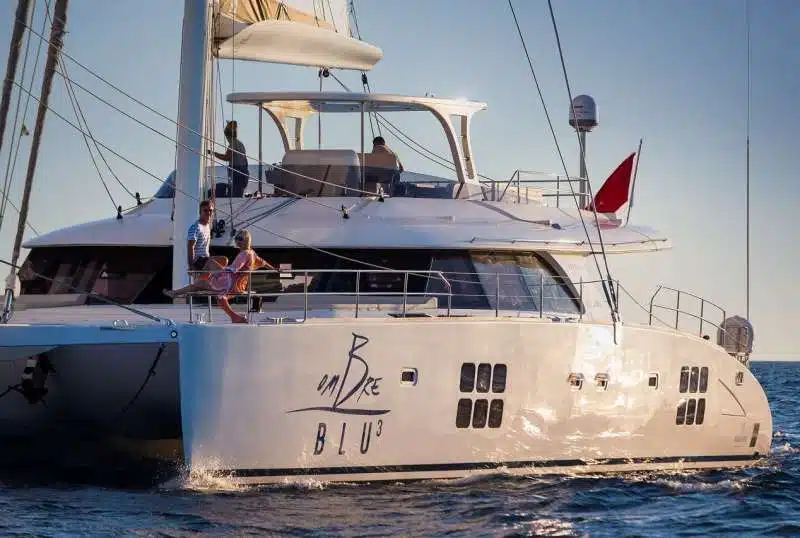
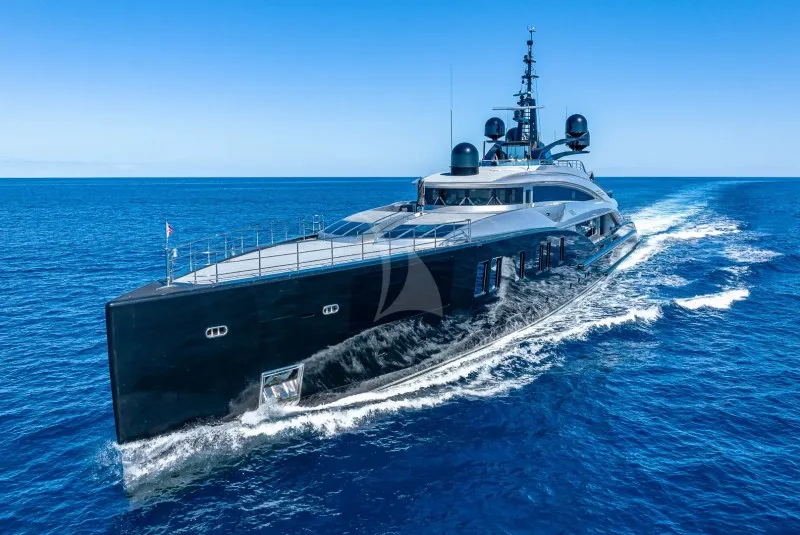
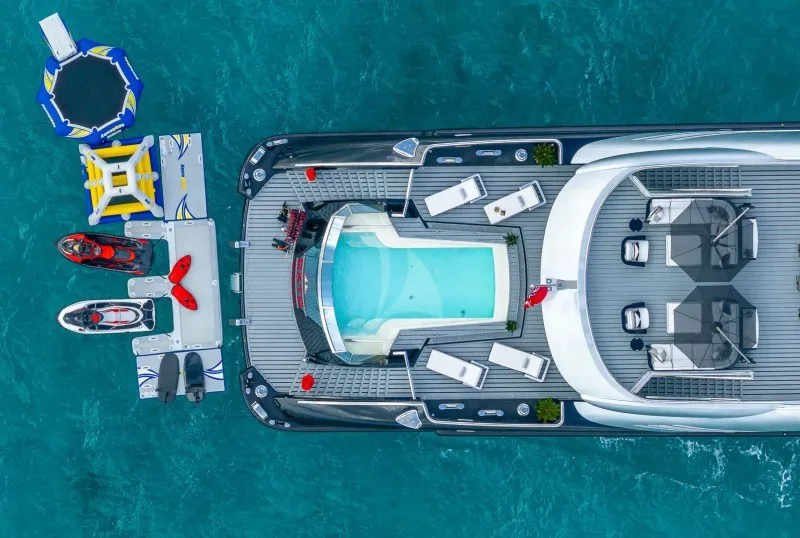
18 carry their own compressor. That is what lets a boat refill tanks and dive day after day without meeting an operator at a dock. They run from family-size catamarans up to OKTO at 590,000 euros a week, and the catamaran group is strong: COMPASS, COSMOS, STADIUM, ELOYA RAY, AZUL, OMBRE BLU3 and SAMARA all carry one. You can browse the full list on our charter yachts with scuba diving onboard page.
12 have a divemaster or a dive instructor in the crew. 8 of those carry instructor-level qualifications, which is what can actually certify you. A divemaster can guide certified divers and cannot issue a card, and that distinction is the whole reason this page exists.
3 yachts in the Greek fleet have both a compressor and a dive instructor in the crew: FRIENDSHIP, GUILLEMOT and OKTO, all large yachts starting at 125,000 euros a week. To see where that sits on the wider scale, our guide to what a Greek yacht charter costs covers every budget band. So unless yours stretches to a superyacht, the honest answer is that the course goes through a dive centre ashore, and the boat’s job is to make that easy.
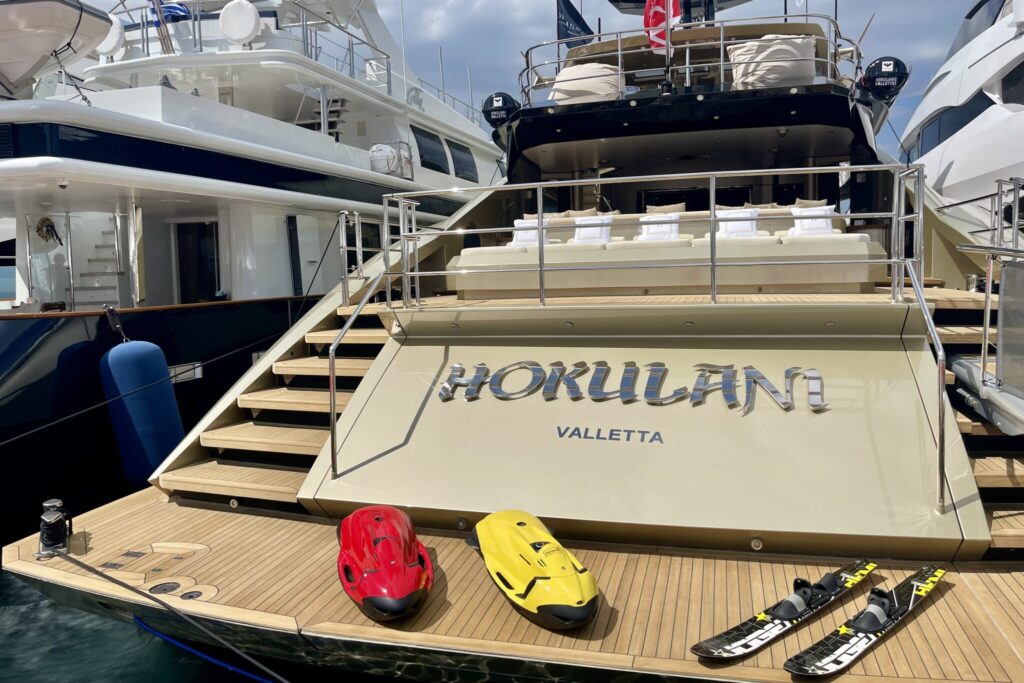
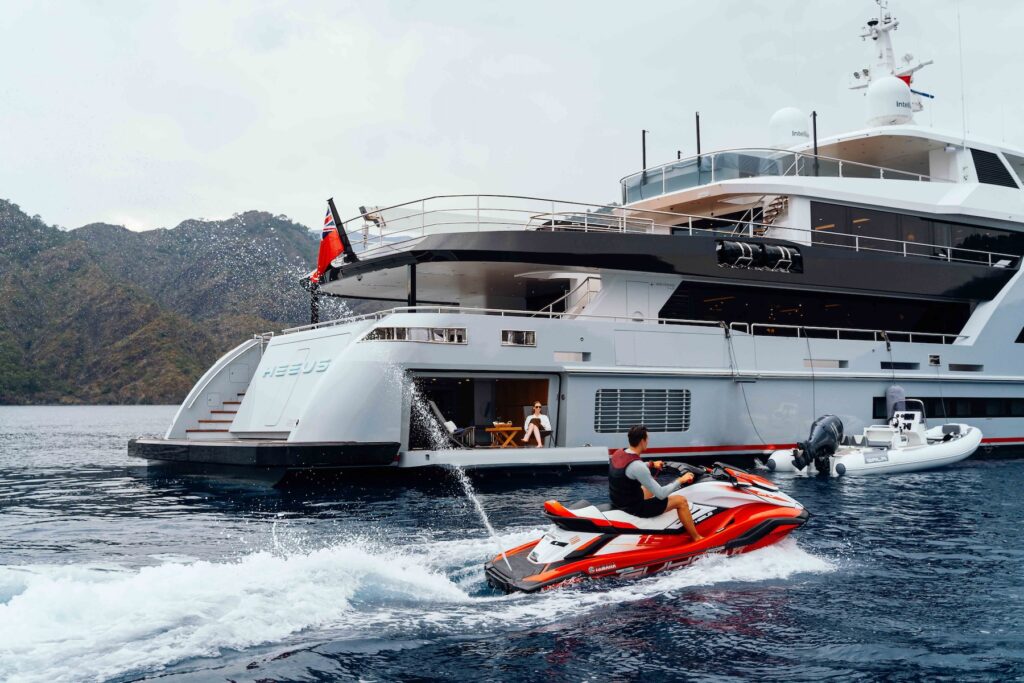
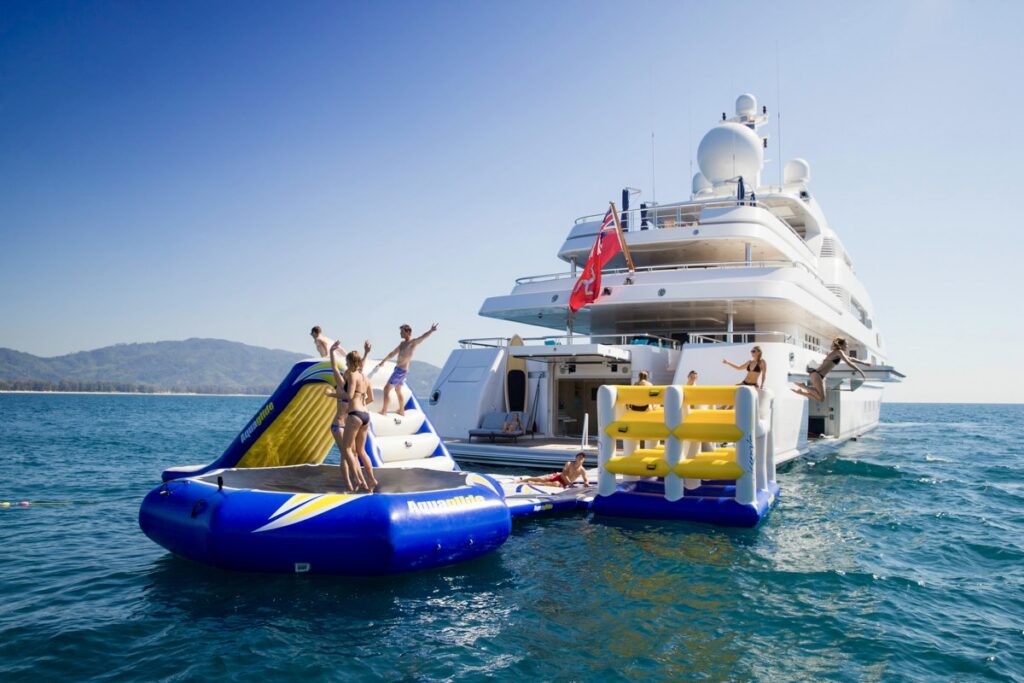
Here are 3 from the compressor list, spanning the range.
How the course actually runs on a charter week
Do the theory before you fly. Every agency offers it online now, and getting it out of the way at home turns a 4-day commitment into something that fits a charter week.
The rest happens with a dive centre at a port on your route. Confined-water skills go in one session, then the 4 open-water dives spread across at least 2 days, which is a hard requirement rather than a scheduling preference. Your captain positions the boat so those days land where a centre is, and the group carries on with the rest of the itinerary around them. Some routes make that positioning much easier than others, and our guide to where to go on a Greek catamaran charter shows how the areas differ.
If you are planning this for a teenager, check ages first. Junior certifications start at around 10 to 12 depending on the agency, and the full open-water certification is available from 15.
Plan for it to take part of 3 or 4 days. It will not fit into one afternoon, and anyone who tells you it will is cutting something out.
Already certified? Then it is simple
Bring your card and your logbook. Most Greek operators want to see both, and if it has been a while since your last dive they may ask for a refresher before the first one.
From there your crew coordinates guided dives with a centre at each stop, and diving slots in between swimming, beaches and lunch like any other part of the day. If you want to dive most days rather than once, that is when the compressor list above starts to matter, because a boat that can fill its own tanks is not tied to an operator’s schedule.
What you can and cannot dive in Greece
Greece opened up considerably in 2006. Before that most of the coast was closed to recreational diving to protect what is on the seabed, and today you can dive the great majority of it, including wrecks and archaeological sites, as long as you go with a certified dive club rather than on your own.
What stays closed is specific and easy to respect: designated antiquities areas, military exercise zones, shipping lanes and anchorages. On any site with archaeology, the rule is look and do not touch. You may not raise, move or even photograph an object of archaeological value. Your dive centre knows exactly where the lines are, which is another reason the diving runs through them.
5 things to sort before you go
- Say what you want early. Certifying from scratch, refreshing lapsed skills and fun-diving as a certified guest point to 3 different yachts and 3 different routes.
- Ask who is teaching. Onboard crew or a partner centre changes the whole schedule, and it is a fair question to put to us before you sign anything.
- Check the air. Ask whether the yacht carries tanks and a compressor or whether the centre supplies everything. On most Greek yachts it is the centre.
- Do the medical form honestly. Courses use a standard health questionnaire, and a yes to certain questions means a doctor has to sign you off before you get in the water. Far easier to handle at home than on a Tuesday in the Cyclades.
- Leave a gap before your flight. The usual guidance is at least 12 hours after a single dive and 18 after several days of diving. Book the last dive early in the week, not the morning you travel.
One thing worth being straight about
A crewed yacht is a very good base for diving and it is not a dive boat. The crew’s first job is running the yacht safely, and instruction should always come from a qualified professional, whether that is someone on board or a centre ashore.
If diving matters to your trip, tell us who wants to dive and at what level. We will look at which yachts and routes can genuinely support it and come back with honest options, including the ones where the answer is that the course happens ashore. And if you would rather have one number cover the whole week, fuel and meals included, start from our all-inclusive yacht charters in Greece.
People also ask
Can you get PADI certified on a yacht charter in Greece?
You can complete a certification during a charter week, but rarely entirely on board. Only 3 of the 603 yachts we list in Greece carry both a compressor and an instructor-rated crew member, and they are large yachts starting at 125,000 euros a week. The path that works at most budgets: do the theory online at home, then complete the confined-water session and the 4 open-water dives with a licensed dive centre at ports along your route, spread over at least 2 days.
Can you try scuba diving in Greece without a certification?
Yes. Licensed Greek dive centres run supervised introductory dives, usually sold as discover or try dives, where an instructor stays with you in shallow water and no card is required. It does not certify you, but it is the quickest way to find out whether a full course is worth your time. Your crew can arrange one at a port on your route.
Do Greek charter yachts carry scuba diving gear?
Most carry snorkeling gear and nothing more. Of the 603 crewed yachts we list in Greece, 18 have their own compressor and can refill tanks on board, and 12 have a divemaster or dive instructor in the crew. Every other boat relies on dive centres ashore for tanks, weights and guides, which works fine for a few dives during the week.
How long after diving do you have to wait before flying?
The standard guidance is at least 12 hours after a single dive and 18 hours after multiple dives or several days of diving. Book the last dive early in the week rather than the morning you fly home, and your crew will keep the schedule on the right side of that line.
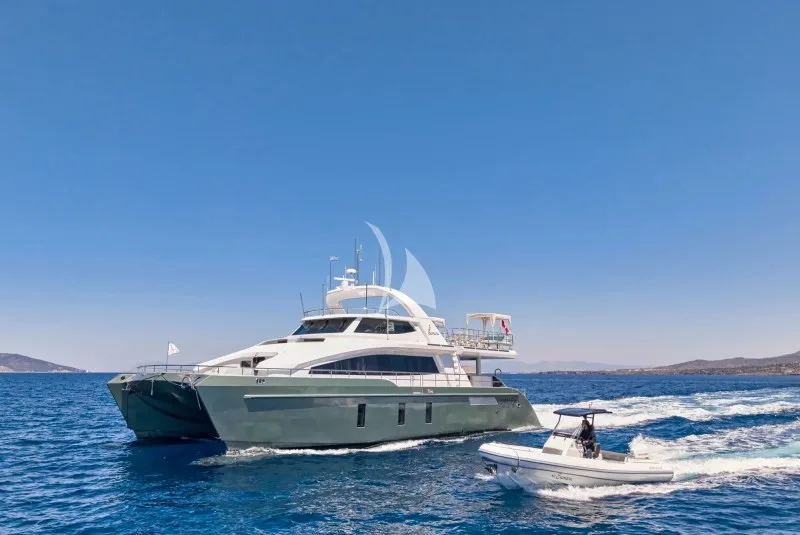
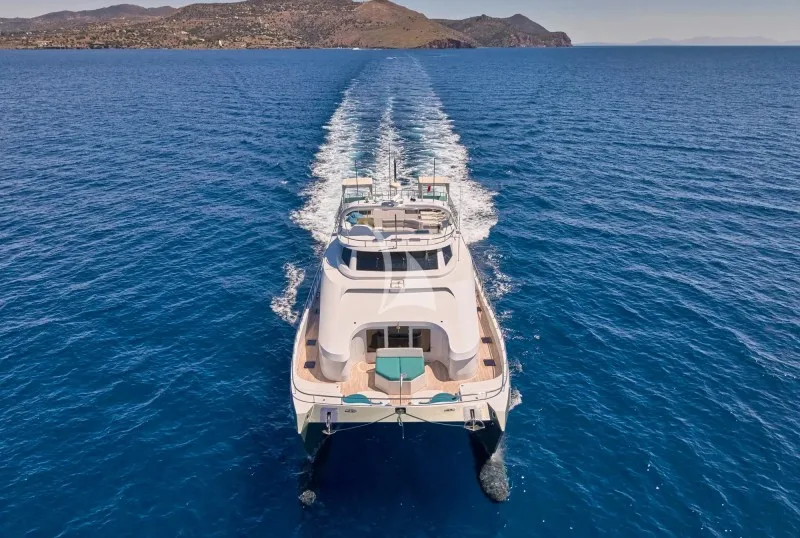
SAMARA, the 79-foot power catamaran from the compressor list above, on camera: