Broker insight
There is no extra fee for using a broker. The owner pays our commission from the same charter fee you would pay booking direct, so the advice and the vetting come free.
 Chris de Kock
Charter Broker, Sales Broker, Active CYBA Member
Chris de Kock
Charter Broker, Sales Broker, Active CYBA Member
No. Booking a crewed yacht charter through a broker does not cost you extra. In the standard crewed charter model, the broker is paid from the yacht’s published charter rate, not added as a separate client fee.
A good broker can actually save you money because they compare the full market, not only the yachts under 1 agency or fleet. That gives you more choice, better visibility on seasonal discounts, and fewer bad-fit options.
The point is not to sell you a particular yacht. At DMA, our job is to find the yacht, crew, route, and terms that match your requirements best.
Quick Answer
- A yacht charter broker is not an extra fee on top of the same yacht, dates, and terms.
- In the normal crewed charter model, the broker’s commission is paid from the yacht side of the published charter rate.
- At DMA Yachting, we price match the like-for-like yacht quote.
- A broker can save you money by comparing the wider market, seasonal discounts, and better-value alternatives instead of only showing yachts from 1 agency or fleet.
- A good broker is not trying to sell you a specific yacht. The job is to find the yacht, crew, terms, and route that fit your requirements best.
- The final charter total can still change because of VAT, APA, fuel, delivery, gratuity, and what is actually included.
- In Greece, a broker is most useful for checking yacht fit, route realism, APA assumptions, contract terms, and what happens if plans change.

How Broker Pricing Usually Works
On most crewed yacht charters, the yacht is marketed at a published weekly charter rate. The broker commission is paid out of that rate by the yacht owner, central agent, or yacht management side. The client is not normally charged “charter fee plus broker fee” just because a broker is involved.
That is why booking through a broker should not make the same yacht more expensive. The important phrase is same yacht, same dates, same terms. If 2 quotes look different, we would check the currency, VAT, APA percentage, delivery or repositioning fees, inclusions, and contract assumptions before deciding which offer is actually better.
If you are comparing full trip cost, our Greece yacht charter cost guide is the better companion read because it separates the charter fee from the expenses that sit around it.
What Can Still Change the Final Price?
The broker should not be the extra cost. But the total charter price can still change a lot depending on the yacht and the terms. In Greece, many crewed charters are quoted as a base charter fee plus VAT and APA. APA is the advance provisioning allowance used for variable costs such as fuel, food, drinks, port fees, and other trip expenses.
This is where clients can get misled if they compare headline prices only. One yacht may look cheaper because the quote is missing a delivery fee. Another may look expensive because it shows the total more honestly. Some yachts include more in the base rate than others. Some routes require more fuel or repositioning. We want those details visible early, not discovered after the yacht has already been chosen.
Our guides to all-inclusive vs APA in Greece and how APA works go deeper into that part of the pricing conversation.
Broker insight
Clients often worry that a broker is another line item on top of the charter rate. It is not. At DMA, we price match the like-for-like yacht quote. The real advantage is that I am not trying to make 1 owner's yacht fit every client. I can compare the wider market, current discounts, crew, APA, route, and terms, then tell you which option I would actually trust for Greece.
Chris de Kock
Charter Broker, Sales Broker, Active CYBA Member
Watch Marcelle Explain the Short Version
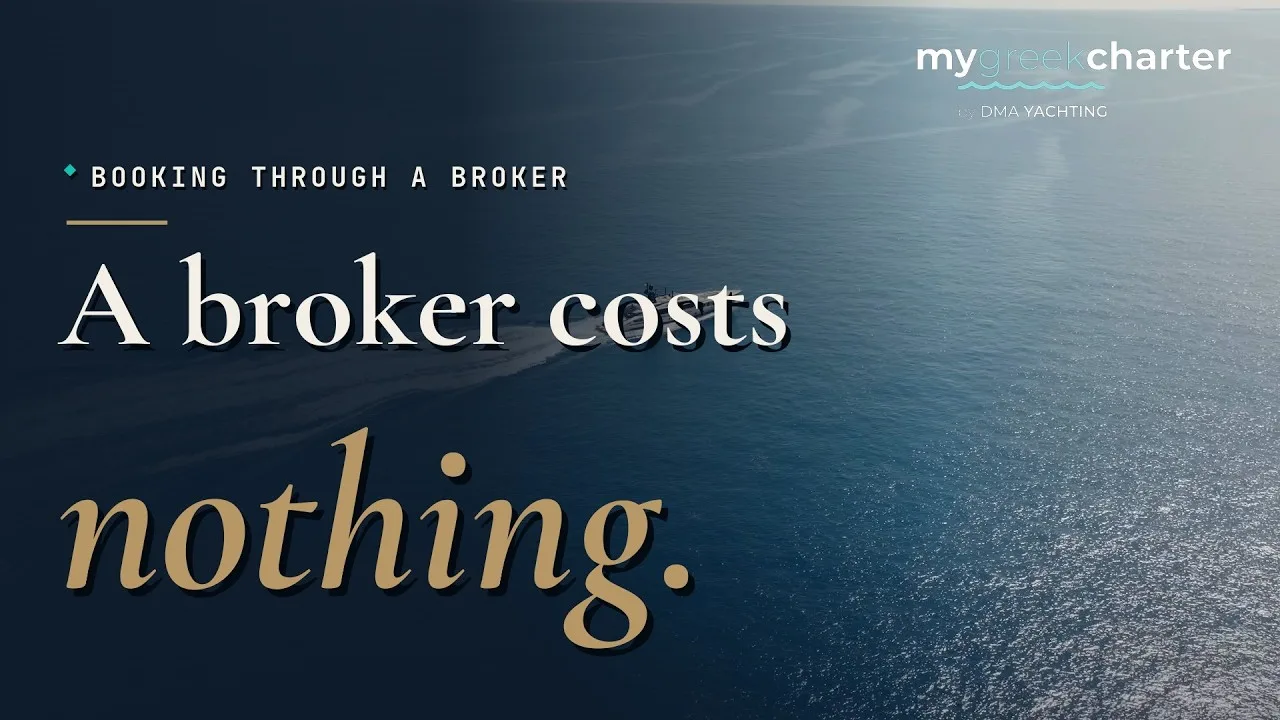
The video below features Marcelle and was filmed for our BVI channel, but the pricing point applies to the same question clients ask us in Greece: the broker should help make sure the money is well spent, not add another fee on top of the same yacht quote.
Why Not Just Book Directly?
Booking directly is not automatically wrong. If you already know the exact yacht, manager, route, contract terms, APA logic, and crew fit, direct contact may feel simple. The limitation is that the yacht or manager is naturally representing that yacht.
A broker should compare across yachts, not defend 1 boat. That matters when the yacht you like is not available, the crew is not the right match, the route is too ambitious, the cabin layout does not fit the group, or a cheaper quote is missing a cost that will appear later. In practice, we often add value by saying no to the wrong yacht before the client spends money on it.
Our step-by-step Greece booking guide shows how that process should work from inquiry to embarkation.
Where a Broker Helps Most in Greece
Greece is a market where broker guidance can change the quality and value of the charter, even when the yacht rate itself is the same. The differences usually show up in the shortlist, the crew fit, the route plan, and the details around the quote.
- Full-market view: A broker can compare yachts across the market, not only the yachts controlled by 1 owner, fleet, or central agency.
- Seasonal value: A better quote is not always a lower headline rate. Sometimes the smarter option is a better crew, a stronger inclusive package, or a seasonal discount on a yacht that fits the route properly.
- Yacht fit: A motor yacht, catamaran, sailing yacht, or power catamaran can all be right, but not for the same route, group, or comfort level.
- Route realism: A 7-day Cyclades week is not the same operationally as a compact Saronic or Ionian route.
- APA and VAT clarity: The headline rate is only useful if you know what sits on top and what is already included.
- Contract and option timing: A good yacht can be lost if holds, deposits, and contract timing are not handled properly.
- Crew and preference fit: The yacht is not just a hull. The crew, chef, service style, and how your preferences are briefed matter heavily.
That last point is why we also care about the post-booking work. The preference sheet, crew brief, and final planning are not admin chores. They are part of making sure the yacht you paid for actually delivers the trip you had in mind.
Questions to Ask Before You Book
If you are comparing quotes, ask questions that show whether the broker is really protecting your budget and widening your options. A serious broker should be able to answer them clearly.
- Which other yachts would you compare against this one at the same budget?
- Are there seasonal discounts or better-value alternatives available for my dates?
- Is this the published charter rate for the yacht, dates, and cruising area?
- Is VAT included, estimated separately, or still to be confirmed?
- What APA percentage is required, and what does it cover?
- Are delivery, repositioning, marina, or one-way costs included?
- If I have another quote, are we comparing the same yacht, dates, discounts, and terms?
- What would you change if this yacht or route is not the smartest use of the budget?
The first 2 questions are especially revealing. A broker who only repeats the brochure is not doing enough. A broker who can compare alternatives, spot discounts, explain the tradeoff, show the better-fit yacht, or reshape the route is where the value starts.
Our Recommendation
For most luxury crewed yacht charters in Greece, we recommend using a broker because the right advice does not cost extra and can make the budget go further. The value is not just in booking the yacht. It is in comparing the full market, finding the best-fit crew and route, checking the real total, and telling you honestly when a different yacht is the smarter use of the money.
If you already have a quote, send it to us with the yacht name, dates, guest count, preferred route, and anything you are unsure about. We can tell you whether the numbers look like-for-like, whether a seasonal offer changes the shortlist, where the real cost sits, and whether the yacht is the one we would actually choose for the week.
People also ask
Does a yacht charter broker charge the client a fee?
In the normal crewed yacht charter model, no. The broker commission is paid from the yacht side of the published charter rate, not added as a separate client fee.
Is booking directly with the yacht cheaper?
It should not be cheaper for the same yacht, dates, and terms. If a direct quote looks lower, compare VAT, APA, delivery fees, inclusions, and contract details before assuming it is a better deal.
How does a yacht charter broker get paid?
The broker is normally paid a commission from the yacht owner, central agent, or yacht management side after a charter is booked. The client pays the agreed charter costs, not a separate broker invoice.
What costs should I compare before choosing a yacht?
Compare the base charter fee, VAT, APA, delivery or repositioning fees, fuel assumptions, gratuity, cancellation terms, and what is included onboard. The cheapest headline rate is not always the best charter value.
Can a broker negotiate the yacht rate?
Sometimes. It depends on the yacht, dates, demand, owner flexibility, and how close you are to the charter period. A good broker will also look beyond the rate and check whether the overall terms make sense. Our guide to what your Greek charter broker should actually be doing for you shows the full service.