This is the southern Dodecanese loop we recommend most often from Rhodes: eight days covering Symi, Nisyros, Kos, Tilos, Alimia, Halki and Lindos, about 223 nautical miles with the longest single crossing at 48nm. It suits couples and families who want history, volcanic scenery, and quiet harbours, with noticeably calmer meltemi conditions than the open Cyclades.
The charter week runs Saturday to Saturday: board Saturday afternoon in Rhodes, hand the yacht back the following Saturday morning, seven full nights on board. Our captains adjust the day order to the forecast, so treat this as the shape of the week rather than a fixed schedule.
The route at a glance
- Day 1: Board in Rhodes, sail to Symi (about 23nm)
- Day 2: Symi to Nisyros (about 39nm)
- Day 3: Nisyros to Kos (about 26nm)
- Day 4: Kos to Tilos (about 33nm)
- Day 5: Tilos to Alimia (about 20nm)
- Day 6: Alimia to Halki (about 6nm)
- Day 7: Halki to Lindos (about 48nm)
- Day 8: Lindos to Rhodes, return (about 28nm)
Day 1 – Board in Rhodes, Sail to Symi (about 23nm)
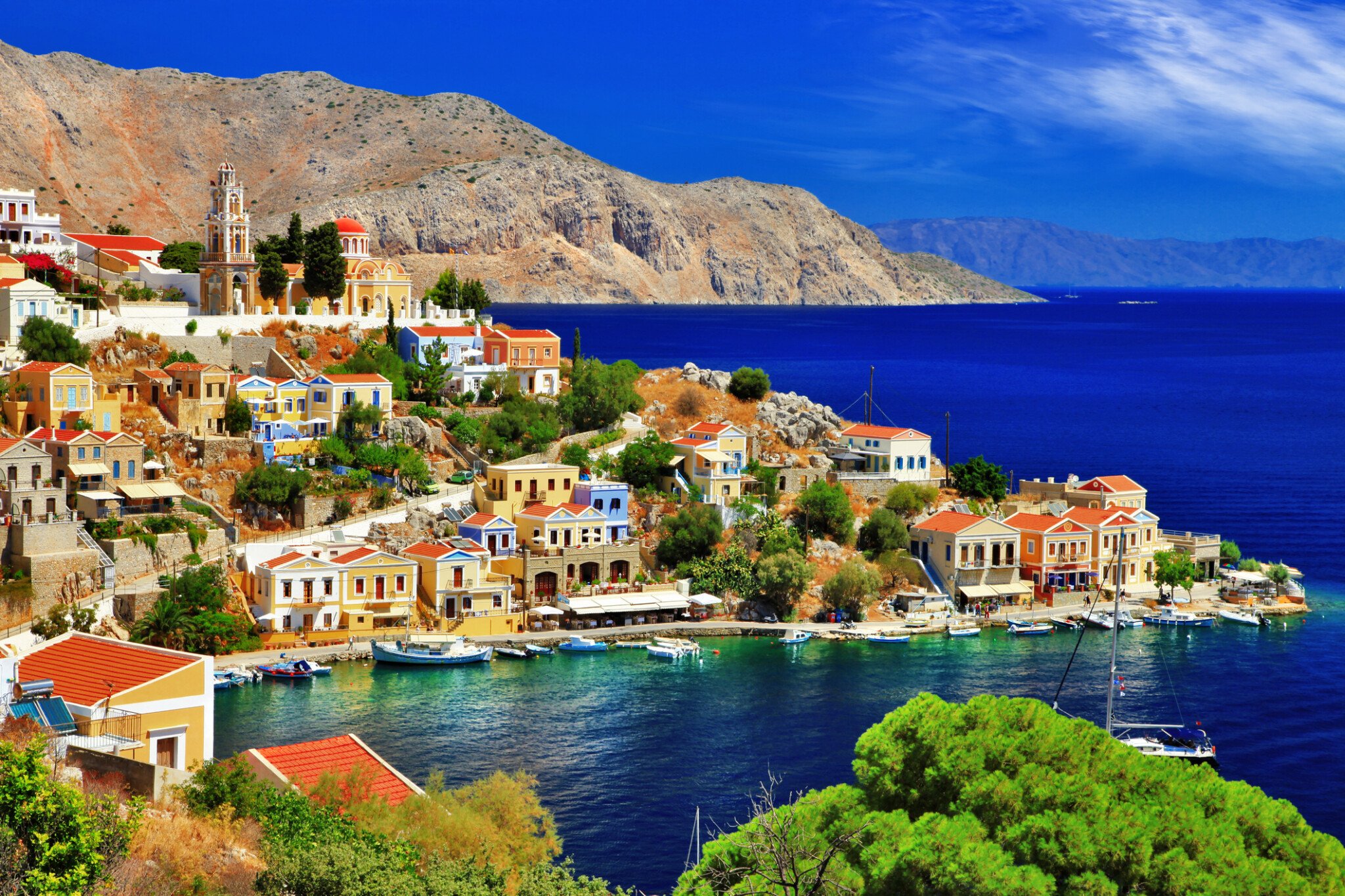
Midday: boarding in Rhodes
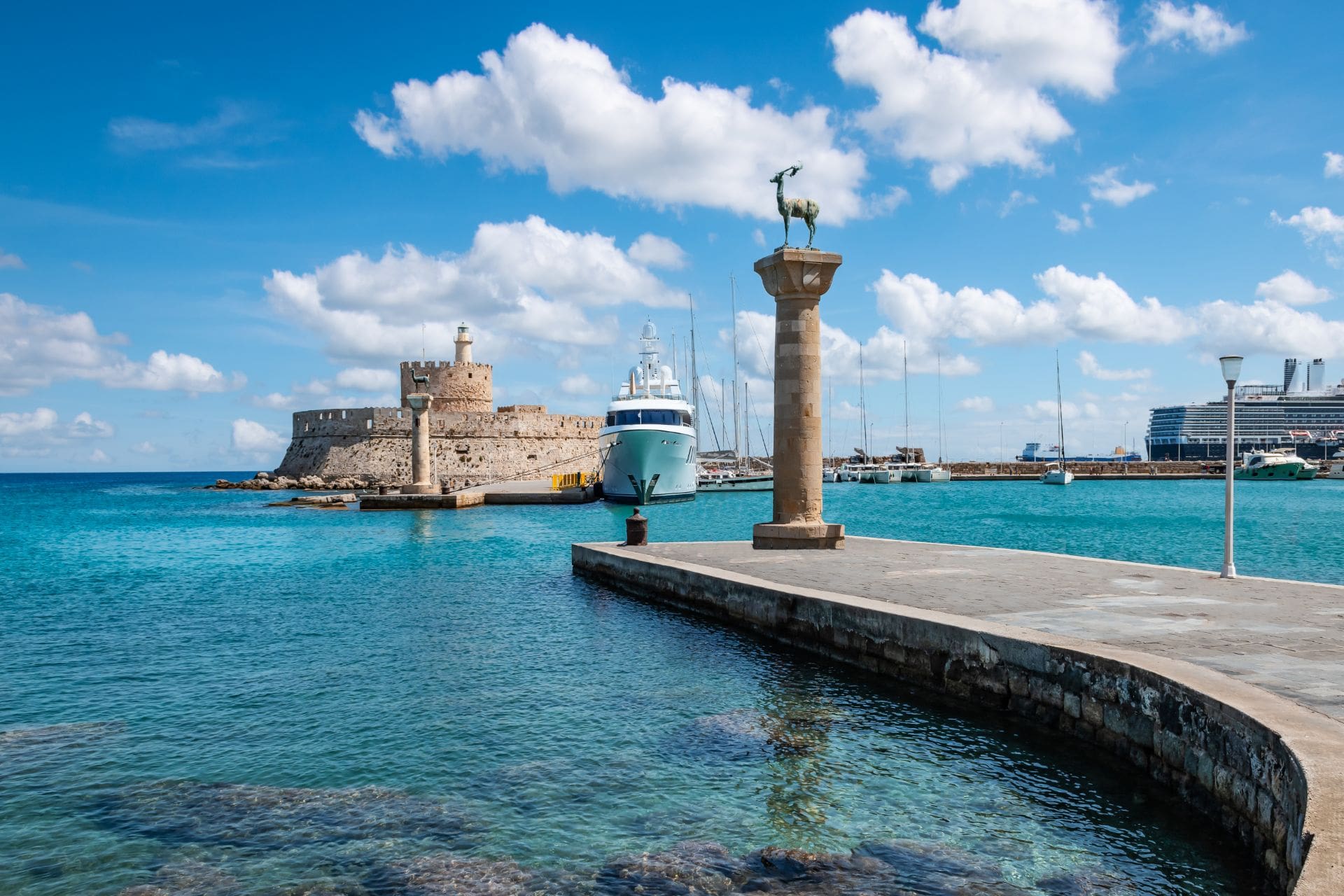
Embarkation is Saturday afternoon in Rhodes, usually Mandraki or the marina, a short taxi from the airport. Meet the crew, go through the preference sheet, and you are underway with the afternoon still ahead, a three-to-four-hour sail to the most photogenic harbour in the Dodecanese.
Afternoon: arriving at Symi
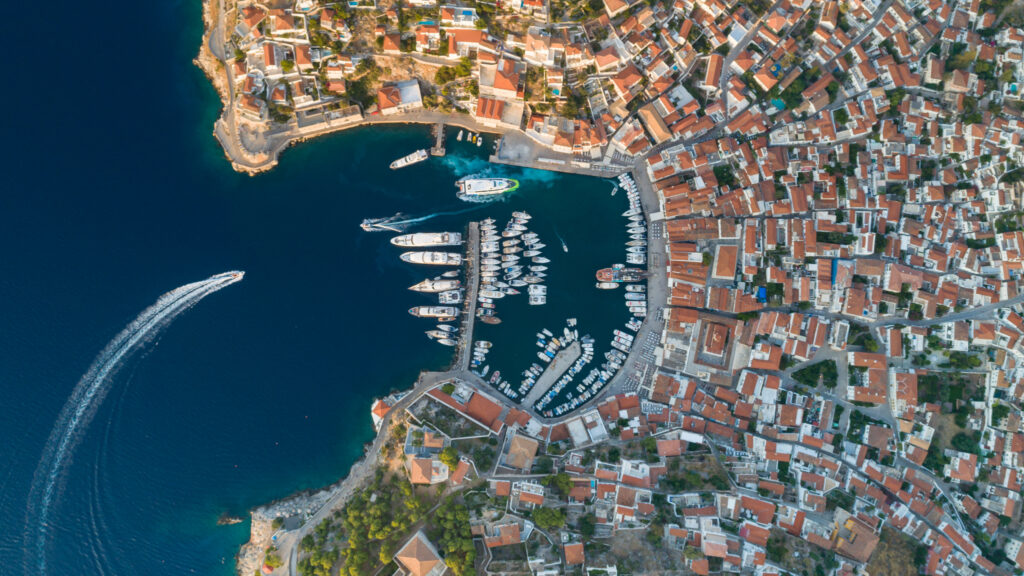
Symi‘s amphitheatre of neoclassical houses is best entered by sea, arriving by yacht here beats every ferry view. Lunch at anchor in St George’s Bay under its sheer cliff before heading into the harbour.
Evening: Gialos harbour
A harbourfront table in Gialos for the island’s famous small shrimp, one of the better dinners of the week this early on.
Broker insight
The Dodecanese stays warm and cruisable later than the Cyclades, and the hops between islands here keep the days relaxed. It is underrated for September and October.
 Leonidas Marousos
Charter Broker
Leonidas Marousos
Charter Broker
Overnight: Symi harbour, or Pedi Bay if Gialos is full in peak season.
Don’t Miss
- Symi’s amphitheatre harbour, best seen arriving by yacht
- Lunch at anchor under the cliffs of St George’s Bay
- Symi shrimp at a Gialos harbourfront taverna
Day 2 – Symi to Nisyros (about 39nm)
Morning: the crossing
A longer crossing today to Nisyros, an active volcano and the day guests talk about afterward. Go in the morning, before the day-trip boats from Kos arrive.
Afternoon: the Stefanos crater
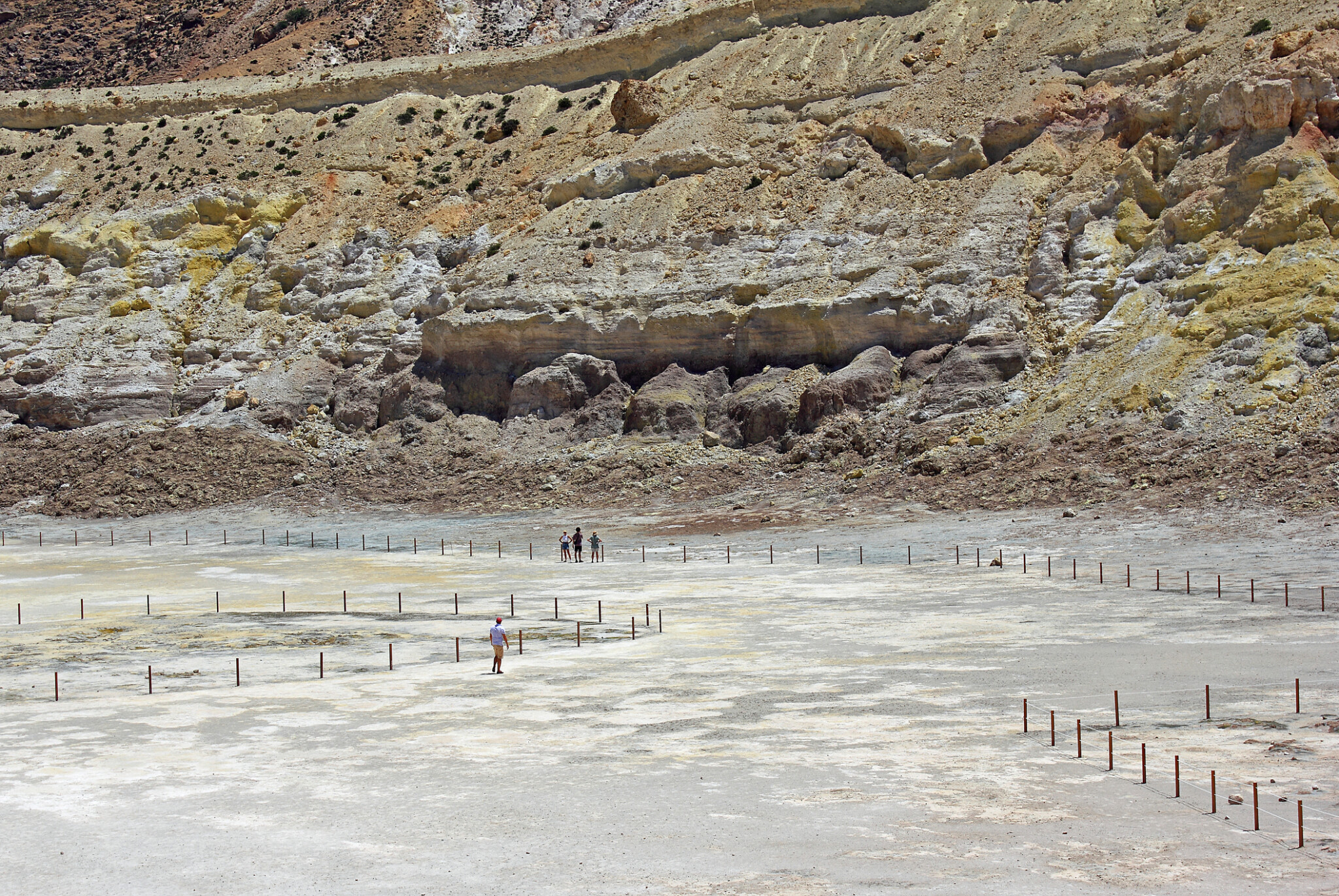
Walk down onto the floor of the Stefanos crater, 300 metres wide, sulphur vents still steaming, Greece’s youngest volcano and one of the more genuinely strange places on the whole route.
Evening: Mandraki
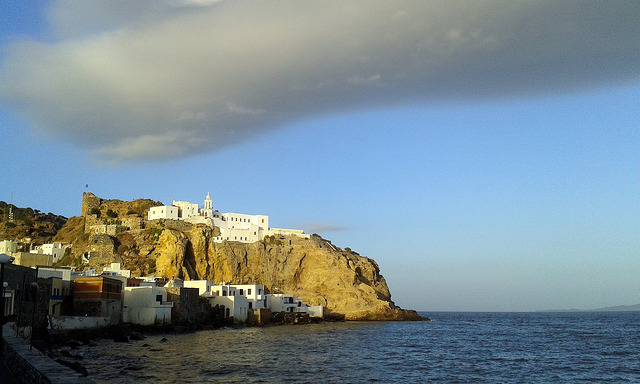
The afternoon is for Mandraki, one of the most underrated harbour towns in Greece, whitewashed lanes climbing toward the Monastery of Panagia Spiliani above the port.
Overnight: Mandraki, Nisyros.
Don’t Miss
- Walking the floor of the Stefanos crater
- Mandraki’s lanes and the monastery above the port
- A quiet, genuinely local overnight away from the day-trip crowds
Day 3 – Nisyros to Kos (about 26nm)
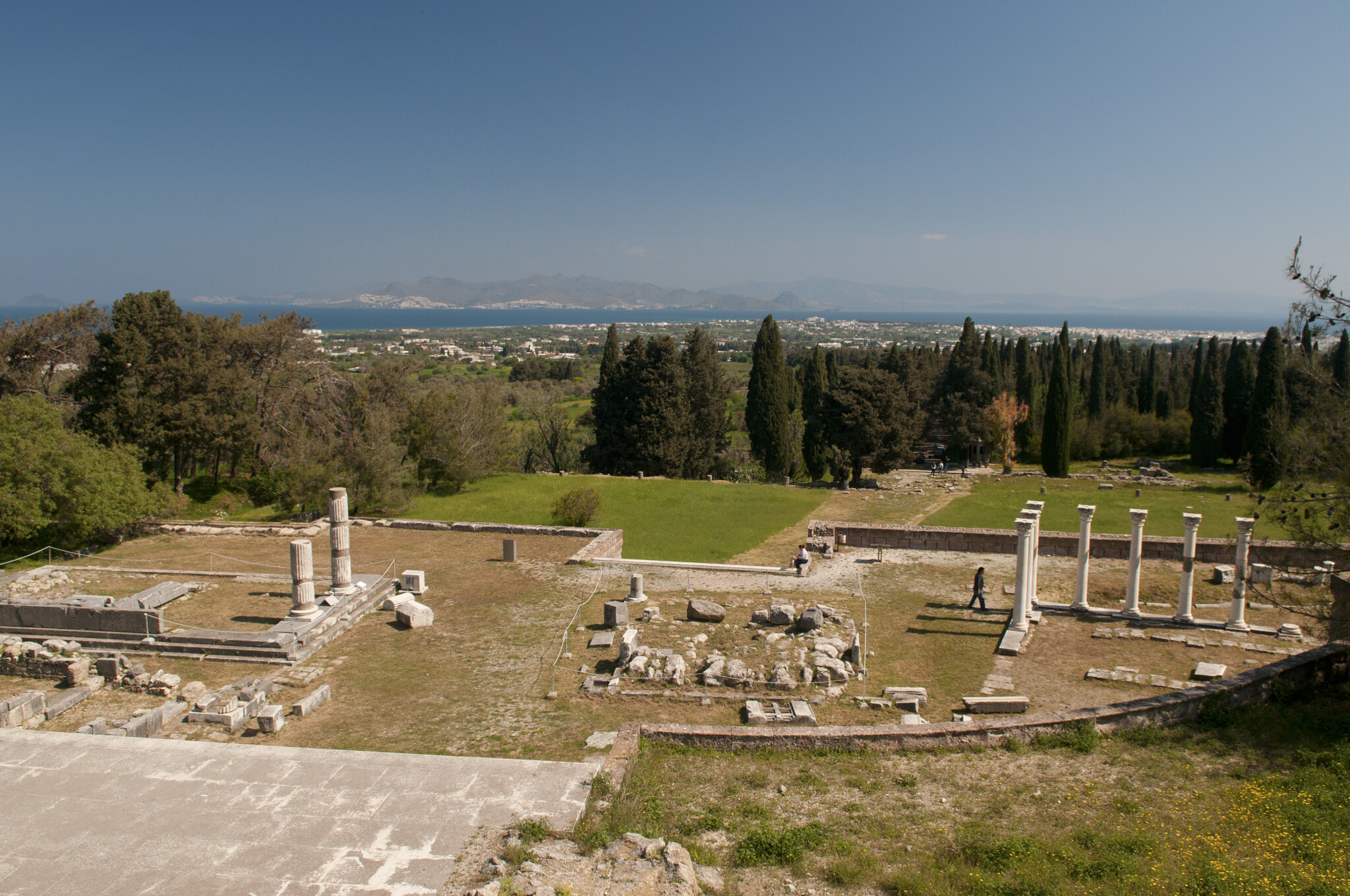
Morning: the birthplace of Western medicine
On to Kos, the third-largest island in the Dodecanese and a sharp change of pace: sandy beaches, real nightlife, and a genuine piece of history in the Asklepion, the sanctuary and medical school built after Hippocrates’ death around 370 BC.
Lunch: the plane tree
In Kos Town, the plane tree where legend says Hippocrates taught his students still stands, hollowed out and propped up now, trunk over four and a half metres across, but standing.
Afternoon: Zia village
Up into the hills for Zia, the island’s classic sunset viewpoint, or the thermal beach at Agios Fokas if the group would rather stay by the water.
Evening: Kos Town
Dinner in Kos Town, more polished and more lively than anywhere else on the route so far, a deliberate contrast before the week turns quiet again.
Overnight: Kos Town.
Don’t Miss
- The Asklepion, the ancient world’s medical school
- Hippocrates’ plane tree, still standing after two millennia
- Sunset from Zia village in the hills
Day 4 – Kos to Tilos (about 33nm)
Morning: back to quiet
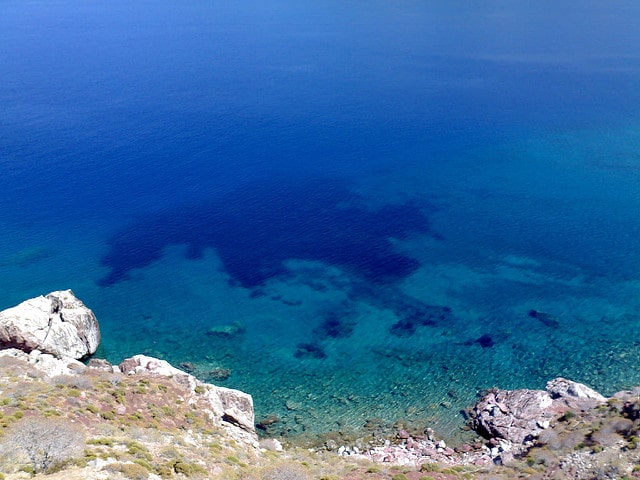
The crossing to Tilos is a real change of register after Kos: fewer than a thousand residents, an eco-island ethos, and some of the emptiest anchorages in the Dodecanese.
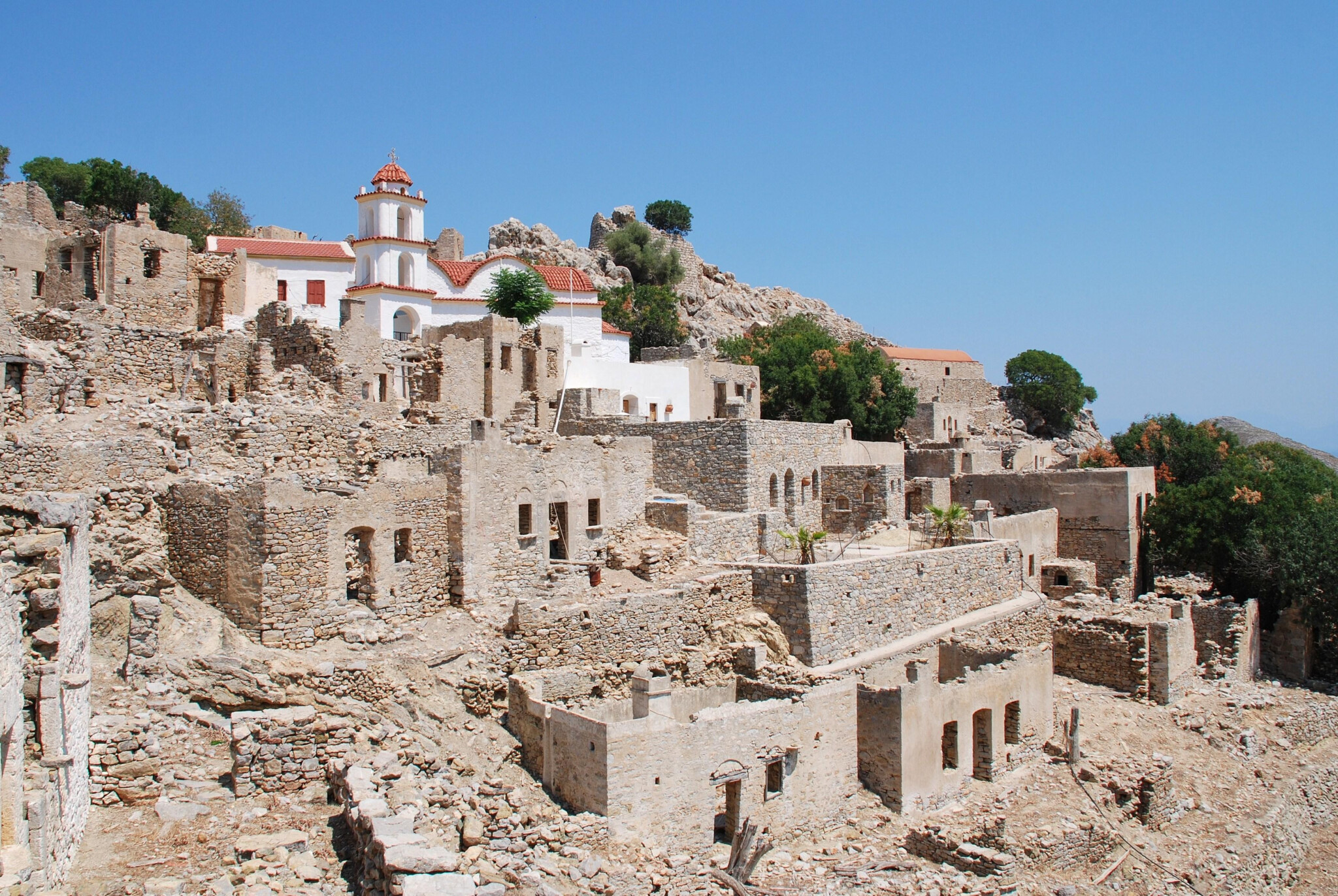
Afternoon: Mikro Chorio
The abandoned stone village of Mikro Chorio is worth the walk before dinner, a genuine ghost village rather than a curated one.
Evening: Livadia
Dinner in Livadia, the main harbour village. If you came to the Dodecanese to get away from crowds, this is the day it delivers.
Overnight: Livadia, Tilos.
Don’t Miss
- The abandoned stone village of Mikro Chorio
- Some of the emptiest anchorages of the whole route
- Dinner in Livadia’s low-key harbour
Day 5 – Tilos to Alimia (about 20nm)
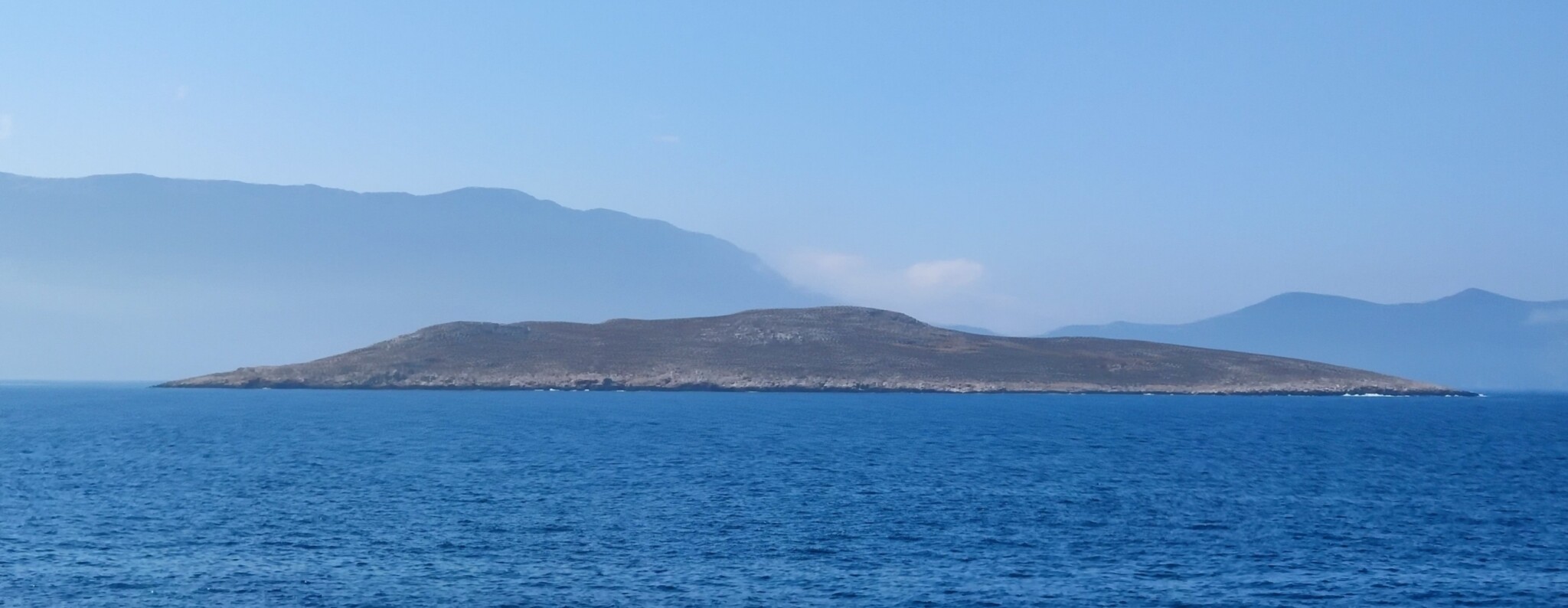
Morning: a deserted island
Alimia sits uninhabited between Rhodes and Halki, and it is one of the most striking detours on the whole route: two sheltered coves, Agios Georgios and Emporio, and nobody living there at all.
Afternoon: the Italian submarine base
Mussolini used Alimia as a submarine base for the Regia Marina during the Italian occupation of the Dodecanese, and the abandoned barracks and a small ruined fishing village are still there to explore by tender. The island was also the site of one of the last engagements of the Second World War in Europe, a battle between German forces and the Greek Sacred Squadron on 1 and 2 May 1945.
Evening: at anchor
There is no village to go ashore to tonight, this is a private-island night at anchor, swimming and paddleboarding in coves that stay empty even in August.
Overnight: At anchor, Alimia.
Don’t Miss
- The ruins of the Italian submarine base and abandoned barracks
- Swimming in coves with no other boats in sight
- The abandoned fishing village at Agios Georgios
Day 6 – Alimia to Halki (about 6nm)
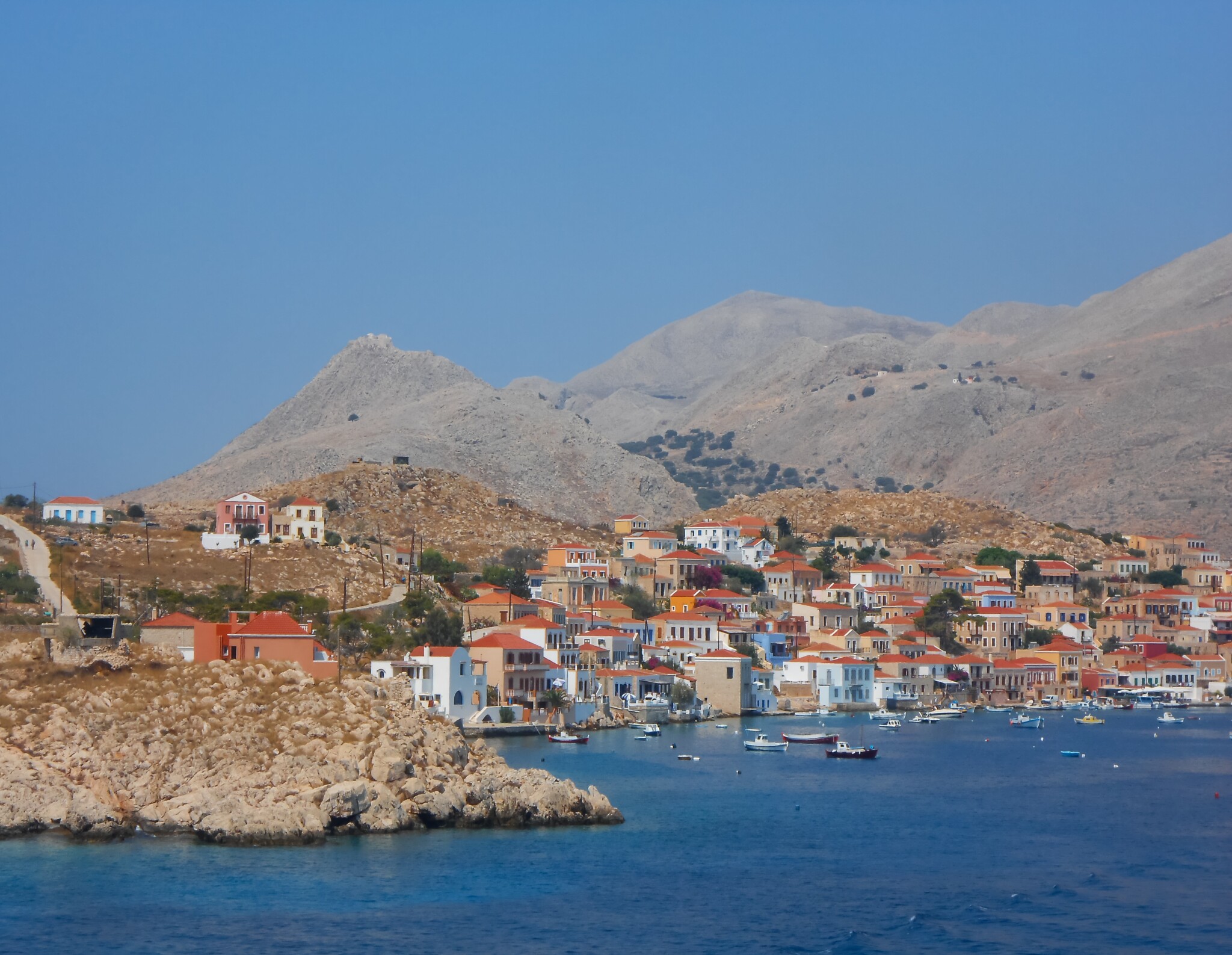
Morning: the shortest crossing
A short hop to Halki, the smallest inhabited island of the Dodecanese, and one that has largely escaped development.
Afternoon: Emborios
One harbour village, Emborios, a row of restored captain’s houses, and water clear enough to see your anchor from the deck. There is genuinely little to do here, that is the point.
Evening: Ftenagia or Kania
Swim off the boat, take the tender to Ftenagia or Kania beach, and have a long taverna dinner on the waterfront. This is the night that resets everyone’s pace.
Overnight: Emborios, Halki.
Don’t Miss
- Emborios’ row of restored captain’s houses
- Water clear enough to see the anchor from the deck
- A long, unhurried taverna dinner on the waterfront
Day 7 – Halki to Lindos (about 48nm)
Morning: the longest crossing
The longest leg of the week, crossing back to Rhodes’ east coast, so an early start.
Afternoon: the Acropolis of Lindos
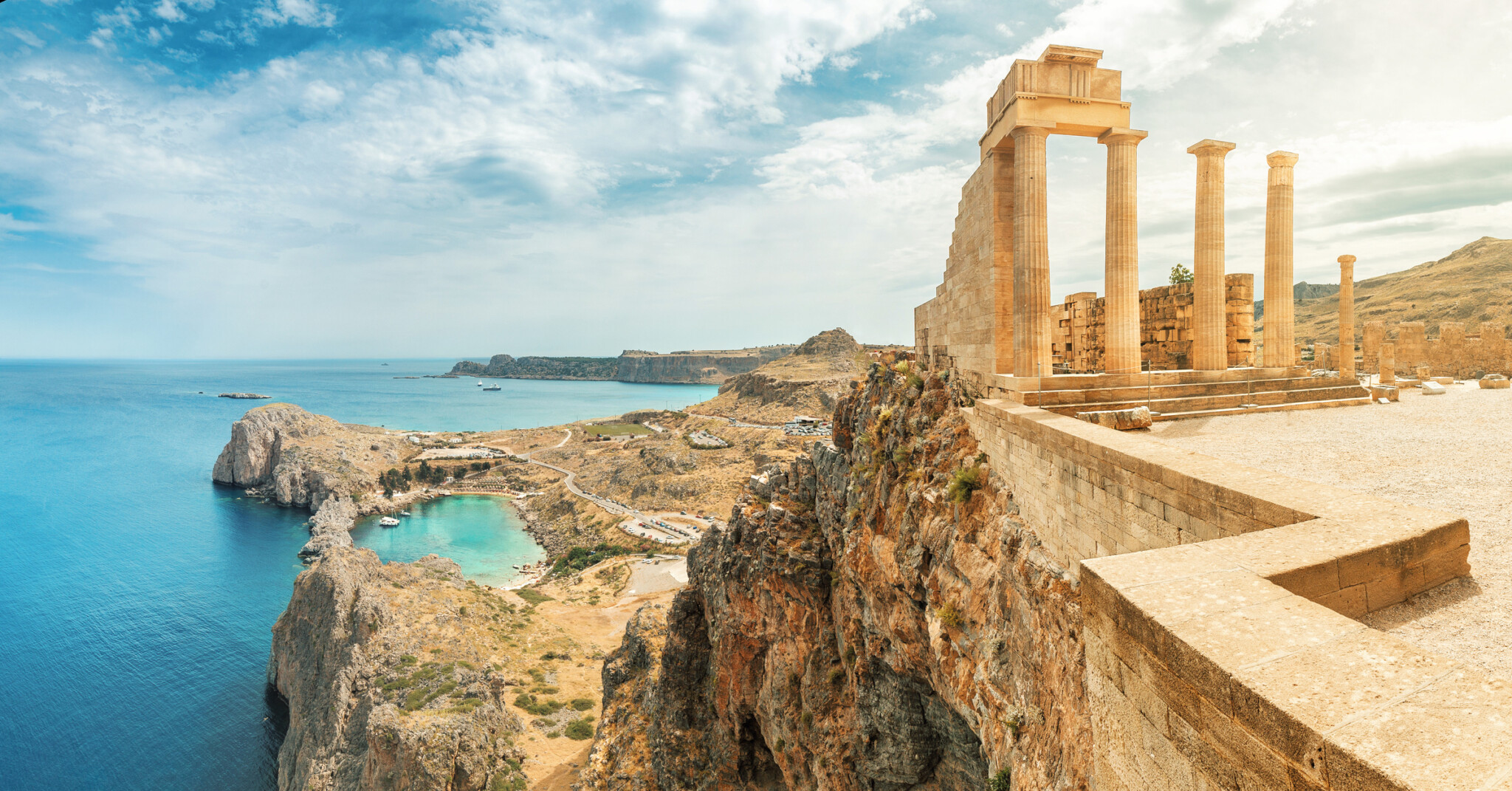
You anchor beneath one of the great sights of the Aegean: the Acropolis of Lindos on its 116-metre rock. Climb up in the late afternoon when the heat and the coach tours have faded, the view over the bay is the best in the Dodecanese.
Evening: St Paul’s Bay
St Paul’s Bay, the almost-enclosed cove below the acropolis, is a favourite overnight anchorage of our captains when conditions allow, dinner in Lindos’ old town afterward.
Overnight: St Paul’s Bay, Lindos.
Don’t Miss
- The Acropolis of Lindos, climbed once the coach tours leave
- St Paul’s Bay, an almost-enclosed natural cove
- Dinner in Lindos’ old town
Day 8 – Lindos to Rhodes, Return (about 28nm)
Morning: an easy final run
An easy final day running up the east coast, with swim stops along the way, Tsampika beach and Anthony Quinn Bay are the two used most.
Afternoon: back in Rhodes
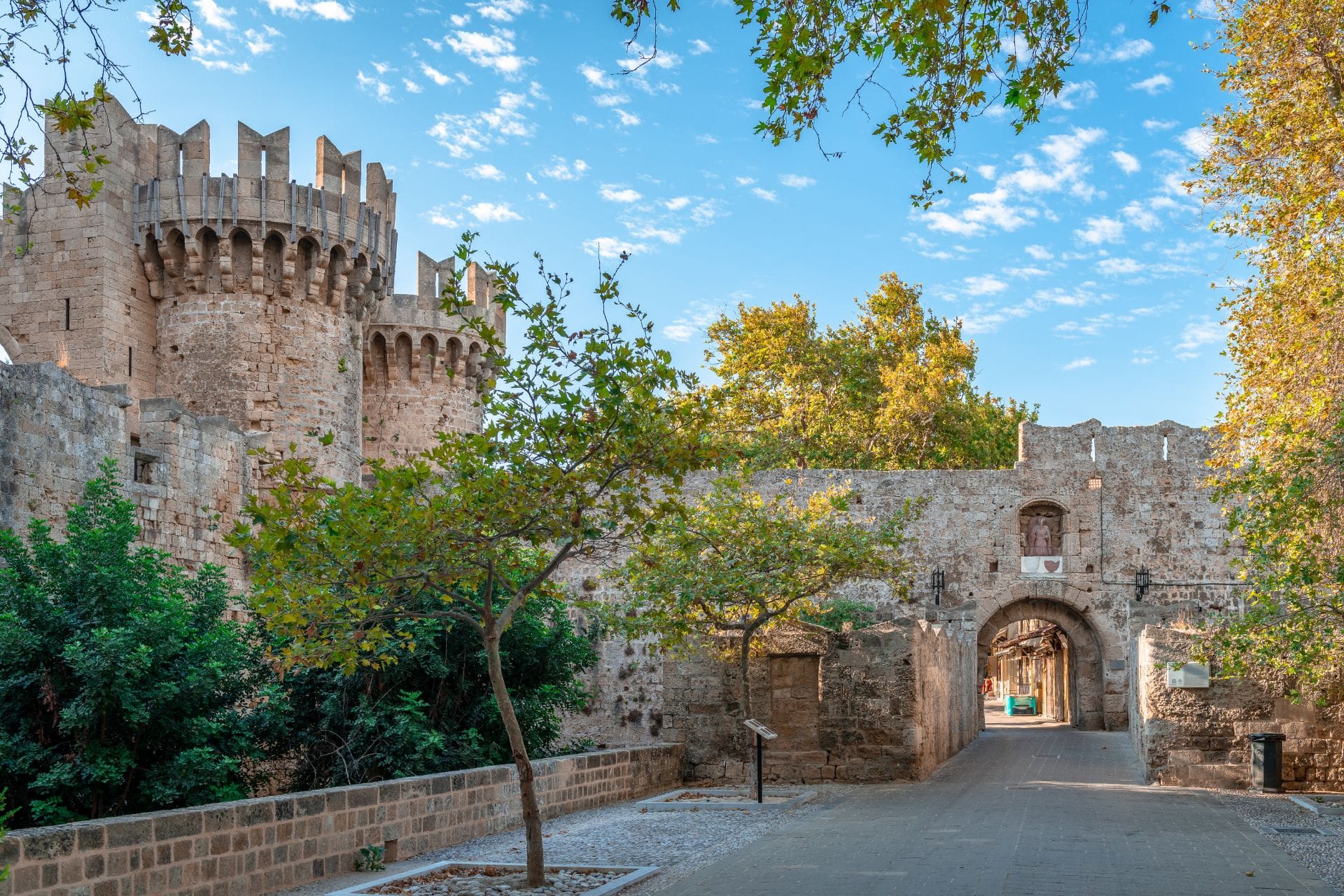
Back in Rhodes by late afternoon for a last evening in the Old Town.
Departure: Disembarkation is Saturday morning after breakfast.
Don’t Miss
- A last swim at Tsampika beach or Anthony Quinn Bay
- One more evening in Rhodes’ medieval Old Town
- A calm, unhurried final morning before hand-back
Making This Week Work
The yacht you need
Symi and Rhodes are harbour nights; Halki, Lindos, Nisyros and Kos are usually harbour nights too, with Alimia the one true anchor night of the week. If you strongly prefer one or the other, tell us and we will match the yacht and route accordingly.
How weather can change the week
The meltemi is real here in July and August but noticeably gentler than in the central Cyclades, and every leg on this route has a shelter option. The order above assumes normal summer conditions; your captain may run it in reverse if the wind argues for it.
Best Months to Book
- Best: September and October, when the Dodecanese stays warm and cruisable well after the Cyclades cool off
- Toughest: late July to mid-August, still comfortable by Aegean standards, just book Symi’s harbour ahead
Prefer quieter, smaller islands with even shorter hops? Look at our northern Dodecanese itinerary from Kos, or browse all routes in our Greece itineraries guide.
Can We Add Turkey to This Week?
Marmaris and the Datca peninsula sit just across the water from Rhodes, and this is the question we get most often on this route. The honest answer is that you cannot do both countries properly on one yacht. Turkish-flagged yachts are not allowed to charter in Greek waters, clearing in and out costs real money each way, and the rules move with the politics. What works is a week in each country on two different yachts, and we book both halves for you. The full breakdown is on our Dodecanese yacht charter page.